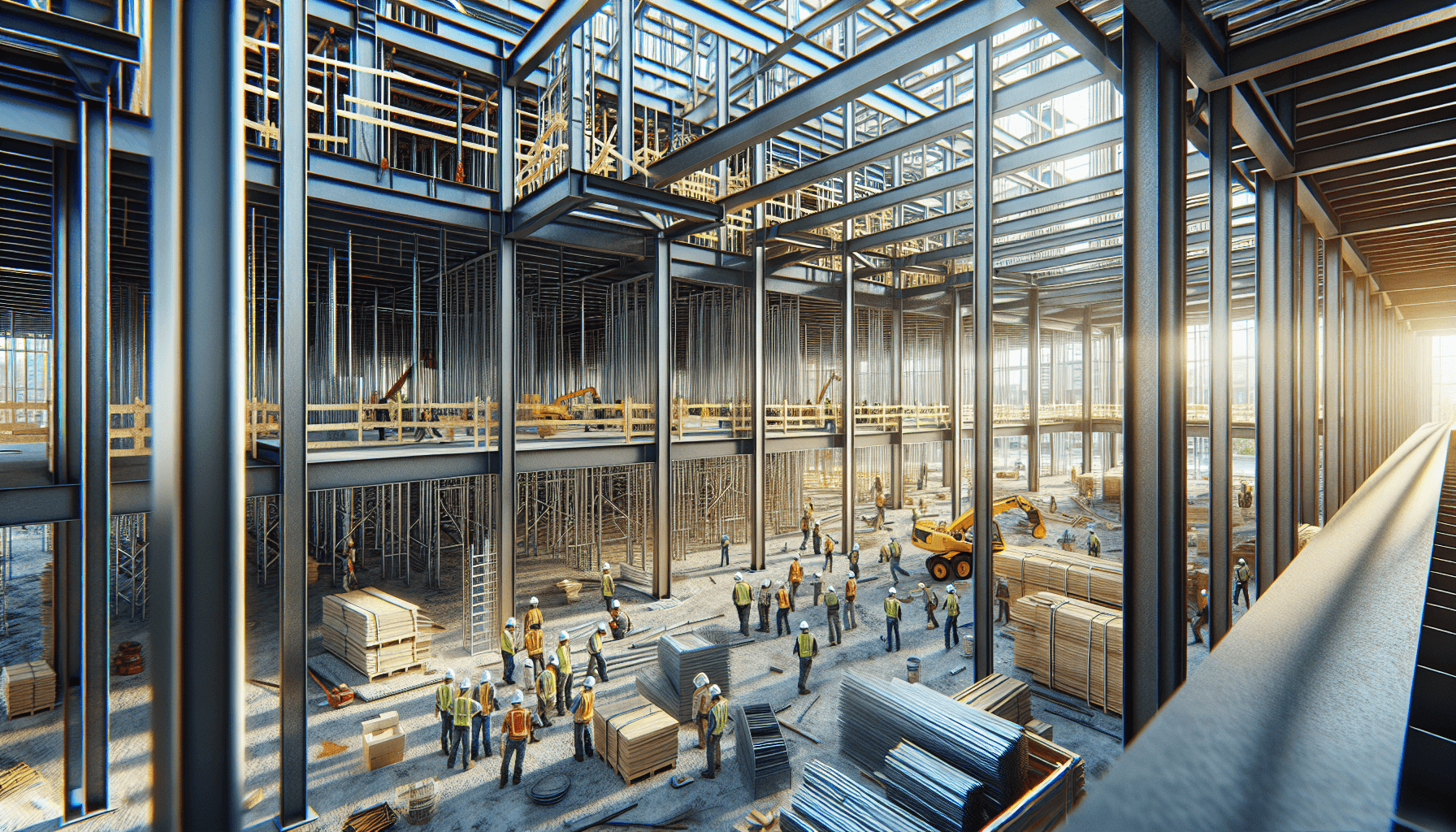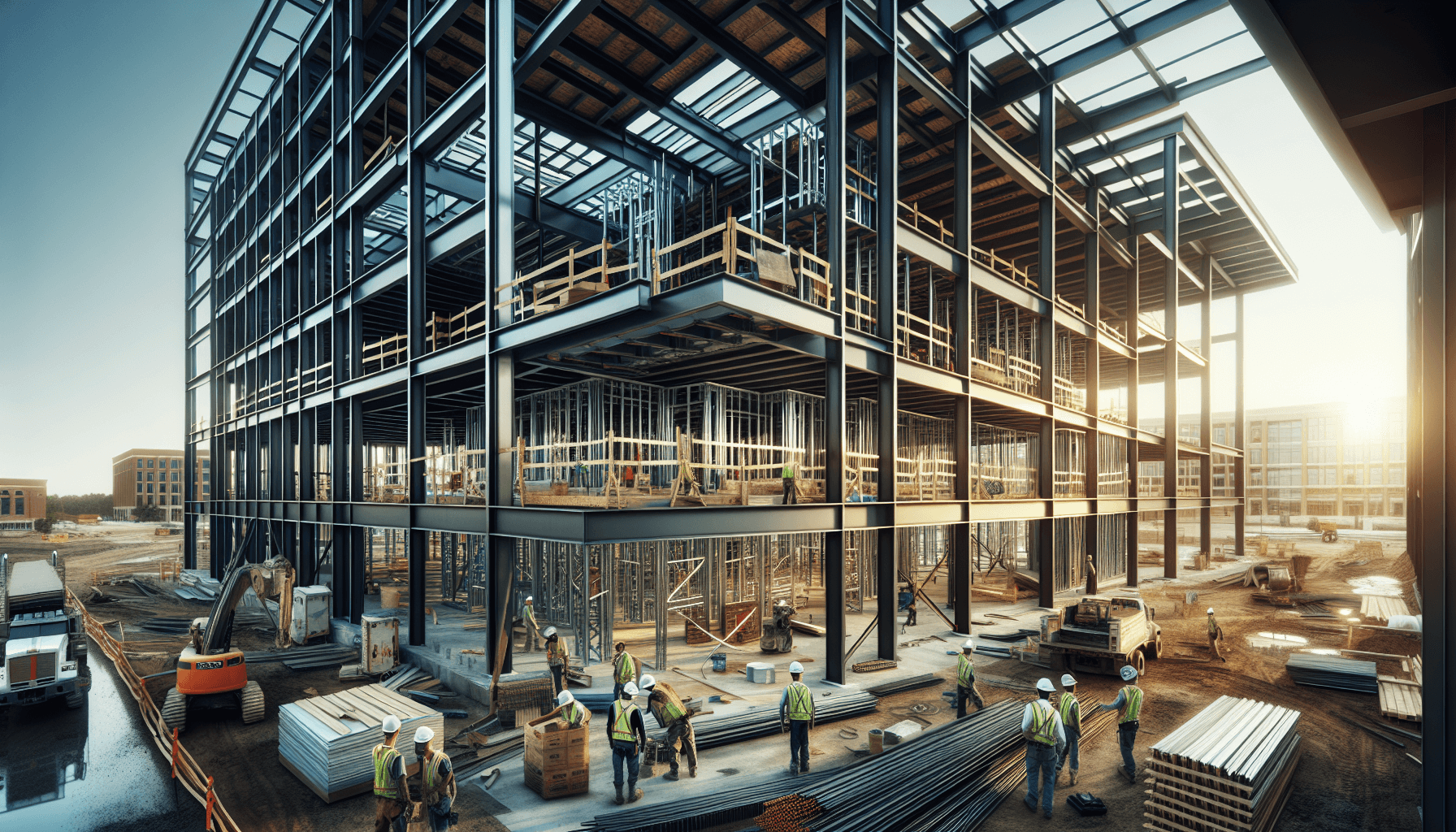
If you're planning a commercial construction project in Charlotte, NC, one of the most critical decisions you'll make is selecting the right commercial general contractor. Understanding what a commercial general contractor does and why they're essential to your project's success is fundamental whether you're developing a new warehouse in Steele Creek, renovating a retail space in South End, or building a craft brewery in NoDa.
A commercial general contractor is a licensed construction professional who serves as the central coordinator and manager for all aspects of commercial building projects from initial planning through final completion. Unlike residential contractors who focus on homes, commercial general contractors specialize exclusively in business properties including office buildings, retail centers, industrial facilities, restaurants, medical offices, warehouses, and multi-family residential structures.
In Charlotte's booming construction market, which saw over $4.2 billion in commercial construction spending in 2023, the role of a skilled general contractor has never been more important. From navigating the City of Charlotte's complex permitting process to managing the intricate logistics of commercial builds, these professionals serve as the linchpin of successful construction projects throughout the Queen City and surrounding areas like Matthews, Huntersville, and Rock Hill, SC.
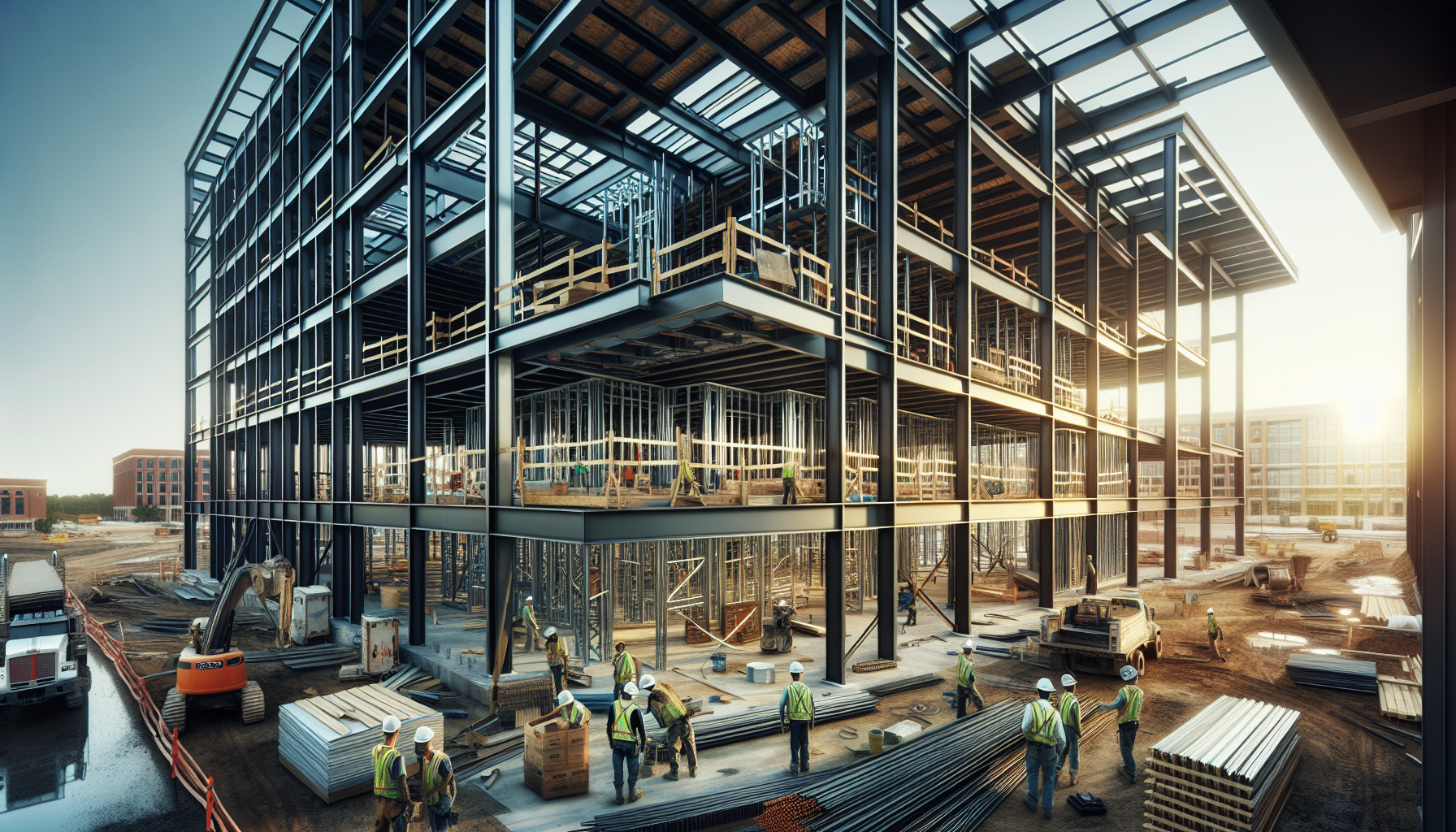
What Does a Commercial General Contractor Actually Do?
A commercial general contractor functions as both the project manager and primary responsible party for all construction activities. They coordinate every aspect of the building process, ensuring that complex commercial projects are completed safely, on time, and within budget. Their role encompasses far more than simply overseeing construction work.
Project Management and Coordination
The general contractor serves as the single point of contact between the property owner, architects, engineers, subcontractors, and regulatory agencies. They develop comprehensive project schedules, coordinate the work of multiple trades, manage material deliveries and equipment, monitor progress against milestones, and handle day-to-day problem-solving that inevitably arises during construction.
For a typical commercial project in Charlotte's growing markets like Ballantyne or University City, this coordination might involve managing 20+ different subcontractors over a 6-12 month timeline while ensuring each meets North Carolina licensing requirements and safety standards.
The best commercial general contractors begin adding value during pre-construction planning, often identifying cost savings of 15-25% before ground is even broken through value engineering and design optimization.
Financial Management and Budget Control
Commercial general contractors are responsible for developing accurate cost estimates, managing project budgets, processing payments to subcontractors and suppliers, handling change orders and variations, tracking expenses against approved budgets, and providing transparent financial reporting to owners throughout the project.
This financial stewardship is crucial given the scale of commercial projects. In Charlotte's current market, construction costs typically range from $150-$250 per square foot for standard office construction, $200-$350 per square foot for restaurant construction, and $80-$150 per square foot for warehouse and industrial facilities.
Regulatory Compliance and Quality Assurance
General contractors ensure all work complies with applicable building codes, zoning requirements, safety regulations, environmental standards, and local ordinances. They manage quality control inspections, coordinate required testing and commissioning, ensure proper documentation and certifications, and oversee final inspections and occupancy approvals.
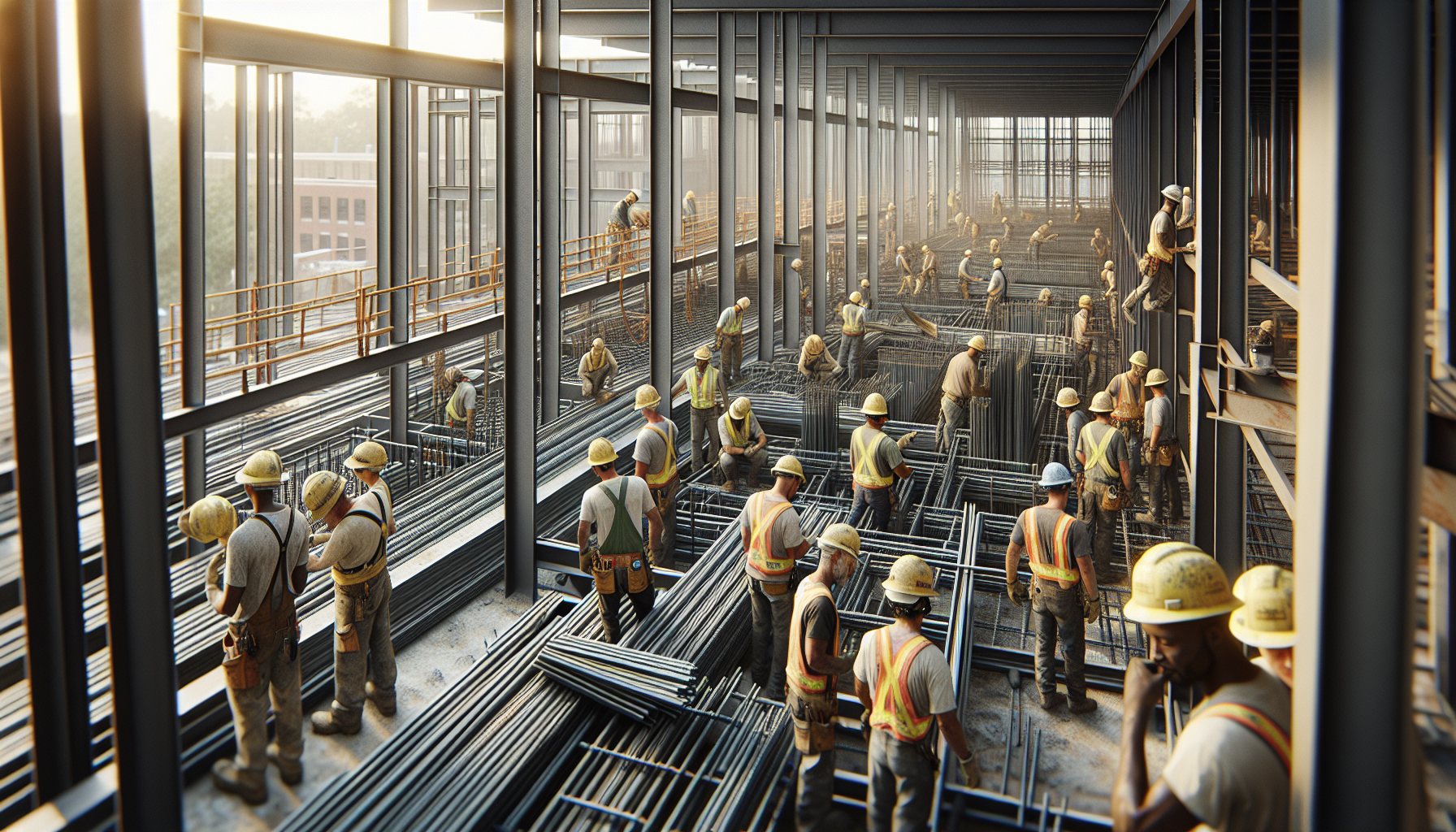
The Core Responsibilities of Commercial General Contractors
Understanding the comprehensive scope of a commercial general contractor's responsibilities helps property owners appreciate the value they bring to every phase of construction.
Pre-Construction Planning
Before construction begins, contractors conduct feasibility studies, develop preliminary budgets, create project timelines, review plans for constructability issues, and identify potential challenges or cost-saving opportunities.
Permitting and Approvals
Contractors navigate complex regulatory requirements, submit permit applications, coordinate with multiple agencies, and ensure all approvals are obtained before construction activities begin.
Subcontractor Management
They recruit qualified trades, negotiate contracts, coordinate work schedules, monitor quality and safety, and manage payments according to project milestones and performance.
Construction Oversight
Daily management includes supervising work quality, ensuring safety compliance, coordinating deliveries, monitoring progress, and resolving issues that arise during construction.
Project Closeout
Final phases include coordinating inspections, managing punch list completion, providing owner training, and delivering warranties and documentation.
Subcontractor Selection and Management
Commercial construction projects typically involve 15-30 different subcontractors and specialty trades. The general contractor serves as the conductor of this orchestra, ensuring electricians, plumbers, HVAC technicians, framers, concrete specialists, roofing contractors, and other trades complete work in proper sequence without delays or conflicts.
This coordination extends beyond scheduling. Professional contractors vet subcontractors for licensing, insurance, experience, and reliability. They negotiate agreements, review work for quality and code compliance, and manage payments. For commercial projects in Lake Norman areas like Cornelius or Davidson, this might mean coordinating 20+ subcontractors while ensuring each meets stringent North Carolina licensing requirements.
Planning a commercial construction project in Charlotte? Our experienced team manages every detail from initial planning through final completion.
Get a Free ConsultationPermitting and Regulatory Navigation
One of the most complex aspects of commercial construction is navigating regulatory requirements. Commercial general contractors manage all permitting requirements including building permits, mechanical permits, electrical permits, plumbing permits, fire protection permits, and specialty permits for specific uses like food service or healthcare.
In Charlotte, commercial projects must comply with the North Carolina Building Code (based on the International Building Code), local zoning ordinances, and specific neighborhood overlay districts. The permitting process typically takes 4-8 weeks for standard commercial projects, though more complex developments in high-growth areas like South End or Uptown Charlotte may require 12-16 weeks for plan review and approval.
| Permit Type | Typical Timeline | Charlotte Requirements |
|---|---|---|
| Building Permit | 4-6 weeks | Plans, structural calculations, energy compliance |
| Mechanical Permit | 2-3 weeks | HVAC plans, equipment specifications |
| Electrical Permit | 2-3 weeks | Electrical plans, load calculations |
| Plumbing Permit | 2-3 weeks | Plumbing plans, fixture schedules |

Types of Commercial Projects General Contractors Manage
Commercial general contractors handle diverse project types, each with unique requirements, challenges, and specialized building codes. Understanding these different project categories helps property owners select contractors with relevant experience.
Office Buildings and Corporate Facilities
Office construction represents one of the most common commercial project types. This includes ground-up office buildings, tenant improvements and corporate upfits, headquarters development, and professional service facilities. Modern office projects in Charlotte's business districts like Ballantyne, South Park, and University City require expertise in open floor plans, advanced technology infrastructure, sophisticated HVAC zoning, and energy-efficient building systems.
Today's office projects increasingly incorporate sustainable design elements to achieve LEED certification or other green building standards. Contractors with U.S. Green Building Council membership bring specialized knowledge of sustainable construction practices, helping clients reduce long-term operating costs through energy-efficient systems, improved indoor air quality, and resource-efficient materials.
Retail and Mixed-Use Developments
Retail construction demands unique considerations including high-traffic durability finishes, extensive electrical infrastructure for lighting and displays, storefront glazing and security systems, loading and service access design, and strict compliance with ADA accessibility requirements. Mixed-use developments combining retail, office, and residential components add complexity, requiring expertise in building code separations, fire protection systems, and multi-tenant utility management.
In Charlotte's revitalized neighborhoods like Plaza Midwood and NoDa, adaptive reuse projects convert historic industrial buildings into mixed-use spaces. These projects require specialized knowledge of historic preservation standards, structural reinforcement techniques, and creative problem-solving to blend old and new construction elements seamlessly.
Industrial and Warehouse Facilities
The explosion of e-commerce and regional logistics has driven significant demand for warehouse and distribution center construction throughout the Charlotte region. These projects involve large clear-span structures, heavy-duty floor slabs capable of supporting high-density racking systems, extensive loading dock facilities, and specialized features like refrigerated storage areas or manufacturing process utilities.
Industrial construction in growing areas like Pineville, Indian Trail, and Rock Hill, SC often includes comprehensive site development work such as mass grading, stormwater management systems, and utility infrastructure extensions. Full-service general contractors coordinate civil engineering requirements, structural specifications, and specialized building systems to deliver functional industrial facilities that meet precise operational requirements.
Industrial warehouse construction in Charlotte typically costs $80-$150 per square foot, while specialized facilities with refrigeration or manufacturing capabilities can range from $200-$400 per square foot depending on requirements.
Restaurant and Hospitality Construction
Restaurant and brewery construction involves highly specialized requirements including commercial kitchen equipment installation, extensive grease waste management systems, hood and ventilation systems, specialized electrical service for cooking equipment, health department compliance measures, front-of-house design elements, bar and tap systems for breweries, outdoor patio construction, and high-durability finishes capable of withstanding heavy use.
Charlotte's thriving food and beverage scene, particularly in neighborhoods like South End and the Arts District, demands contractors who understand unique permitting requirements for alcohol service, outdoor dining regulations, entertainment venue codes, and health department inspections. Restaurant buildouts typically range from $250-$500 per square foot, while craft brewery construction costs between $300-$600 per square foot depending on brewing capacity and specialized equipment requirements.
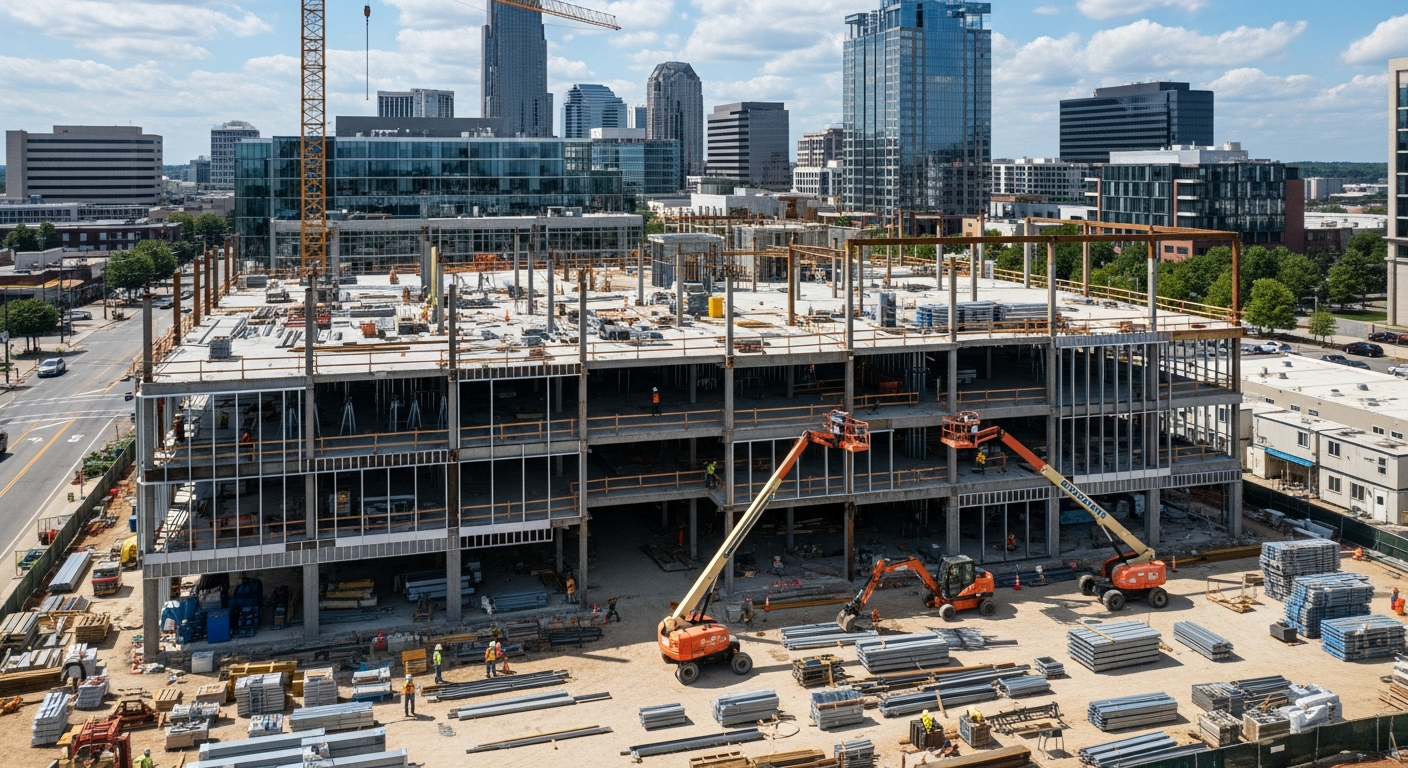
The Commercial Construction Process: From Planning to Completion
Understanding the construction process helps property owners know what to expect when working with a commercial general contractor. While each project presents unique challenges, most follow a similar progression through distinct phases.
Phase 1: Pre-Construction (4-12 weeks)
Pre-construction establishes project foundation through site analysis, budget development, schedule creation, plan review, value engineering, and preliminary subcontractor outreach.
Phase 2: Permitting & Site Prep (6-10 weeks)
Permit submission and approval concurrent with site preparation including utility coordination, demolition, grading, and temporary facilities installation.
Phase 3: Foundation & Structure (8-16 weeks)
Foundation installation, below-grade work, structural framing, and building envelope construction form the project backbone.
Phase 4: Systems Installation (10-20 weeks)
MEP systems rough-in, roofing, exterior closure, and major building system installation and testing.
Phase 5: Finishes & Completion (8-14 weeks)
Interior finishes, final systems, testing and commissioning, inspections, and project closeout with owner training and documentation.
Pre-Construction and Planning Phase
The pre-construction phase establishes the foundation for project success. The general contractor works closely with the owner and design team to refine plans, develop accurate budgets, establish realistic schedules, and identify potential challenges before they become costly problems. This phase includes comprehensive site analysis, utility coordination planning, geotechnical investigation review, and preliminary subcontractor outreach to verify current pricing and availability.
For commercial projects in Charlotte, this phase also includes coordination with City of Charlotte planning and zoning departments, neighborhood associations in areas with overlay districts, and utility providers including Duke Energy, Charlotte Water, and telecommunications companies. Thorough pre-construction planning typically adds 4-8 weeks to the overall timeline but can reduce construction phase delays by 30-40% and often identifies significant cost savings.
Site Preparation and Foundation Work
Once permits are secured, site preparation begins with utility relocations, demolition of existing structures, site clearing and grading, erosion control installation, and temporary facilities setup. For ground-up commercial construction, this phase includes foundation layout, soil testing, and underground utility installation.
Charlotte's predominantly clay soils require careful foundation design and moisture management strategies. Experienced contractors understand local soil conditions and work with structural engineers to ensure proper foundation systems. Foundation work includes excavation, foundation system installation (slab-on-grade, spread footings, or deep foundations depending on conditions), and below-grade waterproofing and drainage systems.
Ready to start your commercial project with proven expertise? Our team brings 60+ years of combined experience to every project.
Schedule Your Consultation - (980) 471-1745Building Systems and Infrastructure
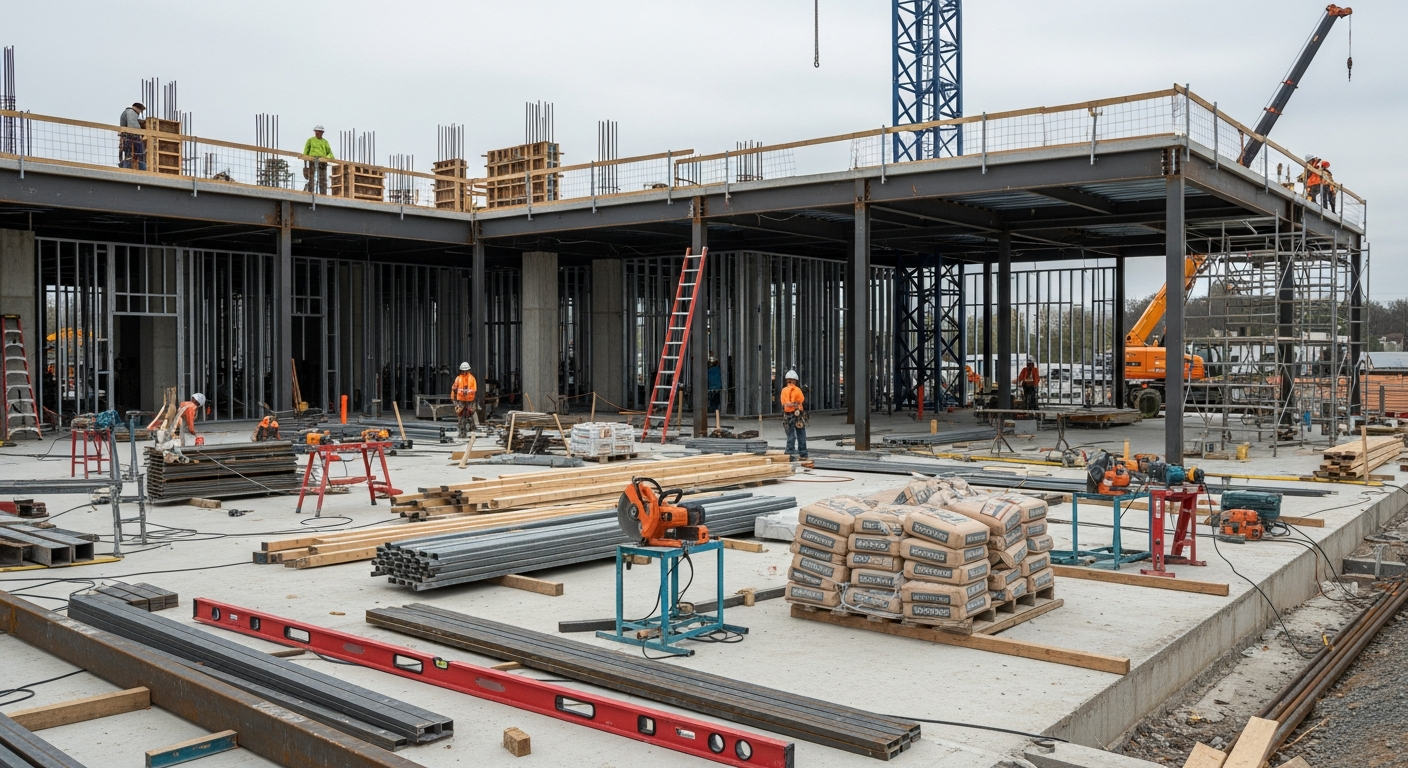
Modern commercial buildings incorporate increasingly sophisticated building systems. General contractors coordinate mechanical, electrical, and plumbing (MEP) rough-in work including HVAC equipment installation and ductwork distribution, electrical service and distribution panels, plumbing and fire protection systems, telecommunications and data infrastructure, and building automation and security systems.
These systems represent approximately 25-35% of total construction costs and require careful coordination between multiple specialty trades. Experienced contractors understand system interdependencies and sequence work to avoid conflicts and delays. For projects requiring specialized systems like commercial roofing or industrial equipment, additional coordination ensures proper integration.
Essential Qualifications for Commercial General Contractors
Not all general contractors possess the expertise and qualifications necessary for commercial construction. When selecting a contractor for your Charlotte commercial project, evaluate these critical qualifications and characteristics.
Licensing and Professional Requirements
In North Carolina, commercial general contractors must hold a current North Carolina General Contractor License issued by the NC Licensing Board for General Contractors. For projects exceeding $30,000, this licensure is mandatory. Verify that any contractor under consideration maintains current licensure and check their license status through the state licensing board website.
Additional professional requirements include workers' compensation insurance covering all employees and subcontractors, general liability insurance with minimum $1-2 million coverage, builder's risk insurance for project-specific coverage, professional liability insurance for design-build projects, and bonding capacity appropriate to project size and complexity.
Always verify contractor licensing through official state channels. Unlicensed contractors cannot legally perform commercial work over $30,000 and provide no recourse if problems arise.
Relevant Experience and Expertise
Experience with your specific project type is invaluable. A contractor experienced in warehouse construction brings different expertise than one specializing in restaurant buildouts or medical offices. Review the contractor's project portfolio to verify they've successfully completed projects similar in scope, size, and complexity to yours.
Ask specific questions about their experience: How many projects of this type have they completed in the past three years? What was their largest project in terms of square footage and budget? Can they provide references from similar recent projects? Contractors with 60+ years of combined team experience bring historical knowledge and proven systems that newer firms may lack.
Financial Stability and Bonding Capacity
Commercial construction projects involve significant financial commitments and inherent risks. Verify the contractor's financial stability through bonding capacity evaluation, bank references, and credit reporting. For public projects and many private developments, payment and performance bonds are required, typically 100% of the contract value.
A contractor's bonding capacity indicates their financial strength and ability to handle projects of various sizes. Bonding companies conduct thorough financial analysis before issuing bonds, making bonding capacity a reliable indicator of contractor stability and capability.
| Insurance Type | Minimum Coverage | Recommended Coverage |
|---|---|---|
| General Liability | $1-2 Million | $2-5 Million |
| Workers' Compensation | State Required | Full Coverage |
| Builder's Risk | Project Value | 110% Project Value |
| Professional Liability | $1 Million | $2 Million |
How Commercial General Contractors Add Value Beyond Basic Construction
While managing the physical construction process represents the core responsibility, experienced commercial general contractors provide additional value that extends far beyond basic building services.
Value Engineering and Cost Optimization
Value engineering represents a systematic approach to identifying cost-saving opportunities without sacrificing quality, functionality, or performance. Skilled contractors analyze design elements, specified materials, and proposed construction methods to recommend alternatives that reduce costs while maintaining or improving overall performance.
Common value engineering applications include suggesting pre-engineered metal building systems instead of conventional steel framing for warehouse projects (potential savings of 15-25%), recommending alternative finish materials with similar aesthetics but lower costs and better durability, optimizing structural systems to reduce material quantities, and adjusting construction sequences to minimize schedule duration and reduce general conditions costs.
For a typical $2 million commercial project in Charlotte, comprehensive value engineering might identify $150,000-$300,000 in savings while improving building performance and reducing long-term maintenance requirements.
Risk Management and Problem-Solving
Commercial construction projects inevitably encounter unforeseen challenges including unexpected site conditions, material delays, design conflicts, weather impacts, regulatory changes, or coordination issues. Experienced general contractors excel at identifying potential risks early, developing comprehensive contingency plans, and solving problems quickly to minimize impacts on schedule and budget.
This expertise proves particularly valuable in Charlotte's dynamic construction environment, where rapid growth creates challenges such as subcontractor availability constraints, extended material lead times, and utility coordination complexity. Contractors with strong local relationships and deep market experience can navigate these challenges more effectively than those new to the region.
Traditional Approach
React to problems as they occur, often resulting in delays, cost overruns, and quality compromises.
Professional Contractor Approach
Proactively identify risks, develop contingency plans, and implement solutions before problems impact the project.
Technology Integration and Smart Building Systems
Modern commercial buildings incorporate increasingly sophisticated technology systems that require specialized coordination. General contractors manage low-voltage systems including structured cabling and data networks, security and access control systems, building automation and energy management platforms, audio-visual and conferencing infrastructure, digital signage and communication systems, and emerging technologies like electric vehicle charging stations.
Understanding how these systems integrate with traditional building construction and ensuring proper coordination between technology vendors and construction trades is critical for project success. This expertise is especially important for office buildings, mixed-use developments, and smart building applications where technology infrastructure represents a significant investment.
Sustainable Building Practices and Green Construction
Sustainability has evolved from niche consideration to mainstream expectation in commercial construction. General contractors with U.S. Green Building Council membership bring comprehensive knowledge of sustainable construction practices including energy-efficient building envelope design, high-performance HVAC and lighting systems, water conservation technologies and systems, sustainable material selection and sourcing, construction waste reduction and recycling programs, and indoor air quality optimization.
These sustainable practices often provide substantial long-term operational savings that offset initial investment. For example, high-efficiency HVAC systems might add $50,000-$75,000 to a 20,000-square-foot office building but reduce annual energy costs by $15,000-$20,000, achieving payback in 3-4 years while improving tenant comfort and building marketability.
Understanding Commercial Construction Delivery Methods
Commercial construction projects utilize various contracting approaches and delivery methods. Understanding these options helps property owners select the approach best suited to their project requirements, risk tolerance, and desired level of involvement.
Design-Bid-Build Traditional Method
The traditional design-bid-build method involves sequential phases where the owner first hires an architect to complete design, then solicits competitive bids from general contractors, and finally awards a construction contract to build the completed design. This method provides clear separation between design and construction responsibilities and facilitates competitive pricing through multiple bids.
Advantages include competitive pricing through transparent bidding, clear design completion before construction begins, straightforward contract relationships with defined responsibilities, and owner control over design decisions. Disadvantages include longer overall project duration since design must be complete before construction bidding, limited contractor input during design development, and potential for costly design conflicts discovered during construction.
Design-Build Integrated Delivery
Design-build combines design and construction services under a single contract with the general contractor. The contractor manages both the design team and construction process, providing single-source responsibility for complete project delivery. This approach enables faster project delivery through overlapping design and construction phases, better integration of constructability knowledge into design decisions, reduced owner administrative burden through single-point responsibility, and often lower overall costs through early value engineering opportunities.
Design-build has become increasingly popular for commercial projects where schedule acceleration provides value or where owners prefer simplified project management. It proves particularly effective for industrial facilities, warehouses, and projects where owners have clear functional requirements but don't require architectural distinction.
Design-build delivery can reduce project timelines by 20-30% compared to traditional methods while often providing cost savings through early contractor involvement in design decisions.
Construction Management Approaches
Construction management delivery methods come in two primary forms: CM-at-Risk (where the contractor manages construction with a guaranteed maximum price) and Agency CM (where the contractor provides management services but doesn't hold direct trade contracts). These approaches offer flexibility for phased construction, strong owner involvement throughout the process, and transparent cost management with detailed reporting.
CM-at-Risk provides many benefits of design-build including early contractor involvement and schedule acceleration while maintaining separate design contracts and preserving competitive bidding for major trades. This method is often used for complex commercial projects where owner control and cost transparency are high priorities.
Common Challenges in Commercial Construction
Commercial construction presents unique challenges that skilled general contractors must navigate successfully to deliver projects on time, within budget, and to quality standards.
Managing Complex Schedules and Trade Coordination
Charlotte's robust construction market creates intense competition for skilled subcontractors and specialty trades. During peak construction periods, subcontractor availability can extend project schedules by 2-4 weeks or more. Experienced contractors mitigate this through early subcontractor engagement, maintaining relationships with multiple qualified trades in each specialty, realistic schedule development that accounts for current market conditions, and flexibility to adjust work sequences when specific trades face availability constraints.
Weather impacts also affect schedules, particularly for exterior work and concrete placement. Charlotte's climate includes hot, humid summers that can impact material performance and unpredictable winter weather that affects concrete curing, exterior finishes, and roofing work. Sophisticated contractors build appropriate weather contingencies into project schedules and utilize advanced weather tracking to optimize work scheduling.
Navigating Supply Chain Complexities
Material supply chains have grown increasingly complex, with lead times extending from traditional 2-4 weeks to 8-16 weeks or longer for specialty items like custom architectural millwork, specific HVAC equipment models, or specialized building materials. Professional general contractors address these challenges through early material identification and procurement, maintaining relationships with multiple suppliers and distributors, value engineering to identify suitable substitute materials when preferred options face delays, strategic material procurement and on-site storage management, and proactive communication with owners about potential material impacts.
For commercial projects in growing areas like Waxhaw, Weddington, or Fort Mill, SC, proactive material management proves essential to maintaining project schedules and budgets despite ongoing supply chain uncertainties.
Managing Occupied Building Renovations
Many commercial projects involve renovations or upfits in occupied buildings, creating unique challenges around noise and disruption management, dust control and indoor air quality protection, phased construction approaches to maintain business operations, security and access control coordination, and after-hours or weekend work scheduling to minimize operational impacts.
For office upfits in occupied buildings throughout areas like Ballantyne Corporate Park or University Research Park, contractors must balance construction efficiency with minimizing disruption to existing tenants and maintaining building operations.
"The best commercial contractors understand that in occupied buildings, their success is measured not just by what they build, but by how little they disrupt the businesses that need to continue operating."
The Future of Commercial Construction in Charlotte
The commercial construction industry continues evolving rapidly, with several significant trends influencing how projects are designed, constructed, and operated throughout the Charlotte market.
Sustainable and High-Performance Building Design
Energy efficiency and environmental sustainability have transitioned from premium features to baseline expectations in commercial construction. New commercial buildings increasingly incorporate high-performance building envelopes with advanced insulation, LED lighting systems with sophisticated controls, high-efficiency HVAC systems with smart controls, renewable energy systems including rooftop solar panels, water conservation technologies and systems, sustainable material selection prioritizing recycled content, and construction waste reduction and recycling programs.
These features reduce long-term operating costs while improving occupant comfort and building marketability. Charlotte's growing emphasis on sustainability, evidenced by the city's comprehensive climate action plans and green building incentive programs, drives increased adoption of sustainable construction practices across all commercial project types.
Advanced Technology Integration
Building Information Modeling (BIM) and digital collaboration tools are fundamentally transforming commercial construction processes. Three-dimensional BIM models enable comprehensive design coordination that identifies conflicts before construction begins, virtual reality walkthroughs for enhanced design review and client communication, automated quantity takeoffs and cost estimating directly from detailed models, real-time project tracking and progress monitoring, and comprehensive as-built documentation for long-term facility management.
During construction phases, digital tools including mobile field reporting applications, comprehensive photographic documentation systems, integrated schedule tracking platforms, and collaborative communication systems improve project coordination and documentation while reducing errors and miscommunication.
Ready to work with a commercial general contractor who brings cutting-edge expertise and proven results to your Charlotte project?
Start Your Project Consultation TodayWhy Charlotte's Market Demands Local Expertise
Charlotte's unique characteristics as a rapidly growing commercial construction market make local expertise particularly valuable for project success. The city's exceptional growth (over 20% population increase from 2010-2020) creates both tremendous opportunities and significant challenges including unprecedented commercial development demand, increasingly competitive subcontractor markets, stressed infrastructure systems requiring careful coordination, and continuously evolving local regulations and permitting requirements.
Local commercial general contractors understand Charlotte's specific market requirements including City of Charlotte permitting processes and established relationships with planning staff, local utility companies (Duke Energy, Charlotte Water, Piedmont Natural Gas) and their unique requirements and timelines, regional soil conditions throughout the metro area (Charlotte's characteristic red clay soils require specific foundation design approaches), established subcontractor and supplier networks with proven reliability, and neighborhood-specific considerations including overlay districts, historic preservation requirements, and community engagement expectations.
This comprehensive local knowledge accelerates permitting processes, improves schedule reliability through proven relationships, enhances cost estimate accuracy, and significantly reduces project risk. For commercial projects throughout the expansive Charlotte metro area from Lake Norman communities like Huntersville and Mooresville to south Charlotte suburbs and into York County, South Carolina communities like Rock Hill, local expertise delivers measurable value and competitive advantages.
Selecting the Right Commercial General Contractor
Choosing the right commercial general contractor represents one of the most critical decisions in any commercial construction project. The selection process should be thorough, systematic, and based on objective criteria rather than price alone.
Begin by developing a comprehensive project definition including detailed scope requirements, realistic budget parameters, target completion schedule, and specific performance requirements. Identify 3-5 contractors with demonstrated relevant experience, appropriate bonding capacity for your project size, and strong reputations in the Charlotte market for quality and reliability.
Request detailed proposals that include comprehensive project understanding and proposed approach, preliminary schedules with realistic phasing plans, detailed budget breakdowns by trade and major material categories, team qualifications and specific assigned personnel, and multiple references from recent similar projects. Interview finalists to assess communication style and cultural compatibility, problem-solving approach and experience, subcontractor and supplier relationship strength, safety program commitment and track record, and quality control processes and standards.
Key Takeaways: What Makes a Commercial General Contractor Essential
- Commercial general contractors serve as the central coordinator for all aspects of commercial construction projects, managing everything from planning and permits to subcontractors and final completion
- They bring specialized expertise in commercial building codes, complex project coordination, and regulatory compliance that residential contractors typically lack
- Professional contractors add significant value through pre-construction services, value engineering, risk management, and problem-solving that often saves 15-25% on project costs
- Different delivery methods (design-bid-build, design-build, construction management) offer various advantages depending on project requirements and owner preferences
- Local Charlotte expertise provides crucial advantages in permitting, subcontractor relationships, soil conditions, and regulatory navigation
- Selecting the right contractor requires thorough evaluation of licensing, experience, financial stability, safety record, and cultural fit rather than focusing solely on price
Check references thoroughly, asking specific questions about schedule performance and reliability, budget management and change order handling, problem-solving capabilities during unexpected challenges, communication quality and transparency throughout the project, and overall satisfaction with the likelihood to hire the contractor again for future projects.
While competitive pricing is important, it shouldn't be the sole deciding factor. The lowest bid often reflects missing scope elements, unrealistic assumptions, or potential quality concerns. Instead, seek the best overall value: the contractor who demonstrates the comprehensive capability to deliver your project successfully at a fair price with minimal risk to your schedule, budget, and quality expectations.
For commercial construction projects throughout Charlotte, Mecklenburg County, and the broader surrounding region, selecting a qualified commercial general contractor with deep local experience, comprehensive construction capabilities, and proven performance track record provides the foundation for project success. Whether you're planning a ground-up commercial development, major renovation project, or highly specialized facility, the right general contractor transforms your vision into reality while protecting your investment and ensuring timely completion.
As Charlotte continues its dynamic transformation into a major southeastern commercial hub with expanding corporate presence, booming food and beverage scene, growing industrial and logistics infrastructure, and innovative mixed-use development throughout the region, the demand for skilled commercial general contractors will only continue increasing. Property owners and developers who understand the comprehensive value these professionals provide and invest adequate time in selecting the right partner position themselves for construction success and optimal long-term operational performance.
If you're planning a commercial construction project and want to work with a contractor who brings proven expertise, comprehensive local knowledge, and unwavering commitment to your project's success, contact our team to discuss your specific requirements and learn how professional general contracting services deliver exceptional results from initial concept through final completion and beyond.