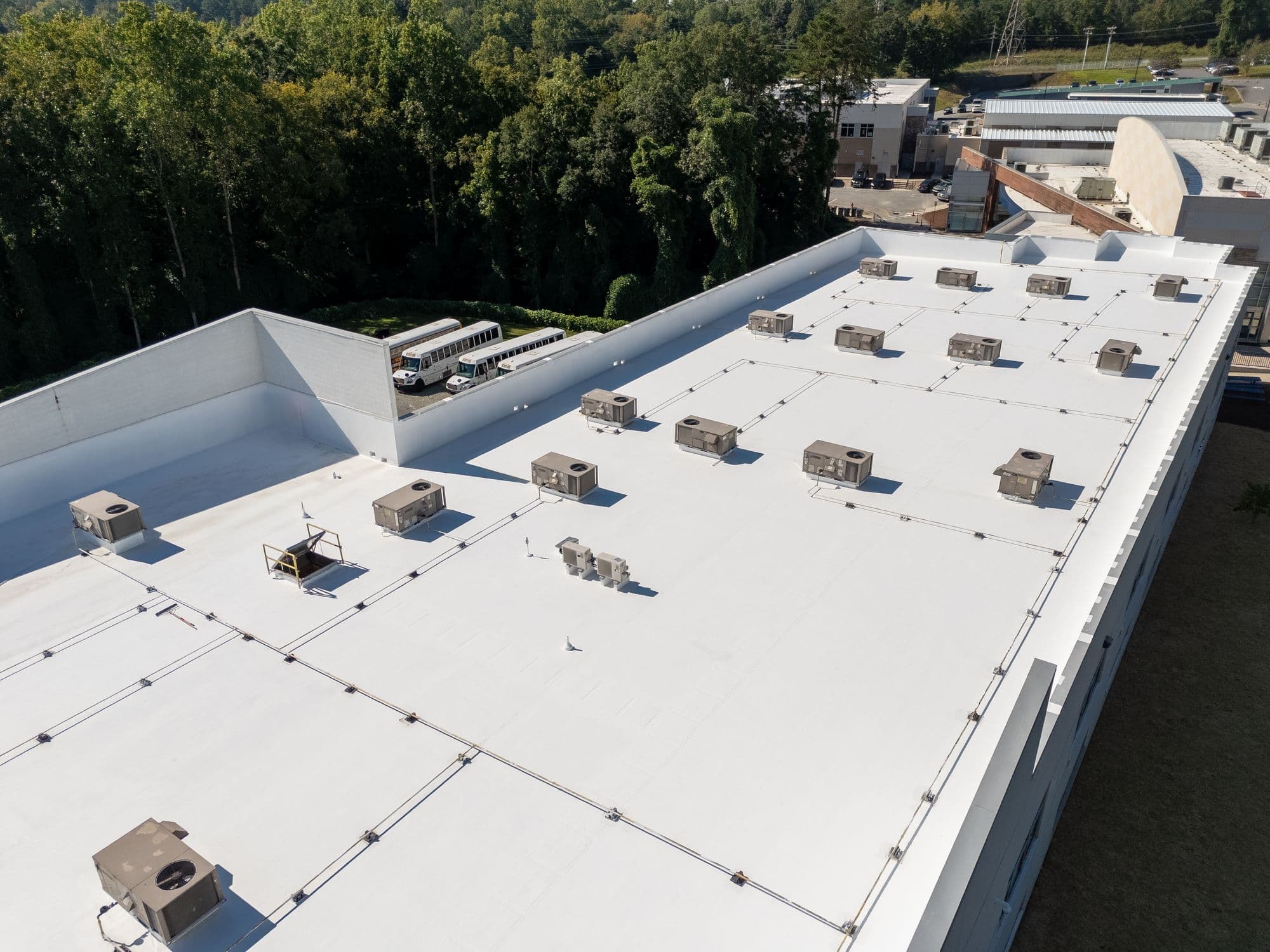
Roof Coating Charlotte NC
Commercial roof restoration that saves up to 50% vs replacement - backed by 60+ years of combined construction experience
Commercial Roof Coating & Restoration in Charlotte, NC
When your commercial roof starts showing signs of wear - ponding water, membrane cracking, seam separation, rust, or recurring leaks - your first instinct might be to budget for a full roof replacement. But in many cases, a professionally applied roof coating can restore your roof to like-new condition at a fraction of the cost. We Coat, the dedicated roof coating division of We Build, provides commercial roof coating services across Charlotte, NC and the surrounding region, including Fort Mill, SC, Lake Norman, and South Charlotte.
Charlotte's climate presents unique challenges for commercial roofs. Summer temperatures regularly push past 95 degrees, driving rooftop surface temperatures above 160 degrees on dark, uncoated membranes. The humidity hovers around 70 to 80 percent from June through September, creating conditions where moisture gets trapped beneath aging membranes and accelerates deterioration. Charlotte averages 43 inches of rain per year, and severe thunderstorms can dump several inches in a single afternoon, testing every seam and flashing detail on your roof. Winter brings freeze-thaw cycles that crack rigid materials and loosen fasteners. A commercial roof coating addresses all of these threats by creating a seamless, reflective, waterproof barrier that protects your existing roof system and dramatically extends its service life.
As a veteran and family-owned general contractor with over 60 years of combined construction experience, We Build brings a level of construction knowledge to roof coating that dedicated coating companies cannot match. We understand building structures, drainage systems, and the full range of commercial roofing substrates because we build and renovate the buildings they sit on. Our team is licensed in both North Carolina and South Carolina, and as a U.S. Green Building Council (USGBC) member, we are committed to sustainable building practices that reduce waste and energy consumption. Every roof we coat is one less roof that ends up in a landfill.
Save 50-70% vs. Full Roof Replacement
A commercial roof coating costs $8 to $12 per square foot installed, compared to $12 to $20 per square foot for full replacement. For a 20,000-square-foot commercial roof, that is a potential savings of $80,000 to $160,000 - plus reduced energy costs from reflective coatings and favorable tax treatment as a maintenance expense.
What Is Commercial Roof Coating?
Commercial roof coating is a liquid-applied roofing membrane that is sprayed, rolled, or brushed directly onto your existing roof surface. Once cured, the coating forms a seamless, monolithic barrier that waterproofs, reflects solar energy, and protects the underlying roof system from UV degradation, weather damage, and thermal stress. Unlike traditional roofing, which requires tearing off the old roof and installing new materials, coating is applied over the existing substrate - preserving your current roof investment and avoiding the cost and waste of a full tear-off.
The concept is straightforward, but the execution requires expertise. The coating must be applied at the correct mil thickness, over a properly prepared surface, with the right primer for the specific substrate. Detail areas - pipe penetrations, HVAC curbs, drains, scuppers, and parapet transitions - require reinforced treatment because they are the points where roof failures originate. A coating is only as good as the surface preparation and detail work beneath it. This is where experience matters, and it is why We Build's construction background gives us an advantage over companies that only do coatings. We understand the structures, flashings, and drainage systems that determine whether a coating will perform for 15 years or fail in 3.
Roof coating has become one of the fastest-growing segments of the commercial roofing industry because it solves a fundamental problem for building owners: aging roofs are expensive to replace, and every dollar spent on replacement is a dollar that cannot be invested in the business. Coating provides a way to restore roof performance at a fraction of replacement cost, while also adding energy efficiency, sustainability benefits, and favorable tax treatment that replacement does not offer.
Types of Commercial Roof Coatings
Choosing the right coating system is critical to long-term performance. Each type has specific strengths that make it the best choice for certain roof substrates and building conditions. Our team recommends the optimal coating based on your specific roof type, drainage characteristics, and performance goals.
Silicone Roof Coating
Silicone roof coatings are the gold standard for commercial flat roofs in Charlotte. Unlike other coatings, silicone does not break down when exposed to ponding water, making it the ideal choice for low-slope commercial buildings where drainage is imperfect. Silicone coatings maintain their reflective properties throughout their lifespan, which is critical in Charlotte where summer temperatures regularly exceed 95 degrees Fahrenheit. These coatings cure by reacting with atmospheric moisture, forming a seamless, monolithic membrane that eliminates the seams and joints where leaks typically originate. For building owners managing large commercial roofs, silicone coatings offer the best long-term value because they resist degradation from UV exposure, extreme heat, and the heavy rain events common across the Carolinas.
Advantages
- Superior ponding water resistance
- Excellent UV stability
- Long lifespan (15-20 years)
- Maintains reflectivity over time
Considerations
- •Higher upfront cost
- •Can attract dirt buildup
- •Requires specific primers on some substrates
Acrylic Roof Coating
Acrylic roof coatings provide excellent reflectivity at a lower price point than silicone, making them a popular choice for budget-conscious commercial property owners in Charlotte. These water-based coatings are easy to apply, dry quickly, and can be tinted to match building aesthetics. Acrylic coatings perform best on sloped metal roofs where water drains completely, as standing water can degrade the coating over time. In the Charlotte metro area, acrylic coatings are frequently used on metal-roofed warehouses, retail buildings, and light industrial facilities. They offer strong UV reflectivity that reduces cooling costs during Charlotte's long, hot summers, and they can be recoated when they reach the end of their service life without the need for a full removal.
Advantages
- Most cost-effective option
- Excellent reflectivity
- Easy to apply and recoat
- Available in multiple colors
Considerations
- •Not suitable for ponding water
- •Requires dry application conditions
- •Shorter lifespan in humid climates
Polyurethane Roof Coating
Polyurethane roof coatings are the toughest option available for commercial roofs that experience regular foot traffic, rooftop equipment maintenance, or hail exposure. Charlotte experiences an average of two to three significant hailstorms per year, and polyurethane coatings absorb impact energy without cracking or splitting. These coatings come in two formulations: aromatic polyurethane for the base coat, which provides impact resistance and adhesion, and aliphatic polyurethane for the topcoat, which provides UV stability and color retention. For commercial buildings in Charlotte with rooftop HVAC units, satellite equipment, or regular maintenance access, polyurethane coatings provide the durability needed to withstand the physical demands placed on the roof surface.
Advantages
- Exceptional impact resistance
- Handles foot traffic well
- Strong adhesion to most substrates
- Good for high-traffic rooftops
Considerations
- •Less UV resistant than silicone
- •Often requires a topcoat
- •Higher application complexity
Elastomeric Roof Coating
Elastomeric roof coatings are engineered to stretch and recover, making them the best choice for metal roofs and substrates that experience significant thermal expansion and contraction. Charlotte's climate swings from below-freezing winter nights to 100-degree summer days, creating thermal cycling that causes rigid coatings to crack at seams and fasteners. Elastomeric coatings stretch up to 300 percent without losing adhesion, bridging gaps and cracks that develop as metal panels expand and contract. For commercial metal buildings, standing seam roofs, and older metal structures throughout the Charlotte area, elastomeric coatings seal fastener penetrations, lap seams, and flashing details that are the primary sources of leaks.
Advantages
- Extreme flexibility
- Expands and contracts with temperature
- Excellent crack bridging
- Works well on metal roofs
Considerations
- •Moderate ponding water resistance
- •May require more frequent recoating
- •Performance varies by formulation
Reflective Cool Roof Coating
Reflective cool roof coatings are specifically formulated to maximize solar reflectance and thermal emittance, dramatically reducing the amount of heat absorbed by your commercial roof. In Charlotte, where cooling costs represent the largest portion of commercial energy expenses from May through September, a cool roof coating can reduce rooftop surface temperatures by 50 to 60 degrees Fahrenheit. This translates directly to lower HVAC energy consumption, with many Charlotte building owners reporting cooling cost reductions of 15 to 25 percent after coating installation. Cool roof coatings also reduce the urban heat island effect in Charlotte's dense commercial corridors, contributing to the sustainability goals that many businesses and municipalities are pursuing. As a USGBC member, We Build recommends cool roof coatings as one of the most cost-effective green building upgrades available.
Advantages
- Maximum energy savings
- Reduces roof surface temperature by 50-60°F
- May qualify for energy rebates
- Meets ENERGY STAR requirements
Considerations
- •Reflectivity decreases over time
- •May not be ideal for all climates
- •Performance depends on proper application thickness
Our 10-Step Roof Coating Process
A roof coating is only as good as the preparation and process behind it. Our 10-step process ensures every project is completed to the highest standard, with thorough documentation at every phase. This process is what separates a coating that lasts 15 years from one that fails in 3.
Initial Roof Inspection
Our certified team conducts a comprehensive roof inspection, documenting the condition of every section including membranes, flashings, penetrations, drains, and seams. We use moisture detection equipment to identify any trapped moisture beneath the existing roof surface that could compromise a new coating.
Condition Assessment & Recommendation
We compile our findings into a detailed assessment report that includes photographs, moisture scan results, and a clear recommendation. If your roof is a candidate for coating, we specify the optimal coating system for your substrate type and building use. If the roof requires structural repair before coating, we identify those areas.
Substrate Repair
Before any coating is applied, we repair all identified issues: patching membrane tears, resealing flashing details, replacing damaged insulation, fixing ponding water areas, and addressing any structural concerns. Coating over unrepaired damage is the leading cause of premature coating failure.
Power Washing & Surface Preparation
We power wash the entire roof surface to remove dirt, debris, algae, mold, and oxidation that prevent proper coating adhesion. For metal roofs, we address rust spots and apply rust-inhibiting treatment. Surface preparation is the single most important factor in coating longevity.
Primer Application
We apply the manufacturer-specified primer to ensure optimal adhesion between your existing roof substrate and the new coating system. Different substrates require different primers, and our team selects the correct primer for your specific roof material whether it is TPO, EPDM, metal, modified bitumen, or built-up roofing.
Detail Work & Flashing
Before the field coating is applied, we reinforce all critical detail areas with fabric-reinforced coating or flashing-grade sealant. This includes pipe penetrations, HVAC curbs, drains, scuppers, parapet walls, and all transitions where the roof meets vertical surfaces.
Coating Application
We apply the roof coating in multiple passes to achieve the manufacturer-specified mil thickness across the entire roof surface. Our team uses calibrated wet-film thickness gauges to verify proper coverage. We monitor weather conditions throughout application to ensure the coating cures properly.
Curing & Monitoring
After application, we monitor the curing process to ensure the coating achieves full adhesion and membrane integrity. Charlotte's humidity levels can affect cure times, and our team schedules applications around weather windows to ensure optimal curing conditions.
Final Inspection & Documentation
We conduct a thorough final inspection, verifying coating thickness, adhesion quality, and detail work integrity. You receive a complete project file including before-and-after photographs, coating thickness readings, material data sheets, and warranty documentation.
Warranty & Maintenance Plan
Every roof coating project includes a manufacturer-backed warranty and a customized maintenance schedule. We provide annual inspection recommendations and a maintenance plan that helps you maximize the lifespan of your new coating system. Our team remains available for warranty service throughout the life of the coating.
Benefits of Commercial Roof Coating
Roof coating is one of the smartest investments a commercial building owner in Charlotte can make. Here is why property managers, building owners, and facility directors choose coating over replacement.
Save 50-70% vs. Roof Replacement
A full commercial roof replacement in Charlotte typically costs $12 to $20 per square foot, while a professional roof coating costs $8 to $12 per square foot installed. For a 20,000-square-foot commercial roof, that is a savings of $80,000 to $160,000. Coating also avoids the hidden costs of replacement: dumpster fees, tear-off labor, disposal charges, and potential damage to interior spaces during removal. The savings compound further when you factor in the tax treatment, as roof coatings are typically classified as a maintenance expense rather than a capital expenditure.
Reduce Energy Costs 15-25%
Reflective roof coatings reduce rooftop surface temperatures by 50 to 60 degrees Fahrenheit, which directly reduces the workload on your HVAC system. In Charlotte, where cooling season runs from May through September, commercial buildings with dark, uncoated roofs absorb enormous amounts of solar energy. A reflective coating bounces that energy back into the atmosphere instead of transferring it into your building. Our clients in the Charlotte metro area consistently report cooling cost reductions of 15 to 25 percent in the first summer after coating installation.
Eliminate Leaks & Water Damage
Roof coatings create a seamless, monolithic membrane over your entire roof surface, eliminating the seams, joints, and fastener penetrations where leaks originate. Charlotte receives an average of 43 inches of rain per year, with severe thunderstorms capable of dumping several inches in a single event. A properly applied roof coating prevents water intrusion that leads to mold growth, insulation damage, structural deterioration, and costly interior repairs to your commercial space.
Extend Roof Life 10-20 Years
A commercial roof coating adds 10 to 20 years of service life to your existing roof system, depending on the coating type and application quality. When the coating reaches the end of its service life, it can often be recoated again, further extending the roof life without ever requiring a full tear-off and replacement. This means a commercial roof that would have needed replacement in 5 years can potentially serve your building for 25 or more years with strategic coating applications.
Sustainable & USGBC Aligned
Roof coatings eliminate the need to tear off and landfill your existing roof, preventing thousands of pounds of roofing waste per building. As a U.S. Green Building Council member, We Build prioritizes sustainable construction practices, and roof coating is one of the most impactful green building strategies available. Reflective coatings also reduce the urban heat island effect in Charlotte's commercial districts and lower the overall carbon footprint of your building operations through reduced energy consumption.
Zero Business Disruption
Unlike a full roof replacement that involves loud tear-off operations, debris, dust, and potential interior exposure, roof coating is applied directly over your existing roof with minimal noise and no interior disruption. Your business operates normally throughout the entire project. Our coatings are non-toxic and low-odor, so employees, customers, and tenants are unaffected. Most commercial coating projects are completed in 2 to 3 weeks depending on roof size and weather conditions.
Roof Coating vs. Roof Replacement: Making the Right Decision
The decision between coating and replacement comes down to the condition of your existing roof structure and insulation. If the structural deck is sound and the insulation is dry, coating is almost always the better financial decision. If the deck is compromised or the insulation is saturated with moisture, replacement becomes necessary because coating over a failed substrate will not solve the underlying problem.
Roof Coating
- Cost: $8-$12 per square foot installed
- Timeline: 2-3 weeks
- Business disruption: None
- Waste generated: Near zero
- Tax treatment: Maintenance expense (deductible)
- Roof life extension: 10-20 years
- Energy savings: 15-25% cooling reduction
- Recoatable at end of life
Roof Replacement
- •Cost: $12-$20 per square foot
- •Timeline: 2-6 weeks
- •Business disruption: Significant noise and debris
- •Waste generated: Thousands of pounds to landfill
- •Tax treatment: Capital expenditure (39-year depreciation)
- •Roof life: 20-30 years
- •Energy savings: Depends on materials chosen
- •Full tear-off required at end of life
Our free roof assessment determines which approach is right for your building. We use moisture detection equipment to scan for trapped moisture beneath the membrane, and we inspect the structural deck, flashings, and insulation condition. If your roof is a candidate for coating, we will tell you. If it needs replacement, we will tell you that too - as a full-service commercial construction company, we handle both.
Charlotte Climate & Your Commercial Roof
Charlotte sits in the humid subtropical climate zone, which means commercial roofs here face a combination of heat, humidity, UV exposure, heavy rain, and occasional severe weather that is more demanding than most regions of the country. Understanding how Charlotte's climate affects your roof is the first step toward making a smart maintenance and protection decision.
Extreme UV Exposure
Charlotte receives an average of 218 sunny days per year, and UV radiation is the primary cause of roof membrane degradation. Uncoated roofs absorb UV energy that breaks down molecular bonds in roofing materials, causing cracking, chalking, and brittleness. Reflective roof coatings block up to 85 percent of UV radiation, dramatically slowing the degradation process and keeping your roof functional years longer than it would last unprotected.
Heavy Rainfall & Storms
Charlotte averages 43 inches of annual rainfall, with severe thunderstorms capable of producing torrential downpours, hail, and high winds. These weather events test every seam, flashing, and penetration on your roof. A seamless roof coating eliminates the joints and seams where water intrusion occurs, and silicone coatings maintain their waterproofing properties even under prolonged ponding conditions that follow heavy storms.
Temperature Extremes & Thermal Cycling
Charlotte temperatures range from the low 20s in winter to over 100 degrees in summer. This 80-degree swing causes roofing materials to expand and contract repeatedly, loosening fasteners, opening seams, and cracking rigid materials. Metal roofs are particularly vulnerable to thermal cycling. Elastomeric and polyurethane coatings absorb this movement without cracking, maintaining a continuous seal through every temperature cycle.
Humidity & Moisture
Charlotte's average humidity of 70 to 80 percent during summer months creates conditions where moisture gets trapped beneath aging roof membranes, promoting mold growth and accelerating insulation degradation. High humidity also encourages algae and biological growth on roof surfaces, which retains moisture and further deteriorates roofing materials. A roof coating seals out moisture from above while allowing trapped moisture to escape through breathable formulations.
Commercial Roof Types We Coat
Our team has experience coating every common commercial roof type in the Charlotte area. Each substrate requires specific preparation, primers, and coating systems for optimal adhesion and performance.
Flat & Low-Slope Roofs
Flat roofs are the most common commercial roof type in Charlotte and the most frequent candidates for coating. Silicone coatings are typically the best choice for flat roofs because they resist ponding water and maintain their properties under constant moisture exposure. We coat flat roofs on office buildings, retail centers, warehouses, and industrial facilities across the Charlotte metro area.
TPO Membrane Roofs
TPO (thermoplastic polyolefin) roofs are popular on newer commercial buildings in Charlotte. Over time, TPO membranes can become brittle, develop seam failures, and lose reflectivity. A silicone or acrylic coating restores the roof surface, reseals seams, and extends the membrane life by 10 to 15 years without the cost of a full TPO replacement.
EPDM Rubber Roofs
EPDM (ethylene propylene diene monomer) rubber roofs are durable but develop issues at seams and flashings as adhesives age. Charlotte's temperature swings accelerate adhesive failure on EPDM roofs. We apply specifically formulated EPDM-compatible coatings that adhere to the rubber surface, seal failing seams, and add a reflective layer that the original black EPDM membrane lacks.
Metal Roofs
Metal roofs on commercial and industrial buildings in Charlotte develop rust, fastener loosening, and seam separation over time. Elastomeric and polyurethane coatings are ideal for metal substrates because they flex with the metal as it expands and contracts through Charlotte's temperature cycles. Our metal roof coating system includes rust inhibitor, fabric reinforcement at seams, and a reflective topcoat.
Modified Bitumen Roofs
Modified bitumen roofs are common on older commercial buildings throughout Charlotte. These multi-layered asphalt systems develop cracks and blisters as they age, particularly under Charlotte's intense UV exposure. A silicone or acrylic coating over modified bitumen seals surface cracks, prevents further UV degradation, and adds the reflective properties the original dark surface lacks.
Built-Up Roofs (BUR)
Built-up roofs, also known as tar-and-gravel roofs, are found on many older commercial buildings in Charlotte. These roofs are excellent candidates for coating because the alternative is an expensive and messy tear-off. We clean the gravel surface, repair any blistering or delamination, and apply a coating system that seals and protects the existing BUR assembly for another 10 to 15 years.
Roof Coating Costs in Charlotte, NC
Commercial roof coating costs in Charlotte depend on several factors: the size of your roof, the condition of the existing substrate, the type of coating system recommended, accessibility, and the amount of repair work needed before coating. Here is a realistic breakdown of what Charlotte building owners can expect to invest.
Typical Cost Ranges
- Acrylic coating:$8.00 - $10.00/sq ft
- Silicone coating:$9.00 - $12.00/sq ft
- Polyurethane system:$9.00 - $12.00/sq ft
- Elastomeric coating:$8.50 - $11.00/sq ft
- Cool roof coating:$8.00 - $10.00/sq ft
- Full replacement:$12.00 - $20.00/sq ft
ROI Analysis: 20,000 sq ft Roof
- Coating cost (silicone):$60,000 - $100,000
- Replacement cost:$140,000 - $240,000
- Savings:$80,000 - $140,000
- Annual energy savings:$3,000 - $8,000
- Tax deduction benefit:Year 1 write-off
- Total 10-year savings:$110,000 - $220,000
These numbers illustrate why roof coating has become the preferred maintenance strategy for commercial building owners in Charlotte. The upfront savings are substantial, and the ongoing energy savings compound year after year. When you add the tax advantage of deducting the full cost as a maintenance expense versus depreciating a replacement over 39 years, the financial case for coating is compelling. We provide free, detailed consultations for every project so you can make an informed decision based on your specific building and budget. Contact our team to schedule a free roof assessment and get a customized cost analysis for your commercial property.
Related Services
Roof coating is one part of We Build's full-service commercial construction capabilities. Whether you need a commercial upfit to renovate your interior while we coat your roof, or a general contractor for a ground-up commercial build, our team handles it all under one roof. Visit our project portfolio to see completed commercial projects across Charlotte, Fort Mill, Lake Norman, and the surrounding region.
More Construction Services
Roof coating pairs well with our broader construction and inspection services.
Green Building & Sustainability
USGBC member contractor offering LEED-certified construction and energy-efficient building strategies that complement reflective roof coatings.
Learn MoreDrone Roof Inspections
FAA-certified thermal imaging drone inspections that identify moisture, leaks, and insulation failures before coating application.
Learn MoreCommercial Renovation
Complete commercial building renovation services that can include roof coating as part of a comprehensive facility upgrade.
Learn MoreRoof Coating FAQ
Answers to the most common questions Charlotte building owners ask about commercial roof coating. If you have a question not covered here, call us at (980) 471-0427 or request a free assessment.
How much does commercial roof coating cost in Charlotte, NC?
Commercial roof coating in Charlotte typically costs $8 to $12 per square foot installed, depending on the coating type, roof condition, and accessibility. For comparison, a full commercial roof replacement runs $12 to $20 per square foot. A standard 15,000-square-foot commercial roof coating project in Charlotte ranges from $120,000 to $180,000, compared to $180,000 to $300,000 for replacement. We provide free roof assessments with detailed, itemized cost estimates so you know exactly what to expect before any work begins.
How long does a commercial roof coating last?
The lifespan of a commercial roof coating depends on the coating type, application quality, and maintenance. Silicone coatings typically last 15 to 20 years. Acrylic coatings last 8 to 12 years. Polyurethane systems last 10 to 15 years. Elastomeric coatings last 10 to 15 years. All of these coatings can be recoated at the end of their service life without removing the existing coating, which means your roof can be maintained indefinitely through periodic recoating.
Is roof coating better than roof replacement?
Coating is the right call when the deck and insulation are still sound and the membrane is just aged or weathered. You save 50-70% versus replacement, generate zero tear-off waste, and the building stays operational. Coating is the wrong call when the deck is rotted, the insulation is saturated below the membrane, or the roof has already been coated more than twice (at some point you have to peel and start over). Our drone thermal scan plus a walk-on inspection gives you a yes-or-no answer in writing. If we recommend replacement, we recommend replacement.
What types of commercial roofs can be coated?
Substrate matters because the primer changes - the wrong primer fails inside 18 months, regardless of how good the topcoat is. What we routinely coat: TPO (needs an aggressive cleaner + TPO-specific primer because the surface is slick), EPDM (acrylic primer, then silicone or elastomeric topcoat), modified bitumen and built-up tar-and-gravel (vacuum the gravel out first, then asphalt-compatible primer), PVC (very specific PVC-bonding primer or it will not adhere), standing-seam and R-panel metal (rust-converter on any oxidized spots, then elastomeric or polyurethane), spray polyurethane foam (silicone topcoat - the only thing that protects SPF long-term), and concrete decks (acid-etch + concrete primer). What we do not coat: ballasted single-ply (the ballast has to come off first, and at that point you are doing a roof project, not a coating project), and any membrane more than 25 years old where the substrate is too brittle to flex with thermal cycling.
Can you apply roof coating while my business stays open?
Yes, and this is the practical reason a lot of owners go with coating instead of replacement. All the work happens on the exterior - no tear-off, no debris drop into your space, no daylight exposure where the membrane used to be. Our coatings are low-VOC and low-odor, so employees and tenants notice nothing inside. Schools, medical buildings, manufacturing floors, and 24/7 operations stay fully operational while the crew works above. We coordinate around your schedule, not the other way around.
How long does a roof coating project take?
Most commercial roof coating projects in Charlotte take 2 to 3 weeks, depending on roof size, condition, and weather. A standard 15,000-square-foot roof typically takes about 2 weeks: several days for cleaning and prep, time for repairs and detail work, and the remaining time for coating application and proper curing. Larger roofs or those requiring extensive repairs may take longer. We schedule around Charlotte weather patterns to avoid rain during application and curing.
Does roof coating stop leaks?
Yes, a properly applied roof coating creates a seamless, waterproof membrane that eliminates the seams, joints, and penetrations where leaks originate. We also repair all existing damage before coating, ensuring that the underlying issues causing leaks are addressed. However, roof coating is not a patch for active structural damage. If your roof has collapsed insulation or structural failure, those issues must be repaired before coating. Our inspection identifies all issues so nothing is overlooked.
What is the best roof coating for Charlotte, NC weather?
For most flat commercial roofs in the Charlotte climate, silicone is what we spec. Charlotte gets enough summer thunderstorms that ponding water shows up on a lot of low-slope roofs, and silicone handles ponding without breaking down the way acrylics will. It also holds up in high humidity and shrugs off UV. For standing-seam or corrugated metal, we lean toward elastomeric or polyurethane because they flex with the thermal expansion the metal does every day. If the goal is utility savings, reflective white coatings are the best bet - we can usually point to the Duke Energy rebate programs that apply.
Does roof coating qualify for tax deductions or energy rebates?
Usually yes on both, but check with your CPA before you bank on it. Tax side: the IRS generally treats roof coating as a repair/maintenance expense (Section 162) rather than a capital improvement, which means it is fully deductible in the year applied instead of depreciated over 39 years like a full roof replacement. That alone is a real reason a lot of CRE owners pick coating. Rebate side: Duke Energy runs a Smart $aver custom incentive that has paid in the past for reflective cool-roof coatings on qualifying commercial buildings - the application has to go in before the work starts, and the incentive is calculated on projected kWh savings, so we provide the manufacturer-published Solar Reflectance Index (SRI) numbers your engineer needs for the application. ENERGY STAR-rated reflective coatings (silicones and acrylics with SRI 78+) are also eligible under some federal energy-property credits. We have done the paperwork-ready quote before; ask for it when you request the bid.
What warranty do you provide on roof coating?
You get two warranties stacked. (1) Manufacturer material warranty: silicone systems carry a 20-year No Dollar Limit (NDL) warranty - meaning the manufacturer pays full replacement cost on a covered failure, no cap. Acrylic systems run 10-15 years. Elastomeric polyurethane on metal runs 10-20 years depending on mil thickness. The manufacturer inspects before they will issue the NDL, so prep and mil-thickness must be documented - we photo-document both during the job. (2) Our workmanship warranty: 5 years on labor and details (penetrations, transitions, drains, terminations) - the spots where coatings actually fail in the real world. To keep both warranties valid, the system requires an annual visual inspection; we do that for $0 the first year and at a reduced rate after that. If something does fail, you call (980) 471-0427 - same PM who supervised the install handles the warranty visit, not a third-party hotline.
How much can roof coating reduce energy costs for my Charlotte building?
Reflective cool roof coatings can reduce rooftop surface temperatures by 50 to 80 degrees Fahrenheit on a typical Charlotte summer day, which translates to measurable HVAC savings. Studies by the Department of Energy show that cool roof coatings reduce cooling energy consumption by 10 to 30 percent depending on building insulation, HVAC efficiency, and roof size relative to building volume. For a 20,000-square-foot commercial building in Charlotte running older HVAC equipment, that can represent $3,000 to $8,000 in annual energy savings. As a USGBC member, We Build recommends cool roof coatings as one of the most cost-effective sustainability upgrades for commercial buildings in the Charlotte climate.
How does roof coating compare to a TPO or EPDM roof replacement in Charlotte?
A full TPO or EPDM roof replacement in Charlotte costs $12 to $20 per square foot and requires 2 to 4 weeks of disruptive tear-off, disposal, and installation. Roof coating costs $8 to $12 per square foot installed and takes 2 to 3 weeks with zero interior disruption. Replacement generates significant landfill waste from the old membrane, while coating creates no tear-off waste at all. The trade-off is that coating requires a structurally sound existing roof and substrate in reasonable condition. If your existing membrane is severely deteriorated or insulation is saturated, replacement is the better long-term investment. Our free roof assessment determines which option is right for your specific building.
Can you coat a metal roof on a warehouse or industrial building in the Charlotte area?
Yes, metal roofs are one of the most common substrates we coat in Charlotte industrial areas like the Airport-West corridor, the I-85 North corridor, and the I-77 corridor toward Mooresville. Metal roofs develop rust, fastener-back-out leaks, and seam failures over time, but the underlying metal panels and structure typically remain sound for decades. We apply rust-inhibiting primer to any corroded areas, seal all seams and fasteners, and then apply an elastomeric or silicone coating system that waterproofs the entire roof surface. Metal roof coatings also reduce thermal expansion noise and significantly lower interior temperatures in non-climate-controlled buildings. The total cost is typically 40 to 60 percent less than a metal roof replacement.
Ready to Restore Your Commercial Roof?
Schedule a free roof assessment with We Build's We Coat team. We will inspect your roof, recommend the right coating system, and provide a detailed proposal - all at no cost and no obligation. Serving Charlotte, NC, Fort Mill, SC, Lake Norman, and surrounding communities.