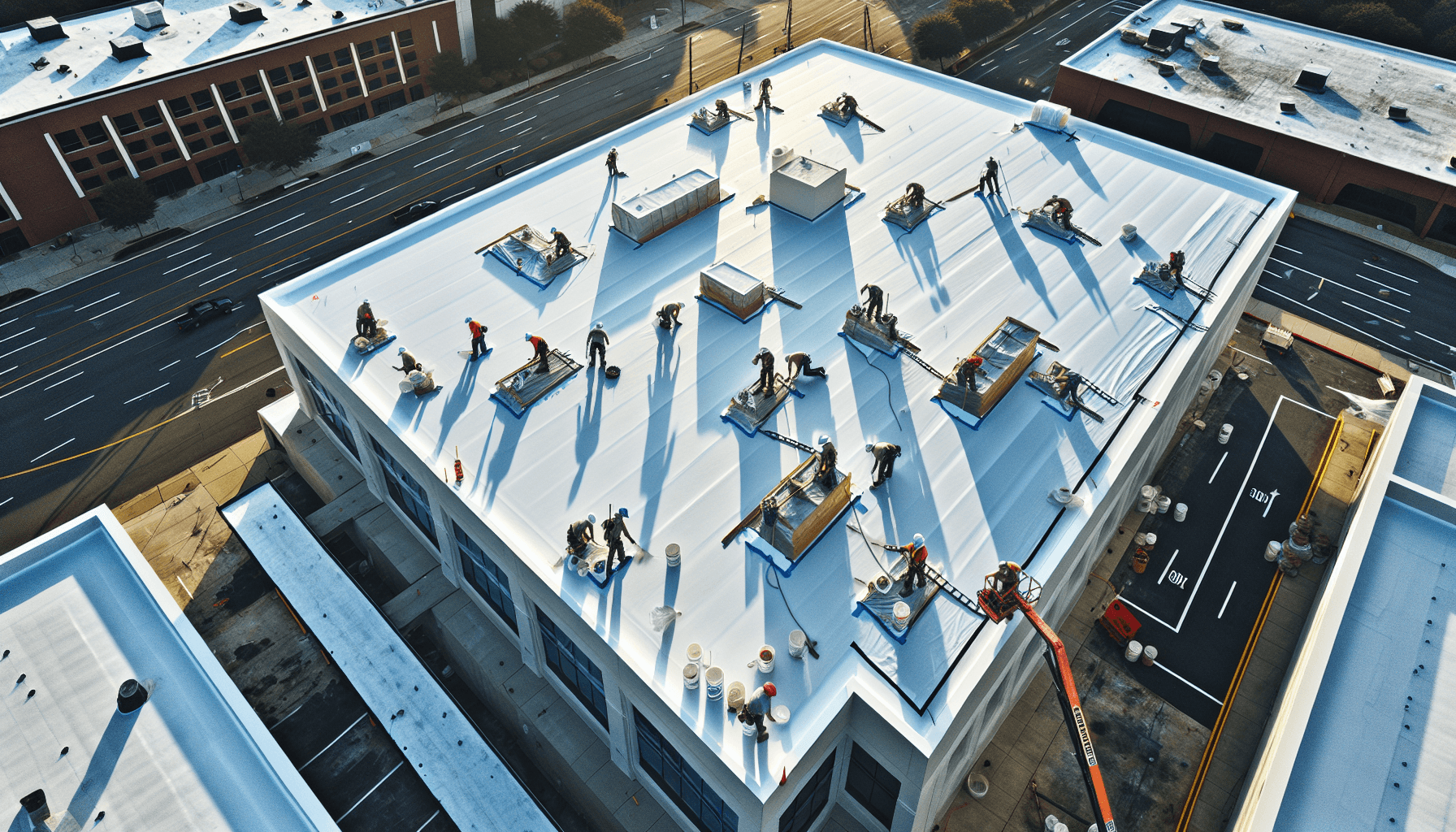
TPO vs EPDM vs PVC Roofing: Which Commercial Membrane is Best for Charlotte NC?
When selecting commercial roofing membranes for buildings in Charlotte, NC, property owners and facility managers face a critical decision between three leading single-ply options: TPO (Thermoplastic Polyolefin), EPDM (Ethylene Propylene Diene Monomer), and PVC (Polyvinyl Chloride). Each membrane offers distinct advantages in performance, cost, and durability that can significantly impact your building's energy efficiency, maintenance requirements, and long-term value.
In Charlotte's humid subtropical climate, where summer temperatures regularly exceed 90°F and annual precipitation averages 41.6 inches, choosing the right roofing membrane is essential for optimal building performance. TPO currently dominates the commercial roofing market with approximately 40% market share, followed by EPDM at 30% and PVC at 25%. Understanding the specific characteristics of each membrane will help you make an informed decision for your commercial construction or commercial upfit project.

What Are TPO, EPDM, and PVC Roofing Membranes?
Single-ply roofing membranes are flexible sheets of synthetic materials installed as the primary waterproof barrier on low-slope commercial roofs. TPO roofing combines polypropylene and ethylene-propylene rubber to create a heat-weldable membrane with excellent reflectivity. EPDM roofing utilizes synthetic rubber compounds to deliver exceptional durability and weather resistance. PVC roofing employs polyvinyl chloride resins with plasticizers to achieve superior chemical resistance and flame retardancy.
These three membrane types have revolutionized commercial roofing in areas like South Charlotte, Uptown, and Lake Norman by offering lightweight, energy-efficient alternatives to traditional built-up roofing systems. Each membrane can be installed using mechanical attachment, fully adhered, or ballasted systems, depending on building requirements and local wind loads.
Charlotte's building codes require wind uplift resistance ratings based on your specific location and building height. Always verify membrane specifications meet or exceed local requirements before making your final selection.
TPO Roofing: Performance and Cost Analysis
TPO Roofing Benefits
TPO roofing delivers exceptional energy efficiency with Solar Reflectance Index (SRI) values typically ranging from 85-95, making it ideal for Charlotte's hot summers. This high reflectivity can reduce cooling costs by 15-20% compared to darker membrane systems. TPO membranes resist UV degradation, ozone exposure, and thermal shock while maintaining flexibility across temperature ranges from -40°F to 180°F.
The heat-welded seam technology in TPO installations creates monolithic waterproof barriers that outperform adhesive-based systems in high-moisture environments like those common in Charlotte and surrounding areas including Huntersville, Matthews, and Mooresville. TPO's resistance to punctures and tears makes it suitable for rooftops with moderate foot traffic and mechanical equipment.
TPO Roofing Limitations
TPO roofing can experience premature aging when exposed to certain chemicals, oils, and solvents commonly found near industrial facilities in areas like Steele Creek or along I-485. The membrane's relatively recent introduction to the market (1990s) means long-term performance data remains limited compared to EPDM systems. Additionally, TPO requires skilled installers to achieve proper heat welding, and poor installation can lead to seam failures.

EPDM Roofing: Durability and Weather Resistance
EPDM Roofing Advantages
EPDM roofing offers proven long-term performance with some installations exceeding 30 years of service life. The synthetic rubber composition provides excellent resistance to extreme weather conditions, including hail storms that occasionally impact the Charlotte region. EPDM maintains flexibility at low temperatures and resists cracking, making it ideal for buildings that experience thermal cycling.
Installation costs for EPDM typically run 10-15% lower than TPO or PVC systems, making it attractive for budget-conscious projects in areas like Rock Hill, SC, or Indian Trail. The membrane's dark color naturally attracts and retains heat, which can benefit buildings requiring thermal mass for temperature stability, though this characteristic may increase cooling costs in Charlotte's climate.
EPDM Roofing Disadvantages
The primary limitation of EPDM roofing in Charlotte applications is its low Solar Reflectance Index (typically 25-30), which can significantly increase cooling costs during hot summer months. Seam integrity depends on adhesive bonding rather than heat welding, creating potential failure points over time. EPDM is also susceptible to punctures from sharp objects and may require more frequent inspections on rooftops with mechanical equipment or high foot traffic.
EPDM's dark surface can reach temperatures exceeding 170°F during Charlotte summers, potentially voiding warranties for rooftop HVAC equipment not designed for high-temperature exposure.
PVC Roofing: Chemical Resistance and Fire Safety
PVC Roofing Benefits
PVC roofing excels in applications requiring superior chemical resistance, making it the preferred choice for brewery construction and restaurant construction projects throughout Charlotte. The membrane's inherent fire resistance meets stringent building codes without additional flame retardant treatments, and heat-welded seams create permanent bonds stronger than the membrane itself.
PVC roofing maintains flexibility across wide temperature ranges while resisting grease, oils, and many industrial chemicals. The light-colored surface provides energy efficiency benefits similar to TPO, with SRI values typically ranging from 85-90. PVC installations often exceed 25-year lifespans when properly maintained, making them cost-effective for long-term building ownership strategies.
PVC Roofing Limitations
PVC roofing represents the highest initial investment among single-ply membranes, with costs potentially 20-30% higher than TPO or EPDM systems. The membrane can become brittle over time when exposed to certain plasticizer-extracting substances, and it may develop stress cracking in areas of high thermal movement. Additionally, PVC requires careful selection of compatible insulation materials to prevent chemical reactions that could compromise membrane performance.
Considering a new commercial roof for your Charlotte property? Our experienced team can help you evaluate TPO, EPDM, and PVC options based on your specific building requirements and budget.
Schedule Your Free Consultation
TPO vs EPDM vs PVC Cost Comparison
Understanding the total cost of ownership for TPO, EPDM, and PVC roofing requires evaluating material costs, installation expenses, energy performance, and maintenance requirements over the membrane's service life. In the Charlotte market, material and installation costs vary based on project size, building complexity, and local contractor availability.
| Membrane Type | Material Cost per sq ft | Installation Cost per sq ft | Total Cost per sq ft |
|---|---|---|---|
| TPO Roofing | $2.50-$4.50 | $3.00-$7.50 | $5.50-$12.00 |
| EPDM Roofing | $2.00-$4.00 | $2.50-$6.00 | $4.50-$10.00 |
| PVC Roofing | $3.00-$6.00 | $3.00-$9.00 | $6.00-$15.00 |
Energy Performance Impact on Operating Costs
Energy performance differences between TPO, EPDM, and PVC roofing can significantly impact long-term operating costs in Charlotte's climate. TPO and PVC membranes typically reduce annual cooling costs by $0.15-$0.30 per square foot compared to EPDM systems. For a 50,000 square foot warehouse construction project, this translates to $7,500-$15,000 in annual energy savings.
These energy savings become particularly important for buildings in high-density commercial areas like South End or Ballantyne, where utility costs remain elevated. Over a 20-year service life, the energy efficiency advantages of reflective membranes can offset their higher initial costs while providing enhanced occupant comfort and HVAC system longevity.
Initial Cost Leaders
EPDM offers the lowest upfront investment, making it attractive for budget-conscious projects or buildings with planned renovations within 15-20 years. TPO provides moderate initial costs with excellent energy performance benefits.
Long-term Value
PVC and TPO systems often deliver superior total cost of ownership despite higher initial investments, thanks to energy savings, extended service life, and reduced maintenance requirements.

Climate Considerations for Charlotte NC Commercial Roofing
Heat and UV Exposure
Charlotte's humid subtropical climate subjects commercial roofing membranes to intense UV radiation during extended summer seasons, with peak heat index values often exceeding 100°F. TPO and PVC membranes provide superior UV resistance compared to EPDM, maintaining structural integrity and appearance over extended exposure periods. The high reflectivity of light-colored TPO and PVC systems also reduces thermal stress on building structures and HVAC equipment.
Buildings in areas with significant urban heat island effects, such as Uptown Charlotte or major commercial corridors along I-277, benefit particularly from reflective membrane systems that help mitigate elevated ambient temperatures and reduce peak cooling loads.
Moisture and Humidity Management
Charlotte's annual precipitation of 41.6 inches, combined with high humidity levels, creates challenging conditions for roofing membrane performance. All three membrane types provide excellent waterproofing when properly installed, but seam integrity becomes critical in high-moisture environments. TPO and PVC heat-welded seams typically outperform EPDM adhesive seams in long-term moisture resistance.
Proper drainage design becomes essential for all membrane types in Charlotte applications, particularly for buildings in low-lying areas near Lake Norman or along creek watersheds where temporary ponding may occur during heavy rainfall events.
Reflective TPO and PVC membranes may qualify for utility rebates from Duke Energy, potentially reducing project costs by $0.10-$0.25 per square foot for qualifying commercial installations in Charlotte.
Installation Methods: TPO vs EPDM vs PVC
Mechanical Attachment Systems
Mechanical attachment represents the most common installation method for commercial roofing projects in Charlotte, providing excellent wind uplift resistance required by local building codes. TPO and PVC membranes utilize heat-welded overlap seams that create continuous waterproof barriers, while EPDM installations rely on adhesive-bonded seams over mechanical fasteners.
Wind load calculations for Charlotte area buildings must account for hurricane-force winds that occasionally impact the region. Mechanical attachment systems provide superior performance in high-wind events, making them preferred for tall buildings or structures in exposed locations like airport facilities or industrial complexes along I-485.
Fully Adhered Installation
Fully adhered membrane installations offer enhanced aesthetic appearance and superior wind uplift resistance for buildings requiring maximum performance standards. This method works well for all three membrane types but requires careful substrate preparation and weather coordination during installation. Fully adhered systems prove particularly valuable for buildings housing sensitive operations or equipment that cannot tolerate roof failures.
Step 1: Structural Assessment
Evaluate existing roof structure, insulation requirements, and drainage systems to determine membrane compatibility and installation methods. Consider wind load requirements specific to your Charlotte location.
Step 2: Membrane Selection
Compare TPO, EPDM, and PVC options based on building use, budget constraints, energy efficiency goals, and long-term ownership plans. Factor in local climate conditions and utility incentive programs.
Step 3: Contractor Qualification
Select experienced commercial roofing contractors with proven track records in your chosen membrane system. Verify licensing, insurance, and manufacturer certifications for warranty protection.
Step 4: Installation Planning
Coordinate installation timing with building operations and Charlotte weather patterns. Plan for proper staging areas and minimize disruption to business activities during membrane installation.
Step 5: Quality Assurance
Implement comprehensive inspection protocols during and after installation. Document all seam testing, fastener patterns, and membrane thickness measurements for warranty compliance.
Maintenance Requirements: TPO vs EPDM vs PVC
Routine Maintenance Protocols
All three membrane types require regular maintenance to achieve maximum service life, but specific requirements vary significantly. TPO roofing benefits from semi-annual inspections focusing on seam integrity and mechanical fastener conditions. EPDM membranes require more frequent seam monitoring due to adhesive-based connections that may deteriorate over time in Charlotte's humid climate.
PVC roofing typically requires the least maintenance intervention due to superior chemical resistance and heat-welded seam integrity. However, all membrane systems benefit from professional thermal drone roof inspections that can identify moisture intrusion, insulation deficiencies, and membrane defects before they become major problems.
Repair Procedures and Costs
Repair procedures for TPO, EPDM, and PVC membranes differ significantly in complexity and cost. TPO and PVC repairs typically involve heat-welding patch materials to existing membranes, creating permanent bonds that match original installation quality. EPDM repairs rely on adhesive-based patching systems that may require more frequent re-treatment in high-moisture environments.
Repair costs generally range from $15-$35 per square foot for minor punctures or seam failures, making preventive maintenance programs essential for controlling long-term expenses. Buildings with rooftop equipment or high foot traffic should budget for annual repair reserves of $0.05-$0.15 per square foot regardless of membrane type.
Establish maintenance agreements with qualified general contractors who understand specific requirements for your membrane type. Regular professional maintenance extends service life by 25-40% compared to reactive repair strategies.
Environmental Impact and Sustainability Considerations
Recyclability and End-of-Life Disposal
Environmental considerations increasingly influence commercial roofing decisions in Charlotte as building owners pursue LEED certification and sustainable operations goals. TPO membranes offer excellent recyclability, with many manufacturers accepting used materials for reprocessing into new products. PVC roofing also provides good recycling options through specialized programs that reclaim and reprocess materials.
EPDM recycling options remain more limited, though the membrane's extended service life helps offset disposal concerns. All three membrane types significantly outperform traditional built-up roofing systems in environmental impact due to reduced material consumption and energy-efficient performance characteristics.
Cool Roof Technology Benefits
TPO and PVC membranes qualify for ENERGY STAR cool roof designations that provide tax incentives and utility rebates in many Charlotte area jurisdictions. These reflective systems reduce urban heat island effects while lowering building energy consumption by 15-25% compared to conventional roofing materials.
As a member of the U.S. Green Building Council (USGBC), We Build understands how membrane selection impacts overall building sustainability ratings. Reflective membrane systems contribute valuable points toward LEED certification while providing measurable energy savings that support long-term operational efficiency goals.
Ready to explore TPO, EPDM, or PVC roofing options for your Charlotte commercial property? Our team provides expert guidance and professional installation services.
Call (980) 471-1745 for Expert ConsultationWarranty Coverage: TPO vs EPDM vs PVC Roofing
Manufacturer Warranty Terms
Warranty coverage represents a critical factor in membrane selection decisions, particularly for long-term building ownership strategies common in Charlotte's stable commercial real estate market. TPO membrane warranties typically range from 15-20 years for material defects, with some manufacturers offering extended coverage for qualified installations and maintenance programs.
EPDM roofing warranties generally provide 15-25 year coverage periods, reflecting the membrane's proven long-term performance history. PVC membranes often command the strongest warranty terms, with 20-30 year material warranties available from major manufacturers, though these extended warranties typically require certified installer networks and specific maintenance protocols.
Installation and System Warranties
System warranties covering both materials and installation typically require certified contractor networks and specific quality control procedures. In the Charlotte market, system warranties range from 10-20 years depending on membrane type and installer qualifications. These comprehensive warranties provide valuable protection for building owners but require careful contractor selection and compliance with maintenance requirements.
When evaluating warranty options, consider the financial stability of manufacturers and contractors, as warranty coverage becomes meaningless if the warranting party cannot honor claims. Established companies with strong local presence, like qualified contractors serving the Charlotte region, provide better long-term warranty security than low-cost providers without regional support infrastructure.
Building Code Compliance in Charlotte NC
Wind Uplift Requirements
Charlotte's location in North Carolina's wind zone requires commercial roofing systems to meet specific uplift resistance standards based on building height, exposure category, and roof zone classifications. All three membrane types can achieve required performance levels when properly designed and installed, but attachment methods and edge details must comply with current building codes.
Recent updates to the North Carolina Building Code have increased wind load requirements for commercial structures, particularly affecting buildings over 60 feet in height or those located in exposed areas near Lake Norman or along major transportation corridors. Membrane selection and installation methods must account for these enhanced requirements to ensure code compliance and warranty validity.
Fire Resistance Standards
Fire resistance requirements vary based on building occupancy classifications common in Charlotte's diverse commercial market. PVC membranes provide inherent flame resistance that often simplifies compliance with stringent fire codes for assembly occupancies or high-risk applications. TPO and EPDM membranes may require additional fire-resistant assemblies or specific installation details to meet code requirements for certain building types.
Always verify current Charlotte building code requirements with qualified professionals before finalizing membrane selection. Code updates occur regularly, and non-compliance can void insurance coverage and create liability issues.
Specific Applications: When to Choose Each Membrane
TPO Roofing Applications
TPO roofing proves ideal for energy-conscious commercial applications where cooling cost reduction represents a primary concern. Office buildings, retail centers, and educational facilities throughout Charlotte benefit from TPO's excellent reflectivity and moderate cost structure. The membrane works particularly well for commercial upfit projects where budget constraints exist but energy efficiency remains important.
Buildings with moderate rooftop activity and standard mechanical equipment loads represent optimal TPO applications. The membrane's puncture resistance and heat-welded seam integrity provide reliable performance for most commercial applications in areas like Ballantyne, University City, and the Airport Corridor.
EPDM Roofing Applications
EPDM roofing excels in applications where initial cost control takes priority over energy efficiency considerations. Warehouse facilities, distribution centers, and industrial buildings with minimal cooling loads can benefit from EPDM's durability and cost-effectiveness. The membrane's proven performance record makes it suitable for buildings where long-term ownership without frequent roof replacement is desired.
Manufacturing facilities and industrial complexes along I-485 or in the Airport Industrial area often specify EPDM for its chemical resistance and ability to withstand mechanical damage from heavy equipment and materials handling operations.
PVC Roofing Applications
PVC roofing represents the premium choice for applications requiring superior chemical resistance, fire safety, or maximum longevity. Restaurants, food processing facilities, and chemical storage buildings benefit from PVC's resistance to grease, oils, and industrial chemicals. Brewery and restaurant construction projects throughout Charlotte frequently specify PVC for its ability to withstand aggressive cleaning chemicals and food-related contaminants.
Healthcare facilities, laboratories, and high-value commercial properties where roof failure consequences are severe often justify PVC's higher initial costs through enhanced performance and extended service life capabilities.
Future Trends in Commercial Membrane Technology
Enhanced Performance Formulations
Ongoing development in TPO, EPDM, and PVC formulations continues to improve performance characteristics while addressing historical limitations. Advanced TPO formulations now offer enhanced chemical resistance and improved aging characteristics that address early generation concerns. EPDM manufacturers are developing lighter-colored formulations that improve energy efficiency while maintaining the membrane's proven durability advantages.
PVC technology advances focus on improving plasticizer retention and developing more sustainable formulations that reduce environmental impact without compromising performance. These improvements benefit Charlotte commercial property owners by extending service life and reducing long-term maintenance requirements across all membrane types.
Integration with Building Technology
Smart building technology integration represents an emerging trend affecting membrane selection decisions. TPO and PVC membranes increasingly serve as platforms for integrated solar installations, cool roof sensors, and building automation systems that monitor roof performance in real-time. These integrated systems provide valuable data for optimizing building energy performance and predicting maintenance requirements.
Advanced thermal drone inspection technologies now provide detailed membrane performance analysis that helps building owners optimize maintenance strategies and extend service life for all membrane types. This technology proves particularly valuable for large commercial properties throughout the Charlotte region where traditional inspection methods prove time-intensive and potentially dangerous.
Key Takeaways
- TPO roofing offers excellent energy efficiency and moderate costs, making it ideal for most Charlotte commercial applications seeking balanced performance and value.
- EPDM roofing provides proven durability and lowest initial costs, suitable for budget-conscious projects where energy efficiency is less critical.
- PVC roofing delivers superior chemical resistance and longest service life, justifying higher costs for demanding applications and premium facilities.
- Charlotte's humid subtropical climate favors reflective membrane systems (TPO/PVC) for energy efficiency, though EPDM remains viable for specific applications.
- Professional installation and regular maintenance prove essential for maximizing service life regardless of membrane type selected.
- Total cost of ownership calculations should include energy performance, maintenance requirements, and warranty coverage beyond initial installation costs.
Making Your Decision: Expert Guidance for Charlotte Commercial Properties
Selecting between TPO, EPDM, and PVC roofing for your Charlotte commercial property requires careful evaluation of multiple factors including building use, budget constraints, energy efficiency goals, and long-term ownership plans. Each membrane type offers distinct advantages that may prove decisive based on your specific requirements and priorities.
Working with experienced general contractors who understand Charlotte's climate conditions, building codes, and local material availability ensures optimal membrane selection and professional installation. Proper contractor selection proves as important as membrane choice in achieving maximum performance and service life from your roofing investment.
At We Build, our team brings over 60 years of combined experience in commercial roofing applications throughout the Charlotte region. We provide comprehensive evaluation services, professional installation, and ongoing maintenance support for all membrane types. Our roof coating services can extend the service life of existing membranes while our thermal imaging capabilities help identify potential issues before they become costly problems.
Don't let membrane selection complexity delay your commercial roofing project. Our experienced team provides expert guidance tailored to Charlotte's unique climate and building requirements.
Start Your Project Consultation TodayFrequently Asked Questions
Which membrane performs best in Charlotte's humid climate?
TPO and PVC membranes generally outperform EPDM in Charlotte's humid subtropical climate due to heat-welded seams that resist moisture infiltration better than adhesive-bonded systems. Their reflective surfaces also reduce cooling loads during extended summer seasons, providing energy savings that offset higher initial costs over the membrane's service life.
How do energy savings compare between TPO, EPDM, and PVC roofing?
TPO and PVC membranes typically reduce cooling costs by 15-25% compared to EPDM systems in Charlotte applications. For a 50,000 square foot building, this translates to $7,500-$15,000 annual savings. Over a 20-year period, these energy savings often justify the higher initial costs of reflective membrane systems.
What factors affect membrane installation costs in Charlotte?
Installation costs vary based on roof complexity, building height, access limitations, and local labor availability. EPDM typically costs $4.50-$10.00 per square foot installed, TPO ranges $5.50-$12.00, and PVC costs $6.00-$15.00. Additional factors include insulation requirements, drainage modifications, and building code compliance measures specific to Charlotte area wind loads.
How long do TPO, EPDM, and PVC membranes last in Charlotte?
Service life expectations vary by membrane type and maintenance quality. TPO membranes typically last 20-30 years, EPDM systems often exceed 25 years, and PVC installations frequently achieve 25-35 year service lives. Charlotte's UV exposure and thermal cycling may reduce these estimates by 10-15% without proper maintenance and quality installation practices.
Which membrane offers the best warranty coverage?
PVC membranes generally provide the strongest warranty terms with 20-30 year material coverage available from major manufacturers. TPO warranties typically range 15-20 years, while EPDM coverage spans 15-25 years. System warranties covering both materials and installation usually provide 10-20 year terms depending on contractor qualifications and maintenance compliance.
Can existing EPDM systems be converted to TPO or PVC?
Membrane conversion is possible but requires careful evaluation of existing substrate conditions, insulation adequacy, and structural capacity. Direct application over EPDM may require separation layers or complete removal depending on adhesive types and membrane condition. Professional assessment ensures compatibility and warranty compliance for conversion projects.
What maintenance differences exist between membrane types?
TPO and PVC systems require similar maintenance focusing on seam integrity and mechanical fastener conditions. EPDM maintenance emphasizes adhesive seam monitoring and may require more frequent interventions in Charlotte's humid climate. All membrane types benefit from semi-annual inspections and professional thermal imaging to identify potential issues early.
Do utility rebates apply to reflective membrane installations?
Duke Energy and other Charlotte area utilities may offer rebates for qualifying cool roof installations. TPO and PVC membranes meeting ENERGY STAR criteria can qualify for rebates ranging $0.10-$0.25 per square foot. Rebate availability changes periodically, so verify current programs before finalizing membrane selection and budget projections.