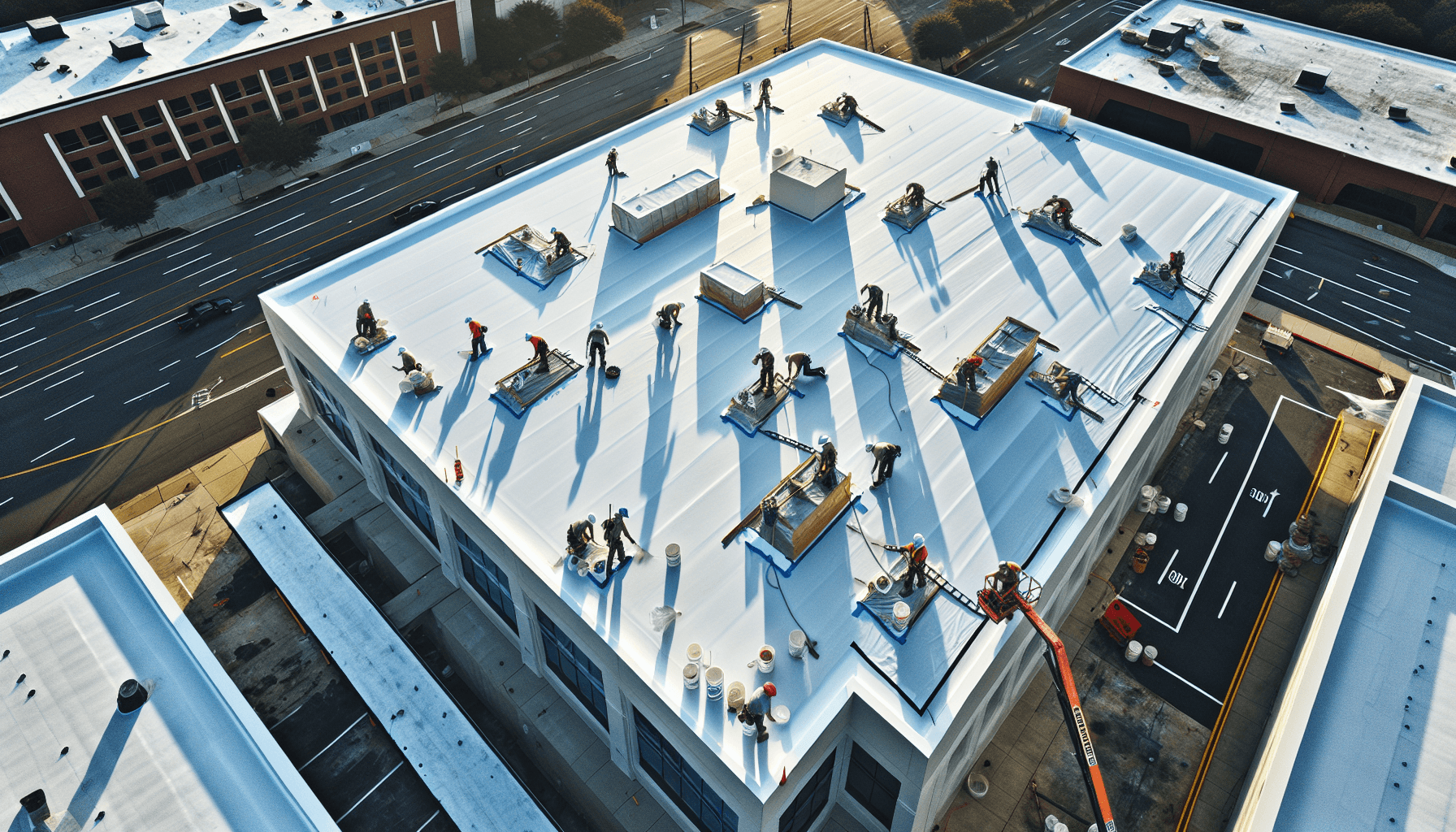
Commercial roof leak detection represents one of the most critical maintenance investments for building owners throughout Charlotte NC and the surrounding metropolitan area. With the average commercial roof leak repair costing between $1,500 and $7,500, and complete roof replacement running $25,000 to $150,000+ depending on square footage, early detection becomes essential to protecting your commercial investment. The challenge lies in identifying these leaks before they cause extensive damage to inventory, equipment, building structure, and business operations.
Traditional leak detection methods often fail to locate the precise source of water infiltration, leading to repeated repair attempts and mounting costs. In Charlotte's climate,where we experience approximately 43 inches of annual rainfall combined with intense summer thunderstorms and occasional winter freeze-thaw cycles,commercial roofs face constant stress. Water can travel significant distances from the actual breach point before manifesting as visible interior damage, making accurate commercial roof leak detection essential for effective repairs.
Modern commercial roof leak detection combines multiple technologies and methodologies to pinpoint water intrusion with precision. From thermal imaging and infrared scanning to moisture meter testing and electronic leak detection, building owners now have access to non-invasive diagnostic tools that identify problems before catastrophic failure occurs. Understanding these detection methods and implementing proactive inspection protocols can save Charlotte businesses tens of thousands of dollars annually while extending roof service life by 5-10 years.
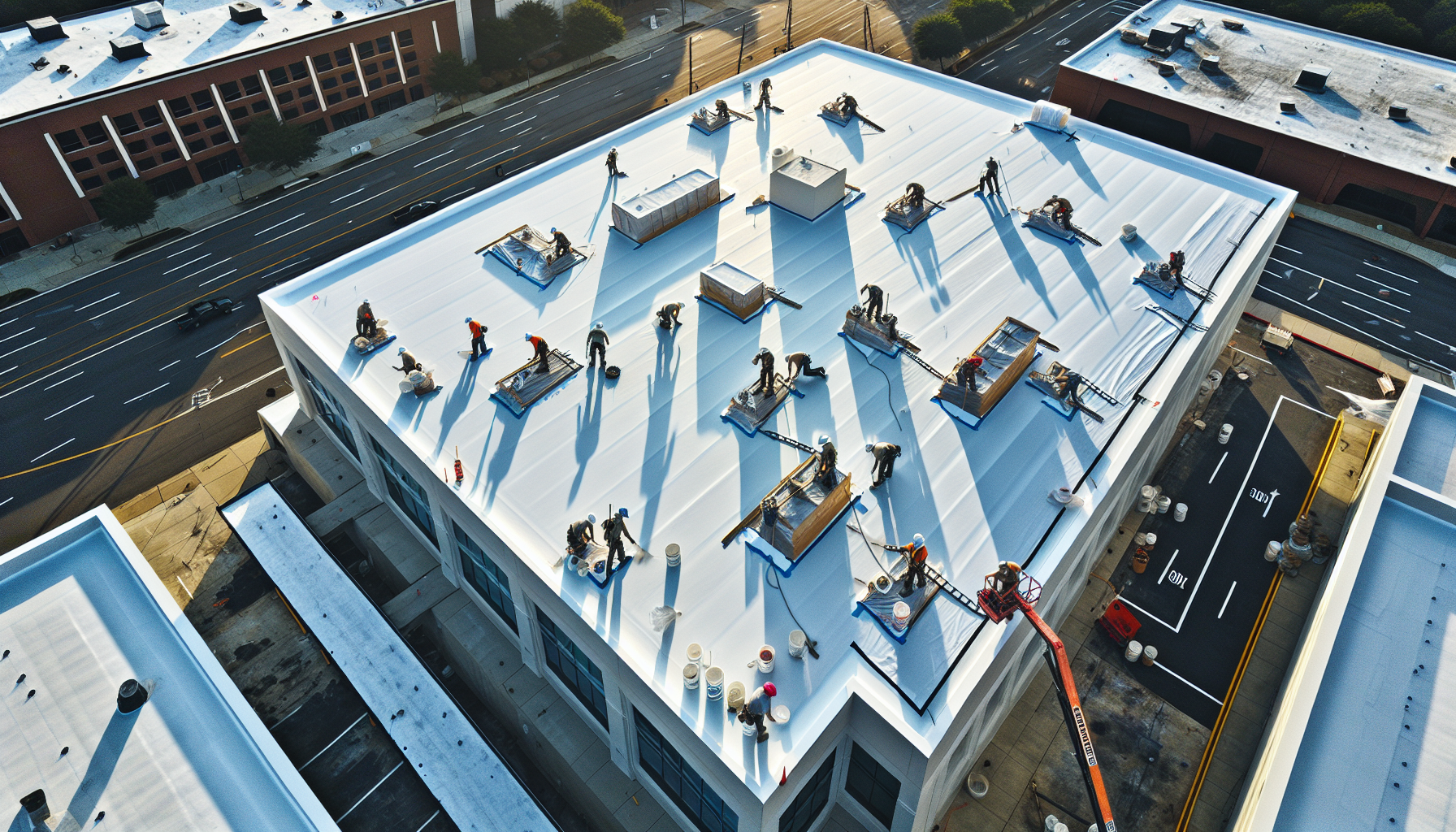
Understanding How Commercial Roof Leaks Develop in Charlotte NC
Commercial roofs in the Charlotte metropolitan area face unique challenges that accelerate leak development. The region's subtropical climate creates a perfect storm of conditions: high humidity levels averaging 72%, temperature fluctuations of 40-50 degrees between winter and summer extremes, and severe weather events including hail, high winds, and heavy rainfall. These factors contribute to several common failure mechanisms that every building owner should understand for effective commercial roof leak detection.
Primary Causes of Commercial Roof Leaks
Membrane deterioration represents the leading cause of commercial roof failures, accounting for approximately 40% of all leak-related issues. TPO, EPDM, and modified bitumen roofing systems typically installed across Charlotte, Huntersville, Matthews, and surrounding areas experience UV degradation, thermal expansion stress, and physical punctures from debris. A single-ply membrane exposed to Charlotte's intense summer sun can lose 20-30% of its tensile strength within 10 years without proper maintenance and coating protection.
Membrane deterioration often begins as subtle chalking or color changes that progress to cracking and splitting. Regular commercial roof leak detection inspections identify these early warning signs before water infiltration occurs.
Flashing failures constitute another 30% of commercial roof leaks detected throughout the Charlotte region. The interface between roofing membranes and vertical surfaces,including parapets, HVAC units, skylights, and penetrations,creates vulnerable transition points. In South Charlotte's Ballantyne area and throughout the Lake Norman region, improperly installed or deteriorated flashings allow water to bypass the primary roofing system entirely. Metal flashings expand and contract at different rates than membrane materials, creating gaps as small as 1/16 inch that permit water entry.
Drainage system inadequacies become particularly problematic during Charlotte's heavy rainfall events and require specialized commercial roof leak detection methods to identify. Commercial flat roofs require minimum slopes of 1/4 inch per foot toward drainage points, but settling buildings, improper initial installation, or debris accumulation can create ponding water. Standing water remaining on a roof surface for more than 48 hours after rainfall accelerates membrane degradation by 200-300% according to industry studies, dramatically reducing expected roof lifespan from 20 years to potentially 6-8 years.
The Hidden Cost of Delayed Commercial Roof Leak Detection
When commercial roof leaks go undetected, the financial impact extends far beyond simple repair costs. Interior water damage to ceiling tiles, insulation, and structural decking adds $3,000-$15,000 to typical repair bills. Business interruption from emergency roof repairs can cost Charlotte retailers and office spaces $500-$2,000 per day in lost productivity. Mold remediation, required when moisture infiltration persists for 48-72 hours, introduces additional expenses ranging from $2,000-$10,000 depending on affected square footage.
Early Detection Benefits
- $1,500-$3,500 typical repair cost
- 1-2 day repair timeline
- No interior damage
- Planned maintenance scheduling
- 95% repair success rate
Late Detection Consequences
- $7,500-$22,000 total damage cost
- 5-10 day emergency repairs
- Interior restoration required
- Business disruption
- 70% repair success rate
The compounding effect of moisture intrusion creates a cascading failure scenario that effective commercial roof leak detection programs prevent. Water entering through a small membrane breach saturates insulation layers, reducing thermal performance by 40-60% and increasing HVAC costs by 15-25% monthly. Wet insulation adds significant weight to roof structures,potentially 10-15 pounds per square foot,creating structural stress that accelerates building deterioration. For warehouse and distribution centers throughout Charlotte's I-77 and I-85 corridors, this additional load can compromise structural integrity and violate North Carolina building codes.
Concerned about potential roof leaks affecting your Charlotte commercial property? Our FAA-certified thermal drone inspections identify moisture intrusion before visible damage occurs.
Get a Free Consultation
Advanced Commercial Roof Leak Detection Technologies
Modern commercial roof leak detection employs sophisticated diagnostic technologies that identify water infiltration with precision impossible using traditional visual inspection alone. These methods allow building owners throughout Charlotte NC, Rock Hill SC, and the Lake Norman region to locate exact failure points, optimize repair scope, and reduce unnecessary roof replacement costs by 30-50%.
Thermal Imaging for Commercial Roof Leak Detection
Infrared thermography represents the gold standard for commercial roof leak detection, utilizing thermal cameras that detect temperature differentials as small as 0.1 degrees Fahrenheit. Wet insulation retains heat differently than dry materials, creating distinct thermal signatures visible through infrared scanning. Professional thermal inspections conducted during specific weather conditions,typically after sunset when roofs cool but saturated areas retain absorbed solar heat,can identify moisture infiltration across 10,000-50,000 square foot commercial roofs in 1-2 hours.
Our thermal drone roof inspection services utilize FAA-certified commercial drone pilots equipped with FLIR thermal imaging cameras capable of detecting temperature variations across entire roof surfaces without requiring ladder access or scaffolding. This technology proves particularly valuable for commercial roof leak detection on buildings in Matthews, Mooresville, and throughout the Charlotte metropolitan area where multi-story structures or complex roof geometries make traditional inspection difficult and dangerous.
Thermal imaging accuracy for commercial roof leak detection reaches 95% when conducted during optimal conditions: temperature differentials exceeding 20°F and 48-72 hours after rainfall events. Charlotte experiences these ideal conditions approximately 200 days annually.
Thermal imaging accuracy depends heavily on environmental conditions and operator expertise for effective commercial roof leak detection. Optimal scanning occurs when temperature differentials exceed 20 degrees between daytime highs and nighttime lows,conditions Charlotte experiences approximately 200 days annually. Professional thermographers analyze thermal patterns against known roof system characteristics, identifying not just moisture presence but estimating affected square footage within 5-10% accuracy. This precision allows contractors to specify exact repair boundaries, reducing material waste and labor costs by 25-40% compared to exploratory demolition methods.
Electronic Leak Detection Systems
Electronic leak detection utilizes low-voltage electrical currents to identify breaches in commercial roofing membranes with pinpoint accuracy, making it an essential tool for comprehensive commercial roof leak detection programs. The ELD process involves creating an electrical circuit between the roofing membrane and conductive decking layer below. When current finds a path through a breach in the waterproofing membrane, specialized equipment identifies the exact location often within a 6-12 inch radius. This technology works exceptionally well on newer commercial roofs throughout Charlotte's Uptown and South End neighborhoods where single-ply membranes cover steel decking.
Step 1: Circuit Creation
Technicians establish electrical connection between membrane surface and conductive deck substrate
Step 2: Voltage Application
Low-voltage current (9-40V) applied safely while building remains occupied during testing
Step 3: Breach Detection
Specialized equipment identifies exact location where current finds path through membrane
Step 4: Precision Mapping
GPS coordinates and digital mapping document each breach location within 6-12 inch accuracy
Two primary ELD methods serve different commercial roof leak detection applications: low-voltage testing for occupied buildings and high-voltage testing for unoccupied structures or during construction. Low-voltage systems operate at 9-40 volts, making them safe for businesses remaining operational during testing. High-voltage systems using 2,000-30,000 volts provide greater sensitivity detecting smaller breaches but require building evacuation during testing. For Charlotte area warehouses, retail centers, and office buildings, low-voltage ELD typically identifies 85-95% of membrane breaches while allowing normal business operations to continue.
ELD proves most effective when combined with thermal imaging for comprehensive commercial roof leak detection. While infrared scanning identifies moisture presence indicating historical or active leaks, electronic leak detection pinpoints current membrane breaches requiring immediate attention. This combination approach, standard practice for commercial construction projects and major renovations, reduces leak investigation time by 60-70% compared to traditional methods while improving repair success rates from approximately 70% to over 95%.
Nuclear Moisture Detection for Commercial Roofs
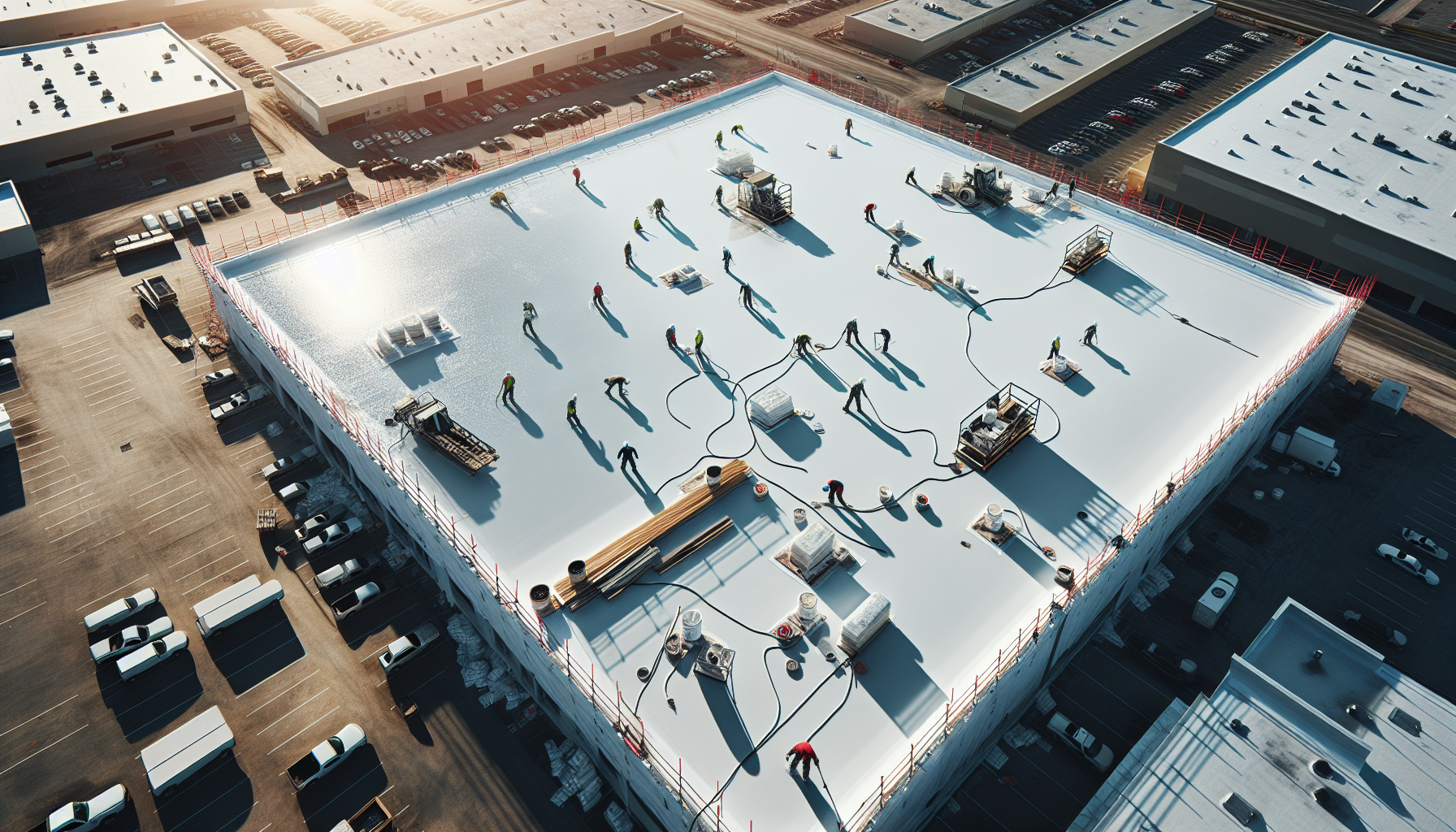
Nuclear moisture meters provide quantitative data essential for accurate commercial roof leak detection, measuring hydrogen atom concentration within roofing assemblies with readings accurate within 1-2% of actual saturation levels. These devices emit low-level radiation,safe for operators and building occupants,that responds differently when encountering water molecules versus dry roofing materials. Nuclear detection excels at measuring moisture depth within multi-layer roof systems, distinguishing between surface condensation and saturated insulation layers requiring replacement.
Capacitance moisture meters offer a non-nuclear alternative for commercial roof leak detection, measuring the electrical capacitance between two probes inserted into roofing materials. Water dramatically increases material capacitance, allowing technicians to map moisture distribution across commercial roofs. This technology works particularly well for built-up roofing systems common in older Charlotte commercial buildings, where multiple bitumen and felt layers create complex assemblies. Capacitance testing identifies moisture trapped between layers that thermal imaging alone might miss, providing critical data for repair scoping and cost estimation.
Nuclear and capacitance moisture testing costs $200-$400 per inspection area but prevents unnecessary roof replacement costing $50,000-$200,000+ when targeted repairs would suffice. The investment typically pays for itself within the first prevented emergency repair.
Both technologies require skilled interpretation for effective commercial roof leak detection. A moisture reading showing 25% saturation might indicate active leaking requiring immediate repair, or residual moisture from a previously repaired leak that simply needs time to dry. Experienced technicians correlate moisture meter data with visual inspection findings, thermal patterns, and building maintenance history to distinguish between scenarios. For building owners throughout Huntersville, Pineville, and surrounding communities, this expertise prevents unnecessary roof replacements that could cost $50,000-$200,000+ when targeted repairs costing $3,000-$15,000 would suffice.
Controlled Water Testing Methods
Controlled flood testing remains one of the most definitive commercial roof leak detection methods for specific roof areas or membrane sections. Technicians create temporary dams around suspected leak locations, typically 10x10 to 20x20 foot sections, then introduce measured water volumes while monitoring interior spaces for infiltration. This direct approach confirms both leak presence and precise location, though it requires careful execution to avoid creating secondary damage or overwhelming drainage systems.
Spray testing offers a less invasive alternative for commercial roof leak detection, applying pressurized water to suspected failure points including membrane seams, penetration flashings, and parapet caps. While less conclusive than flood testing, spray methods quickly verify specific vulnerabilities without the setup time and water volume requirements of flood testing. For Charlotte commercial buildings with complex roof geometries or multiple potential leak sources, sequential spray testing methodically eliminates possibilities until identifying the actual failure point.
Water introduction testing carries inherent risks requiring professional oversight for safe commercial roof leak detection. Improper flood test execution can saturate insulation unnecessarily, create structural loads exceeding design parameters, or introduce water into electrical systems and sensitive equipment areas. Professional general contractors experienced in commercial roofing implement strict protocols including interior protection, water volume monitoring, and immediate drainage procedures that protect building integrity while confirming leak sources definitively.

Implementing a Commercial Roof Leak Detection Program
The most cost-effective approach to commercial roof leak management combines regular inspection protocols with advanced detection technologies deployed at strategic intervals. Building owners throughout the Charlotte region can reduce long-term roofing costs by 40-60% through systematic commercial roof leak detection programs that identify problems at early stages when repairs remain simple and inexpensive.
Recommended Commercial Roof Leak Detection Frequency
Commercial roofs in Charlotte NC require minimum twice-annual professional commercial roof leak detection inspections,typically scheduled in spring and fall to address seasonal damage and prepare for upcoming weather extremes. Spring inspections conducted in March or April identify winter damage from freeze-thaw cycles, ice formation, and debris accumulation. Fall inspections in September or October prepare roofs for winter while addressing summer storm damage and UV degradation from intense solar exposure.
Additional event-driven commercial roof leak detection should follow significant weather incidents. Charlotte experiences severe thunderstorms with 60+ mph winds approximately 8-12 times annually, hailstorms averaging 1-3 yearly, and occasional winter ice events every 2-3 years. Post-storm inspections within 48-72 hours identify acute damage including membrane punctures, flashing displacement, and drainage system debris before minor issues escalate into active leaks. For businesses with valuable inventory or sensitive equipment, this rapid-response approach prevents catastrophic loss from undetected damage.
Thermal imaging inspections provide maximum value for commercial roof leak detection when conducted annually or biannually depending on roof age and condition. Roofs under 10 years old with documented maintenance typically benefit from biannual thermal scans, while older systems or those with leak history warrant annual imaging. The 1-2 hour inspection cost of $500-$1,500 for typical 10,000-25,000 square foot commercial buildings represents minimal investment compared to potential leak damage costs averaging $8,000-$25,000 per incident.
Creating a Tiered Commercial Roof Leak Detection Strategy
Effective commercial roof leak detection integrates multiple technologies and observation methods into cohesive assessment protocols. The optimal strategy combines visual inspection, thermal imaging, moisture testing, and electronic leak detection in a tiered approach that maximizes detection capability while controlling costs. This methodology proves particularly valuable for large commercial properties throughout Charlotte's business corridors including the I-77 corridor through Huntersville and Mooresville, the I-85 corridor through University City and Matthews, and commercial districts throughout Rock Hill SC.
Tier one involves comprehensive visual inspection documenting roof condition through detailed photography, measurement verification of drainage slopes and ponding areas, and assessment of critical details including penetration flashings, membrane seams, and expansion joints. Experienced inspectors identify approximately 60-70% of existing or imminent problems through careful visual examination, establishing baseline documentation for future comparison. This commercial roof leak detection level costs $200-$500 for typical commercial buildings and should occur twice annually minimum.
Tier two deploys thermal imaging when visual inspection identifies concerns or when building owners request comprehensive moisture assessment for commercial roof leak detection. Infrared scanning detects subsurface moisture invisible to visual inspection, identifying problems at earlier stages when repairs cost 50-75% less than addressing advanced failures. Annual thermal inspections for at-risk or aging roof systems provide early warning of developing issues, allowing planned repairs during favorable weather rather than emergency response during active leaking.
Tier three employs electronic leak detection and invasive moisture testing when thermal imaging confirms moisture presence but exact breach locations remain unclear for commercial roof leak detection. This detailed investigation phase, costing $800-$2,500 depending on affected area and complexity, pinpoints specific failure points requiring repair. For commercial upfit projects and major renovations where roof integrity directly impacts interior improvements, this investment ensures comprehensive assessment before committing to repair specifications and contractor selection.
Protect your Charlotte commercial investment with comprehensive roof leak detection and our proven coating restoration services that extend roof life 10-15 years.
Learn About We Coat Services
Charlotte Climate Factors in Commercial Roof Leak Detection
Charlotte's specific climate patterns create unique challenges and opportunities for commercial roof leak detection. Understanding these regional factors helps building owners throughout the metropolitan area optimize inspection timing and detection methodology for maximum effectiveness and cost efficiency in their commercial roof leak detection programs.
Seasonal Weather Impacts on Detection Methods
Summer months from June through September present optimal conditions for thermal imaging commercial roof leak detection in Charlotte. Temperature differentials exceeding 25-30 degrees between afternoon highs (typically 88-95°F) and evening lows (68-75°F) create ideal thermal gradients for identifying moisture within roof assemblies. Wet insulation retains solar heat 3-4 hours longer than dry materials, producing clear thermal signatures during post-sunset scanning windows between 8:00 PM and midnight for effective commercial roof leak detection.
"Charlotte's summer climate provides the perfect conditions for thermal leak detection. The temperature differential between day and night creates clear thermal signatures that make moisture detection incredibly accurate - we can spot problems that would remain hidden for months using traditional methods."
However, summer also brings afternoon thunderstorms averaging 2-3 times weekly from late June through August, which can interfere with commercial roof leak detection scheduling. These storms deposit significant rainfall,often 1-2 inches in 30-60 minutes,that temporarily saturates roof surfaces and masks subsurface moisture patterns. Professional thermal inspections typically schedule 48-72 hours after rainfall events, allowing surface moisture to evaporate while trapped moisture remains detectable. This timing requirement sometimes extends scheduling windows during Charlotte's wet season but ensures accurate moisture mapping for commercial roof leak detection.
Winter months from December through February present commercial roof leak detection challenges including reduced temperature differentials (daytime highs 45-55°F, nighttime lows 28-38°F) and increased cloud cover reducing solar heat gain. Thermal imaging remains viable but requires longer scanning windows and more sophisticated analysis to distinguish moisture patterns from legitimate temperature variations caused by roof system design. Moisture meter testing and electronic leak detection become relatively more valuable during winter months when thermal imaging effectiveness decreases 30-40% compared to summer optimal conditions for commercial roof leak detection.
Regional Precipitation Patterns and Leak Risk
Charlotte receives approximately 43 inches of annual rainfall distributed relatively evenly across seasons, but intensity patterns create distinct leak risk periods requiring strategic commercial roof leak detection timing. Spring months (March-May) deliver 25-30% of annual rainfall including severe thunderstorm events with 2-4 inch hourly rainfall rates. These intense precipitation events stress drainage systems, test flashing details, and expose membrane vulnerabilities that might remain dormant during lighter rainfall.
Building owners throughout South Charlotte areas including Ballantyne, Pineville, and Waxhaw should schedule post-spring commercial roof leak detection protocols to identify storm-related damage before summer heat accelerates deterioration. Similarly, fall tropical systems,while less frequent than coastal areas experience,occasionally deliver 4-8 inches of rainfall over 24-48 hour periods, creating prolonged roof saturation that reveals drainage inadequacies and membrane breaches. Post-storm thermal imaging conducted 3-5 days after major rainfall events identifies moisture intrusion with 90-95% accuracy when environmental conditions align properly for commercial roof leak detection.
The regional freeze-thaw cycle, occurring approximately 20-40 times annually in Charlotte, creates unique leak development mechanisms that affect commercial roof leak detection strategies. Water entering small membrane breaches or flashing gaps expands 9% when freezing, enlarging openings and accelerating failure progression. Morning thermal imaging following overnight freezing temperatures (occurring November-March) can identify these vulnerabilities as ice formation creates distinct thermal signatures different from liquid moisture patterns. This detection window lasts only 2-4 hours after sunrise before ice melts, requiring precise scheduling coordination for effective commercial roof leak detection.
Cost-Benefit Analysis of Commercial Roof Leak Detection
Commercial building owners throughout Charlotte NC frequently question whether investing in advanced commercial roof leak detection technologies delivers adequate return compared to addressing leaks as they become visually apparent. Comprehensive analysis consistently demonstrates that proactive detection programs reduce total roof lifecycle costs by 35-55% while extending service life by 5-10 years beyond typical expectancy.
Financial Comparison: Proactive vs Reactive Detection
Professional thermal imaging commercial roof leak detection for a typical 15,000 square foot commercial roof costs $800-$1,200 including comprehensive reporting and moisture mapping. This investment identifies moisture intrusion affecting 200-500 square feet before visible interior damage occurs. Targeted repair of this identified area costs $1,500-$3,500 including membrane replacement, insulation restoration, and detail correction. Total proactive commercial roof leak detection cost: $2,300-$4,700.
The reactive alternative waits until interior water damage becomes visible,typically after moisture has saturated 500-1,200 square feet of roof assembly and caused ceiling damage, insulation compression, and potential structural deck deterioration. Emergency repair costs escalate to $5,000-$12,000 for roofing work plus $2,000-$8,000 for interior restoration. Business interruption from emergency repairs adds $500-$2,000 in lost productivity. Total reactive cost: $7,500-$22,000.
Commercial roof leak detection programs deliver 70-80% cost savings compared to reactive maintenance. Over a 20-year roof lifespan, proactive programs save Charlotte commercial building owners $15,000-$45,000 while extending roof life 5-10 years.
This 70-80% cost difference compounds across roof service life through effective commercial roof leak detection programs. Commercial roofs typically experience 3-5 leak incidents over 20-year lifespans without proactive detection programs. Implementing annual thermal inspections with targeted repairs reduces incident frequency to 1-2 events while minimizing damage scope. Over 20 years, proactive commercial roof leak detection programs save Charlotte commercial building owners $15,000-$45,000 compared to reactive maintenance approaches,easily justifying annual inspection costs of $800-$1,500.
Insurance and Risk Management Benefits
Commercial property insurance increasingly recognizes the value of documented roof maintenance programs including commercial roof leak detection. Many carriers offer 5-15% premium reductions for buildings with scheduled inspection protocols including thermal imaging leak detection. For typical commercial properties carrying $500,000-$2,000,000 in coverage, this reduction saves $1,500-$6,000 annually,often exceeding the cost of comprehensive commercial roof leak detection programs.
Documentation from professional commercial roof leak detection also strengthens insurance claims when storm damage occurs. Thermal imaging conducted before and after weather events definitively establishes damage timing and causation, reducing claim disputes and accelerating settlement. For Charlotte area businesses affected by severe weather, this documentation proves particularly valuable when differentiating between gradual deterioration (often excluded from coverage) and acute storm damage (typically covered).
Liability protection represents another significant benefit of commercial roof leak detection programs. Water intrusion affecting tenant spaces creates potential liability for commercial building owners when leaks damage tenant property, disrupt business operations, or create unsafe conditions including mold growth or slip hazards. Documented inspection programs demonstrate reasonable care and proactive management, reducing liability exposure. For multi-tenant commercial buildings throughout Matthews, Mooresville, and the broader Charlotte market, this risk mitigation justifies commercial roof leak detection investments independent of direct repair cost savings.
Integrating Leak Detection with Preventive Roof Solutions
Advanced commercial roof leak detection programs deliver maximum value when integrated with preventive roof coating applications that address identified vulnerabilities while extending overall membrane service life. This combined approach,identifying specific problems through sophisticated detection then implementing comprehensive protection,represents best practice for commercial roof asset management throughout the Charlotte region.
Using Detection Data for Coating Optimization
Thermal imaging and moisture testing provide critical data for coating project planning following commercial roof leak detection. Understanding exact moisture distribution allows contractors to specify targeted insulation replacement in affected areas while coating the broader roof surface. This hybrid approach costs 30-50% less than complete roof replacement while achieving comparable service life extension when moisture damage remains limited to 10-20% of total roof area.
Our We Coat roof coating services utilize pre-application thermal imaging to map existing moisture, identify drainage inadequacies requiring correction, and document baseline roof condition for comprehensive commercial roof leak detection. Post-coating thermal scans verify proper application thickness and identify any missed areas requiring touch-up before final inspection. This quality control protocol ensures coating systems achieve rated 10-15 year service life extension rather than failing prematurely due to undiscovered substrate moisture or application deficiencies.
Coating systems also simplify ongoing commercial roof leak detection after installation. White reflective coatings create uniform surface temperatures under solar exposure, making thermal imaging more sensitive to subsurface moisture compared to dark membrane surfaces that create thermal gradients even when dry. Building owners who invest in silicone or acrylic coating systems typically achieve 25-35% improvement in thermal imaging accuracy for subsequent commercial roof leak detection inspections, identifying developing problems earlier when repairs remain simple and inexpensive.
Preventive Protection for Vulnerable Details
Commercial roof leak detection consistently identifies the same vulnerable details across commercial roofs: penetration flashings, membrane seams, parapet walls, and equipment curbs. Rather than addressing these areas only after leaks develop, preventive coating applications can seal these details before breaches occur. Detail coating costs $2-$4 per linear foot for seams and flashings,a fraction of leak repair costs averaging $1,500-$7,500 per incident identified through commercial roof leak detection.
For brewery and restaurant construction projects throughout Charlotte where roof penetrations include extensive HVAC, grease hood exhaust, and utility services, detail coating during construction eliminates the primary leak risk factors that commercial roof leak detection would otherwise identify. Similarly, warehouse and distribution center roofs with numerous skylights, loading dock canopies, and equipment platforms benefit substantially from comprehensive detail coating that addresses multiple potential failure points simultaneously.
The synergy between commercial roof leak detection and coating systems creates a comprehensive roof management approach: detect existing problems through advanced diagnostics, repair identified issues to sound substrate, then apply protective coatings that prevent future leak development while extending membrane service life. This methodology, standard practice for sophisticated commercial property owners throughout Charlotte NC, delivers 20-year roof lifecycles from systems that might otherwise require replacement after 12-15 years of traditional reactive maintenance.
Selecting Qualified Commercial Roof Leak Detection Professionals
The effectiveness of commercial roof leak detection depends entirely on technician expertise and equipment quality. Building owners throughout the Charlotte metropolitan area should evaluate service providers using specific criteria that ensure accurate diagnostics and actionable recommendations rather than expensive guesswork disguised as professional commercial roof leak detection service.
Essential Qualifications for Detection Professionals
Professional thermographers conducting commercial roof leak detection should hold certification from the Infrared Training Center (ITC) or equivalent organization demonstrating competency in thermal imaging principles, equipment operation, and data interpretation. Level II or Level III certification indicates advanced training including roof-specific thermography,critical for distinguishing moisture signatures from legitimate thermal patterns caused by roof system design variations, solar exposure differences, or building use patterns during commercial roof leak detection.
For electronic leak detection services within commercial roof leak detection programs, technicians should demonstrate manufacturer-specific training on the ELD equipment being utilized. Different systems including Vector Mapping, IRLD (infrared leak detection), and capacitance methods require specialized knowledge for accurate operation and result interpretation. Request evidence of formal training and ongoing equipment calibration,ELD systems require annual recalibration to maintain accuracy specifications within acceptable ranges for reliable commercial roof leak detection.
When evaluating commercial roof leak detection providers, verify: ITC Level II+ thermal certification, manufacturer ELD training certificates, FAA Part 107 drone certification (if applicable), $2M+ liability insurance, and professional E&O coverage.
Drone-based thermal imaging requires FAA Part 107 commercial drone pilot certification demonstrating regulatory compliance and safe operational procedures for aerial commercial roof leak detection. Thermal payload operation adds complexity beyond standard aerial photography, requiring pilots familiar with infrared camera operation, data collection protocols, and flight planning that optimizes thermal imaging effectiveness. Our inspection services combine FAA certification with thermal imaging expertise ensuring comprehensive documentation across large commercial roof surfaces throughout Charlotte and surrounding areas for thorough commercial roof leak detection.
Evaluating Commercial Roof Leak Detection Proposals
Comprehensive commercial roof leak detection proposals should specify exact methodologies being employed, weather conditions required for optimal results, and deliverables including thermal imagery, moisture maps, and written reports documenting findings. Be cautious of contractors offering "leak detection" without defining specific technologies or inspection protocols,visual inspection alone rarely identifies problems before expensive damage occurs in professional commercial roof leak detection programs.
Request sample reports demonstrating documentation quality and detail level for commercial roof leak detection services. Professional thermal imaging reports include annotated imagery showing temperature scales, moisture patterns, and specific problem locations correlated to roof plans or building sections. Moisture testing reports should document exact readings, testing locations, and interpreted moisture content percentages rather than subjective "wet/dry" assessments. This documentation proves essential for repair contractor bidding, insurance claims, and future comparison during ongoing roof management following commercial roof leak detection.
Verify insurance coverage including general liability ($2,000,000+ recommended) and professional errors and omissions insurance protecting against misdiagnosis or missed leak sources during commercial roof leak detection. While reputable contractors rarely make significant diagnostic errors, this coverage protects building owners from financial loss should inspection failures result in undetected problems causing substantial damage. For commercial properties throughout South Charlotte, Lake Norman, and surrounding communities, this protection represents prudent risk management for critical building infrastructure during commercial roof leak detection.
Emergency Response and Commercial Roof Leak Detection
Despite proactive commercial roof leak detection programs, emergency leak situations occasionally occur,typically during severe weather events that overwhelm even well-maintained roof systems. Understanding proper emergency response protocols minimizes damage while facilitating permanent repairs once conditions permit, often building on data from previous commercial roof leak detection inspections.
Immediate Emergency Procedures
When active leaking occurs despite regular commercial roof leak detection programs, immediate priorities include protecting interior property and equipment, containing water intrusion, and documenting damage for insurance purposes. Place catch basins under active drips, move sensitive equipment and inventory from affected areas, and photograph water entry points and resulting damage before implementing temporary repairs. This documentation proves critical for insurance claims and helps contractors understand leak extent during permanent repair planning informed by commercial roof leak detection data.
Step 1: Safety Assessment
Evaluate electrical hazards, structural concerns, and slip risks before entering affected areas
Step 2: Damage Documentation
Photograph leak sources, water damage, and affected inventory before moving items
Step 3: Water Containment
Deploy catch basins and protect sensitive equipment from ongoing water intrusion
Step 4: Temporary Protection
Install emergency tarps or patches while avoiding damage to surrounding membrane
Step 5: Professional Contact
Engage roofing contractors within 24-48 hours for permanent repair planning
Temporary leak mitigation using tarps or emergency patch materials should address the leak source without creating secondary damage that could complicate future commercial roof leak detection. Improperly installed tarps create additional problems including wind uplift damage to surrounding membrane, water ponding in tarp valleys, or moisture trapped under tarps accelerating deterioration. Professional emergency services utilize mechanically-attached tarp systems with proper edge sealing and drainage provisions that protect buildings until permanent repairs can proceed,typically $500-$2,000 for temporary protection on commercial buildings compared to $10,000-$50,000+ in potential interior damage from uncontrolled water intrusion.
Contact professional commercial roofing contractors within 24-48 hours of leak discovery even if temporary measures control immediate water entry. Charlotte area weather patterns mean additional rainfall likely follows initial leak events, and temporary repairs rarely withstand multiple weather cycles. Early contractor engagement ensures permanent repairs can proceed during the first available weather window rather than enduring weeks of temporary protection and ongoing damage risk, especially when informed by previous commercial roof leak detection data.
Insurance Claims and Documentation
Commercial property insurance claims for roof leaks require careful documentation including evidence of proper maintenance, timing of damage occurrence, and demonstration that damage resulted from covered perils rather than gradual deterioration,documentation that comprehensive commercial roof leak detection programs provide. Professional leak detection reports conducted before damage events establish baseline roof condition, while post-event inspections document new damage attributable to specific storms or weather incidents.
Thermal imaging proves particularly valuable during insurance investigations following commercial roof leak detection protocols, definitively showing moisture extent and helping differentiate between acute storm damage and pre-existing conditions. Insurance adjusters increasingly rely on infrared documentation when evaluating commercial roof claims, recognizing that thermal data provides objective evidence supporting coverage determinations. Building owners with documented commercial roof leak detection programs typically receive 20-30% higher claim settlements compared to properties without maintenance records, according to insurance industry data.
For significant leak events affecting business operations, consider requesting business interruption coverage evaluation supported by commercial roof leak detection documentation. Many commercial policies include provisions for income loss during repairs or temporary relocation expenses. Professional damage documentation including moisture mapping, affected square footage calculations, and repair timeline estimates supports these claims. Charlotte area businesses affected by roof leaks should engage public adjusters or insurance specialists for claims exceeding $25,000-$50,000 where professional advocacy often recovers 15-40% additional settlement value, especially when supported by comprehensive commercial roof leak detection records.
Key Takeaways
- Commercial roof leak detection saves 70-80% compared to reactive repairs while extending roof life 5-10 years
- Thermal imaging provides 95% accuracy when conducted during optimal Charlotte weather conditions
- Proactive detection programs cost $800-$1,500 annually but prevent $15,000-$45,000 in lifecycle damage costs
- Electronic leak detection pinpoints breaches within 6-12 inches for precise repair targeting
- Insurance premiums reduce 5-15% with documented detection and maintenance programs
- Combined detection and coating systems deliver 20-year roof lifecycles from 12-15 year systems
Ready to implement a comprehensive commercial roof leak detection program for your Charlotte property? Our experienced team combines thermal imaging, electronic detection, and proven repair solutions. Call (980) 471-1745 today.
Schedule Your Free AssessmentFrequently Asked Questions About Commercial Roof Leak Detection
What is commercial roof leak detection?
Commercial roof leak detection uses advanced technologies including thermal imaging, electronic leak detection, and moisture testing to identify water infiltration before visible interior damage occurs. These methods locate exact failure points in roofing membranes with 95% accuracy.
How accurate is thermal imaging for detecting roof leaks?
Thermal imaging achieves 90-95% accuracy when conducted under optimal conditions with temperature differentials exceeding 20°F. In Charlotte's climate, these conditions occur approximately 200 days annually, making thermal detection highly reliable for commercial roofs.
How much does commercial roof leak detection cost?
Professional thermal imaging costs $500-$1,500 for typical commercial buildings, while comprehensive electronic leak detection ranges $800-$2,500. These investments prevent damage costs averaging $8,000-$25,000 per undetected leak incident.
How often should commercial roofs be inspected for leaks?
Commercial roofs require minimum twice-annual visual inspections plus annual thermal imaging for buildings over 10 years old. Post-storm inspections within 48-72 hours identify acute damage before it escalates into active leaking.
Can leak detection identify the exact source of water intrusion?
Yes, electronic leak detection pinpoints membrane breaches within 6-12 inches, while thermal imaging maps moisture distribution across entire roof surfaces. Combined methods achieve 95%+ accuracy in identifying exact failure locations.
What weather conditions are best for roof leak detection?
Optimal conditions include temperature differentials exceeding 20°F between day and night temperatures, conducted 48-72 hours after rainfall to allow surface moisture evaporation while trapped moisture remains detectable through thermal signatures.
Does commercial roof leak detection work on all roof types?
Thermal imaging works on all roof systems, while electronic leak detection requires conductive substrates (steel decking). Membrane types including TPO, EPDM, modified bitumen, and built-up roofing all benefit from comprehensive detection programs.
How do I choose a qualified leak detection contractor?
Look for ITC Level II+ thermal imaging certification, manufacturer training for electronic detection equipment, FAA Part 107 drone certification (if applicable), and minimum $2M liability insurance with professional errors and omissions coverage.