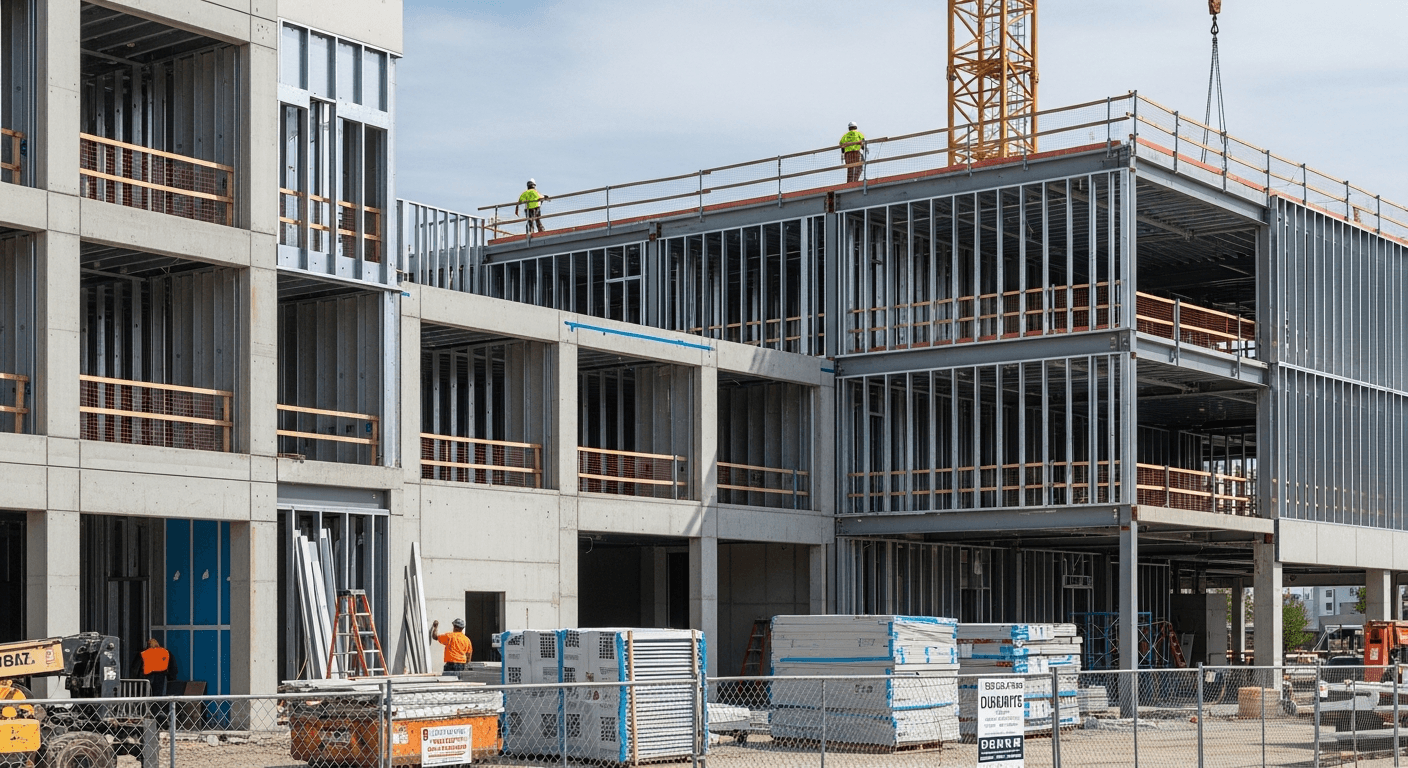
HIPAA Compliant Office Construction: Complete Guide for Charlotte Healthcare Facilities
HIPAA compliant office construction represents one of the most complex and regulated forms of commercial construction in the Charlotte healthcare market. As medical facilities throughout the Charlotte metro area expand to serve a growing population, understanding the intricate requirements of the Health Insurance Portability and Accountability Act (HIPAA) has become essential for healthcare providers, contractors, and facility developers. With HIPAA violation penalties ranging from $100 to $50,000 per violation and maximum annual penalties reaching $1.5 million per violation category, proper construction planning and execution are critical to both regulatory compliance and financial protection.
HIPAA compliant office construction extends far beyond basic privacy considerations, encompassing sophisticated acoustic engineering, controlled access systems, specialized HVAC configurations, and comprehensive security infrastructure. The construction process must protect Protected Health Information (PHI) through carefully designed physical safeguards while creating functional, efficient healthcare environments. This comprehensive guide explores every aspect of HIPAA compliant office construction, from initial planning through final certification, specifically addressing the unique challenges faced by healthcare providers in Charlotte's diverse medical markets.
Understanding HIPAA Physical Safeguard Requirements
HIPAA compliant office construction must address both the Privacy Rule and Security Rule requirements through physical infrastructure design. The Privacy Rule mandates protection of PHI from inadvertent disclosure, while the Security Rule requires specific protections for electronic PHI (ePHI). These regulations translate into concrete construction specifications that affect every aspect of medical facility design, from wall construction to technology infrastructure.
The physical safeguards required by HIPAA include workstation use controls, device and media controls, facility access controls, and assigned security responsibility. In construction terms, this means creating environments where patient information cannot be accidentally observed, overheard, or accessed by unauthorized individuals. For medical facilities in Charlotte's growing healthcare corridors,from Ballantyne's medical district to the emerging facilities in University City,these requirements drive specific design and construction decisions.
Controlled Access Zone Design
HIPAA compliant office construction must incorporate clearly defined access zones with appropriate security measures. Reception areas require separation from clinical spaces through controlled entry points, typically using card access systems with detailed audit trails. Administrative areas handling PHI need additional security layers, including locked storage areas, positioned workstations that prevent unauthorized viewing of computer screens, and secure disposal systems for confidential documents.
Zone 1: Public Areas
Reception and waiting areas with limited access to PHI, requiring visual privacy screens and acoustic treatment to prevent overheard conversations.
Zone 2: Administrative Areas
Business offices and records management spaces requiring card access control and workstation privacy measures.
Zone 3: Clinical Areas
Exam rooms and treatment spaces with maximum security requirements including soundproofing and restricted access protocols.
Zone 4: Server/IT Rooms
High-security spaces housing electronic PHI with environmental controls, backup power, and strict access limitations.
Acoustic Privacy Standards for Medical Office Construction
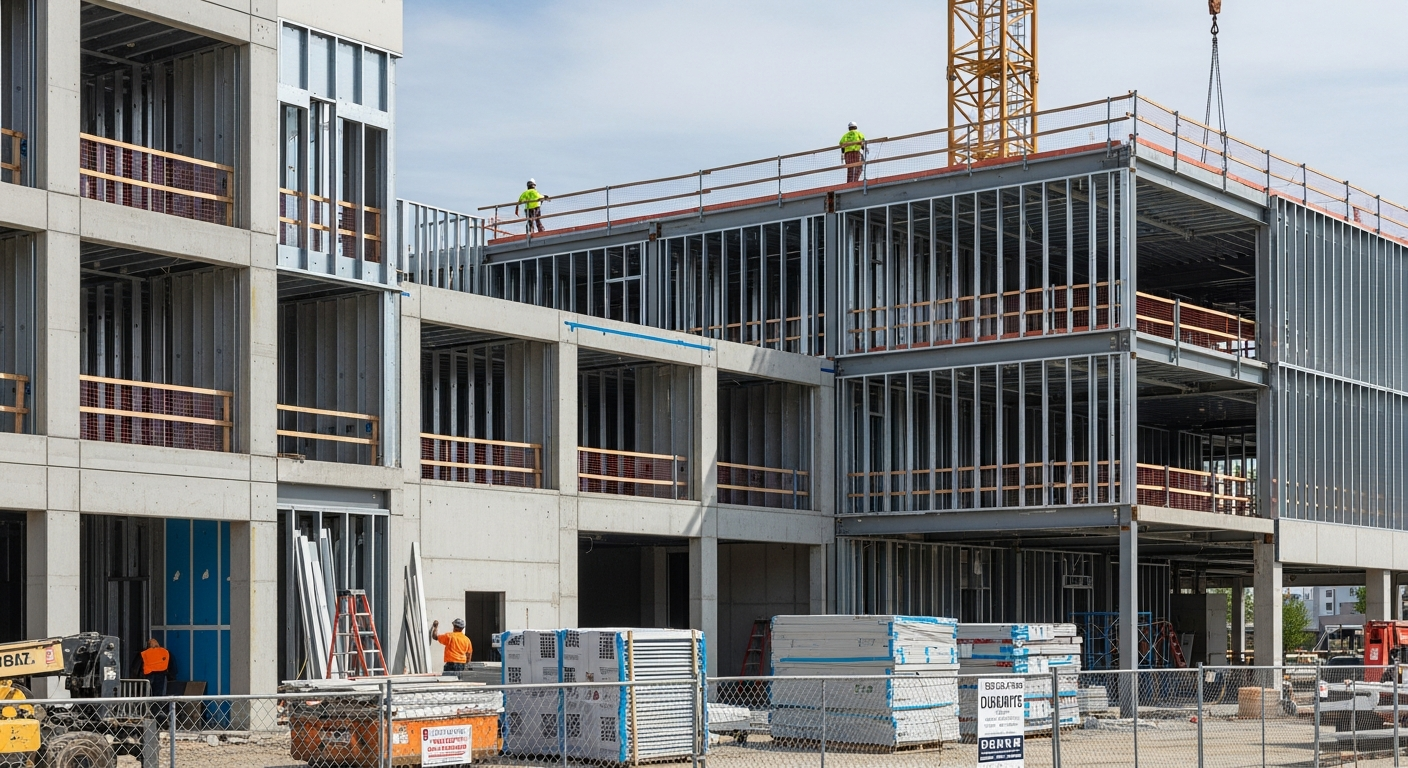
Acoustic privacy represents one of the most critical and frequently overlooked aspects of HIPAA compliant office construction. The HIPAA Privacy Rule explicitly prohibits "incidental disclosure" of PHI, which includes conversations overheard between adjacent spaces. Industry standards recommend achieving Sound Transmission Class (STC) ratings of 45-50 between exam rooms and public corridors, with STC 50-55 between exam rooms and waiting areas where multiple patients may be present.
Achieving these acoustic performance standards requires specific construction techniques that go beyond standard commercial office construction. Our experience with commercial construction projects throughout Charlotte has demonstrated that proper acoustic design must be integrated from the earliest planning stages, as retrofitting inadequate soundproofing can cost 3-5 times more than initial proper construction.
Wall Construction Specifications for Sound Control
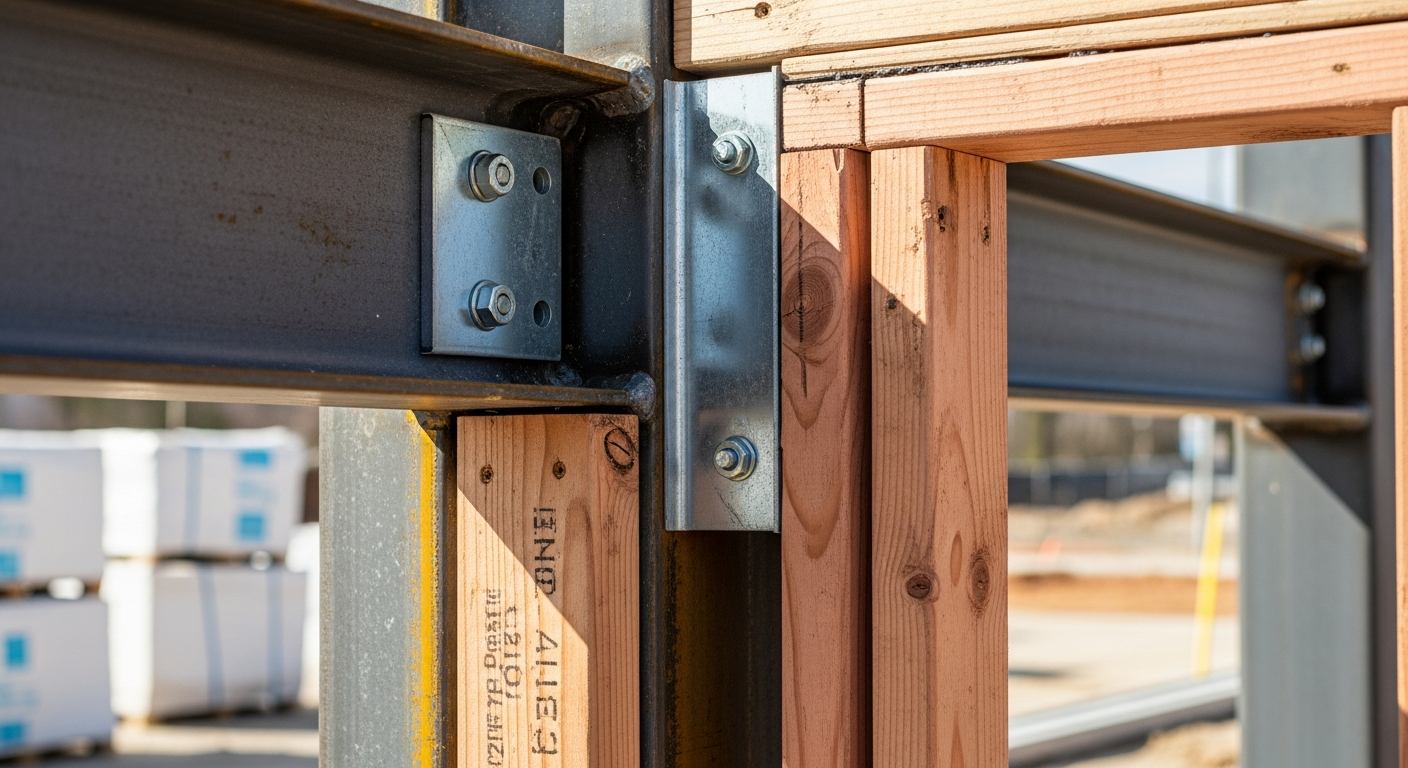
HIPAA compliant office construction requires wall assemblies specifically designed for acoustic performance. Standard metal stud construction with single layers of drywall achieves only STC 35-40, insufficient for medical office privacy requirements. Achieving HIPAA-appropriate sound ratings typically requires:
- Double-Stud Wall Systems: Two separate stud walls with an air gap between them, preventing direct sound transmission through the structural frame. This construction adds approximately 4-6 inches to wall thickness but dramatically improves acoustic performance.
- Staggered-Stud Construction: Single plates with alternating studs supporting opposite sides of the wall, creating a broken thermal and acoustic bridge while using less space than double-wall systems.
- Sound-Rated Insulation: High-density fiberglass or mineral wool insulation (minimum R-13) fills all stud cavities, absorbing sound energy within the wall assembly.
- Multiple Drywall Layers: Type X fire-rated drywall in multiple layers, often with different thicknesses to prevent resonant frequencies that can transmit sound.
- Acoustic Sealant: Special sound-rated caulking at all penetrations, electrical outlets, and wall-to-ceiling connections prevents acoustic flanking paths.
For medical facilities in Matthews and Mint Hill serving growing residential populations, we've found that investing in superior wall construction during initial build-out prevents costly acoustical problems that could lead to HIPAA violations and patient dissatisfaction.
Sound-rated doors are critical components often overlooked in medical construction. Standard hollow-core doors provide virtually no acoustic isolation. Solid-core doors with acoustic seals and automatic door bottoms are essential for achieving HIPAA-compliant privacy levels.
HVAC System Acoustic Considerations
Mechanical systems can create significant acoustic privacy challenges in HIPAA compliant office construction. Ductwork, equipment noise, and air movement can transmit sound between spaces or mask important clinical communications. Proper HVAC design for medical facilities includes:
- Sound-attenuating duct lining in main supply and return ducts to prevent sound transmission through the HVAC system
- Flexible duct connections at all equipment to prevent vibration transmission through rigid connections
- Properly sized equipment operating at lower speeds to minimize noise generation
- Separate HVAC zones for clinical areas to prevent sound transmission through shared ductwork
- White noise generation systems in waiting areas to provide acoustic masking of clinical conversations
Essential Design Elements for HIPAA Compliant Medical Spaces
HIPAA compliant office construction requires careful coordination between architects, contractors, healthcare consultants, and technology specialists. Successful projects balance regulatory compliance with operational efficiency, patient comfort, and staff productivity. Our experience with commercial upfit projects throughout the Charlotte region demonstrates that effective medical facility design shares common principles while accommodating specialty-specific requirements.
Reception Area HIPAA Compliance Design
The reception area represents the first critical checkpoint for HIPAA compliance and often requires the most significant departure from traditional office design. Legacy reception desk designs with open counters and shared sign-in sheets no longer meet privacy standards. Modern HIPAA compliant office construction incorporates:
- Private Check-In Stations: Individual consultation areas with privacy barriers (minimum 18-inch separation) allowing confidential registration and insurance verification. These areas require acoustic treatment and visual barriers preventing other patients from observing the check-in process.
- Financial Discussion Areas: Separate, enclosed spaces for billing conversations, payment plan discussions, and insurance pre-authorization consultations. These areas should be located away from main waiting areas and equipped with locking file storage for financial documents.
- Reception Workstation Design: Computer monitors must be positioned away from patient view with privacy screens on all displays showing PHI. Workstation configuration should prevent "shoulder surfing" while maintaining staff supervision of waiting areas.
- Acoustic Treatment: Sound-absorbing materials including ceiling tiles, wall panels, and flooring systems reduce ambient noise levels and prevent conversations from carrying across the space.
In South Charlotte's Ballantyne and Pineville medical corridors, where multi-specialty practices serve diverse patient populations, reception area design often incorporates separate pediatric and adult waiting areas while maintaining centralized staff oversight and HIPAA compliance throughout the facility.
Clinical Space HIPAA Requirements
Exam rooms and clinical spaces present the most stringent HIPAA compliance challenges, requiring construction that supports both privacy during medical consultations and secure storage of equipment and supplies. Standard clinical space specifications for HIPAA compliant office construction include:
| Element | Specification | HIPAA Purpose |
|---|---|---|
| Room Size | 100-120 sq ft minimum | Adequate space for private consultations |
| Wall Construction | Floor-to-deck, STC 45+ | Prevent sound transmission |
| Door Specification | Solid core, STC 40+ | Acoustic privacy and security |
| Window Treatments | Privacy film required | Prevent external observation |
| Computer Workstation | Wall-mounted with privacy filter | Secure ePHI display |
For specialty practices like behavioral health centers,increasingly common in Charlotte's Steele Creek and Waxhaw communities,clinical spaces often require enhanced soundproofing with STC ratings of 55 or higher to ensure therapeutic conversations remain completely confidential. These enhanced specifications can add $15-25 per square foot to construction costs but are essential for maintaining patient trust and regulatory compliance.
Planning a HIPAA compliant medical office in Charlotte? Our team specializes in healthcare construction and regulatory compliance.
Get a Free Consultation - (980) 471-1745Administrative and Records Management Areas
Behind-the-scenes administrative spaces require equally rigorous HIPAA compliance measures in their construction specifications. Medical records rooms, billing departments, and administrative workstations handle significant volumes of PHI and must incorporate appropriate security and privacy features:
- Server and IT Infrastructure Rooms: Climate-controlled environments (68-72°F, 45-55% relative humidity) with restricted card access, fire suppression systems, and uninterruptible power supplies. These spaces should have minimal shared HVAC ductwork to prevent sound transmission and potential security breaches.
- Medical Records Storage: Fire-rated construction (minimum 1-hour rating), locking file systems, and controlled environmental conditions. Even practices transitioning to electronic records need secure paper record storage and document destruction capabilities.
- Staff Administrative Areas: Open office spaces require computer workstations positioned away from public view, privacy screens on all monitors displaying PHI, and acoustic separation from patient areas.
- Secure Communication Areas: Private spaces for telephone consultations with patients, insurance companies, and other healthcare providers, equipped with sound isolation and secure documentation storage.
Mechanical, Electrical, and Technology Infrastructure
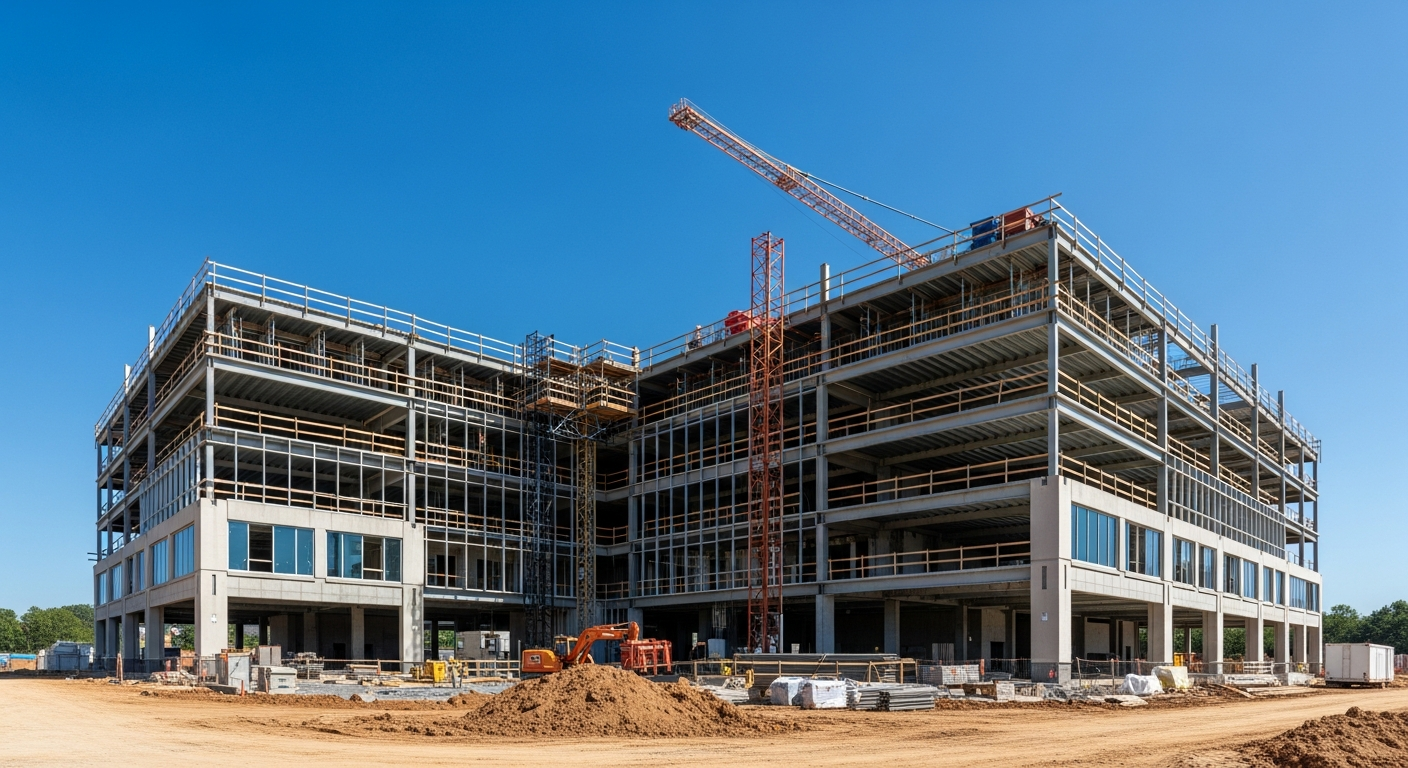
The mechanical and electrical systems in HIPAA compliant office construction serve multiple critical functions: supporting clinical operations, maintaining indoor environmental quality, and protecting patient privacy through proper system design. These systems typically represent 35-45% of total medical office construction costs and require specialized expertise to ensure compliance and operational efficiency.
HVAC System Design for Medical Facilities
HVAC systems in medical facilities must balance infection control requirements, patient comfort, acoustic privacy, and energy efficiency. The FGI Guidelines for Design and Construction of Outpatient Facilities provide baseline ventilation requirements, while HIPAA adds privacy and security considerations:
- Ventilation Rate Requirements: Outpatient exam rooms require minimum 6 air changes per hour (ACH), while procedure rooms may need 15-20 ACH depending on the procedures performed. Adequate outdoor air ventilation (typically 25 CFM per person minimum) maintains indoor air quality.
- Pressure Relationships: Strategic air pressure control prevents odors and potential contaminants from migrating between spaces. Clinical areas often maintain slight positive pressure relative to corridors, while isolation rooms require negative pressure.
- Humidity Control: Charlotte's hot, humid climate requires robust dehumidification capabilities (target 30-60% relative humidity) to prevent mold growth, maintain patient comfort, and protect sensitive medical equipment.
- Acoustic Considerations: HVAC equipment and ductwork can transmit sound between spaces, creating HIPAA privacy violations. Sound-attenuating materials, proper equipment selection, and strategic system layout minimize these issues.
- Filtration Systems: Medical offices typically require MERV 13 or higher filtration to remove airborne particles and potential pathogens, with some specialty areas requiring HEPA filtration.
Our general contractor services include coordination with specialized mechanical engineers familiar with medical facility requirements, ensuring systems meet both HIPAA privacy standards and clinical operational needs throughout the Charlotte metro area.
Medical facilities in mixed-use buildings should have completely separate HVAC systems from adjacent retail or office tenants to prevent cross-contamination and maintain controlled environmental conditions. Shared systems can create privacy and infection control problems.
Electrical Infrastructure for Healthcare Technology
Modern medical practices depend heavily on electronic health record (EHR) systems, diagnostic equipment, and telecommunications infrastructure. HIPAA's Security Rule requires specific protections for electronic PHI, creating detailed electrical and technology infrastructure requirements in medical office construction:
- Power Quality and Reliability: Medical equipment requires clean, stable electrical power. Dedicated electrical circuits, voltage regulation, and uninterruptible power supplies (UPS) protect sensitive equipment from power fluctuations common in commercial buildings.
- Emergency Backup Systems: Critical systems including servers, security equipment, and emergency lighting require backup power through battery systems or emergency generators, depending on facility size and services provided.
- Network Infrastructure: Structured cabling systems supporting both current and future technology needs, with secure networking equipment rooms and encrypted wireless access points where required. Physical security includes locking network cabinets and restricted access to telecommunications rooms.
- Workstation Power: Clinical areas need abundant electrical capacity (minimum 8-12 outlets per exam room) supporting computers, medical devices, mobile equipment charging, and future technology additions.
- Lighting Design: Clinical areas require adjustable task lighting (100-150 foot-candles at examination height) with color rendering index (CRI) above 90 for accurate clinical assessment. Administrative areas need balanced lighting reducing screen glare while providing adequate illumination for documentation.
Security and Access Control Infrastructure
Physical security systems represent a fundamental HIPAA requirement, controlling access to areas containing PHI while maintaining detailed audit trails. HIPAA compliant office construction must incorporate multi-layered security appropriate to the facility's size and risk profile:
Electronic Access Control
Card reader systems at minimum for main entrances, medical records areas, medication storage, and server rooms. Systems must maintain detailed logs showing access times and badge holder identity.
Video Surveillance
Cameras covering entry points, corridors, and storage areas (never in clinical spaces). Digital recording with 30-90 day retention and secure, access-controlled viewing capabilities.
- Intrusion Detection Systems: After-hours monitoring protecting valuable medical equipment and controlled substances, with 24/7 central station monitoring for comprehensive security coverage.
- Visitor Management: Controlled entry protocols for non-patients, including temporary badge systems and escort requirements for access to clinical areas.
- Panic Button Systems: Emergency communication devices in clinical areas allowing staff to summon assistance during medical emergencies or security incidents.
Construction Process Management for HIPAA Projects
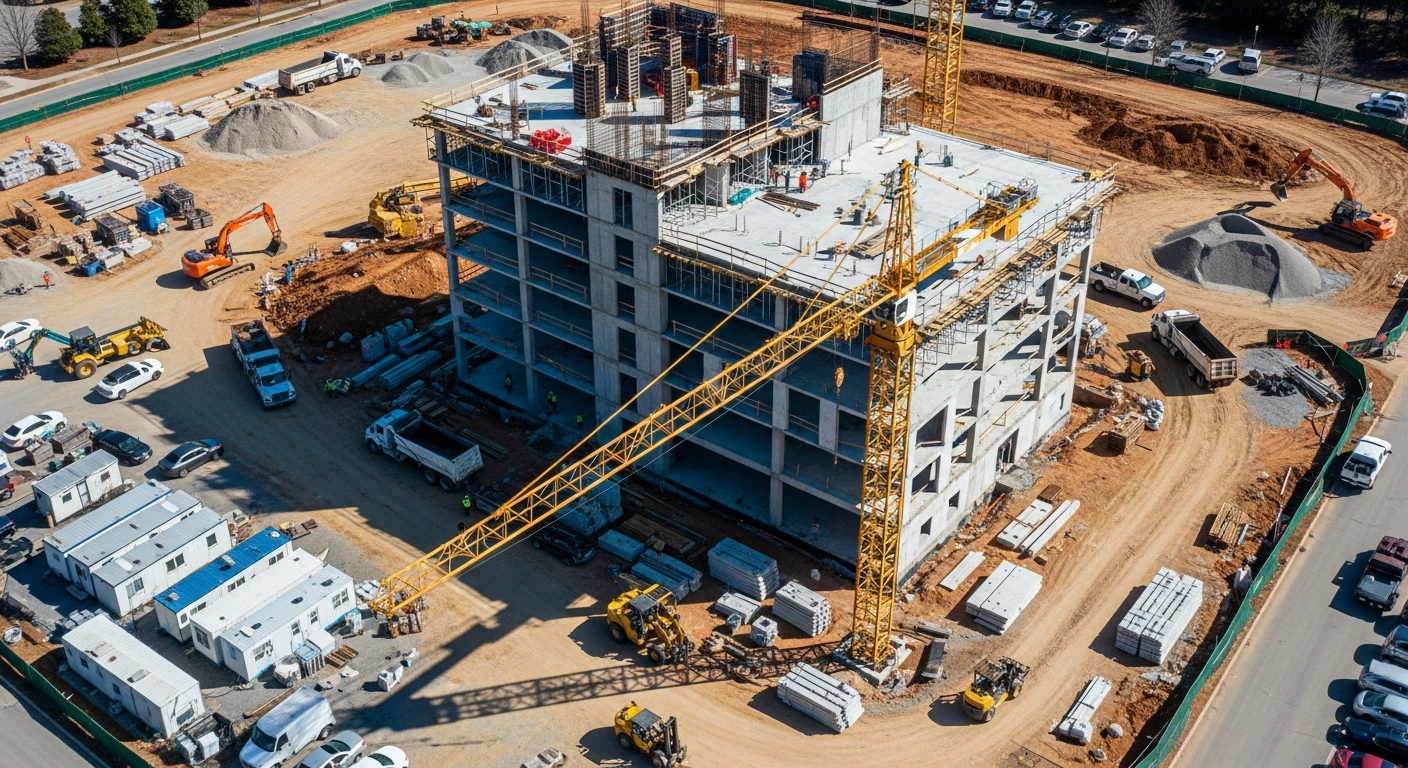
HIPAA compliant office construction requires specialized project management approaches addressing regulatory compliance, infection control during construction, and coordination with medical equipment vendors. The construction process must accommodate the unique challenges of healthcare environments while maintaining project schedules and budgets.
Pre-Construction Planning Phase
Successful HIPAA compliant office construction begins with comprehensive pre-construction planning, typically spanning 10-16 weeks for complex medical facilities. This phase establishes the foundation for regulatory compliance and operational success:
HIPAA Compliance Assessment
Detailed analysis of clinical workflows to identify all points where PHI is created, stored, transmitted, or accessed. This assessment informs design decisions about space layouts, security requirements, and technology infrastructure.
Regulatory Code Compliance Review
Coordination of multiple overlapping building codes including International Building Code (IBC), NFPA 101 Life Safety Code, FGI Guidelines, ADA accessibility standards, and local Charlotte/Mecklenburg County requirements.
Budget Development and Value Engineering
Detailed cost analysis balancing HIPAA compliance requirements with operational budgets. Medical facility construction costs in Charlotte range from $175-$275/sq ft for upfits and $350-$500/sq ft for ground-up construction.
Schedule and Logistics Planning
Construction timeline development accommodating specialty contractor coordination, equipment procurement, inspection sequences, and potential phased occupancy requirements.
For medical facilities in Charlotte's established healthcare corridors,including the Carolinas Medical Center area and Providence Road medical offices,pre-construction planning often involves coordination with existing building management, adjacent tenants, and utility providers to minimize disruption during construction.
Construction Phase HIPAA Considerations
Active construction in healthcare environments presents unique challenges requiring specialized protocols and procedures. HIPAA compliance considerations affect daily construction operations, particularly in renovation projects within occupied medical buildings:
- Construction Isolation Procedures: Physical barriers separating construction zones from occupied clinical areas, including floor-to-deck temporary walls and HVAC isolation preventing dust and contaminants from reaching patient care spaces.
- Personnel Screening Requirements: Background checks for construction workers accessing healthcare facilities, particularly important when working in areas that might contain PHI or controlled substances.
- Infection Control Risk Assessment (ICRA): Required protocol for construction in occupied healthcare facilities, identifying risks from dust, mold, and airborne pathogens while prescribing specific control measures including negative air pressure and HEPA filtration.
- Schedule Coordination: Many medical office renovation projects occur during off-hours (evenings, weekends) to minimize disruption to patient care and prevent potential HIPAA violations from construction personnel in occupied areas.
- Specialty Trade Coordination: Medical facilities require specialized contractors including medical gas installers, lead-lined drywall installers, clean room contractors, and certified equipment installation technicians.
After-hours construction schedules and specialized protocols can increase construction costs by 15-25%, but this investment is often necessary to maintain patient care operations and ensure HIPAA compliance during renovations.
Our experienced team manages every aspect of HIPAA-compliant construction from initial planning through final certification.
Schedule a Project Consultation TodayTesting, Commissioning, and Certification Processes
The final phase of HIPAA compliant office construction involves comprehensive testing and documentation verifying that all systems function as designed and meet regulatory requirements. This process typically requires 2-4 weeks and includes multiple specialized inspections:
- Acoustic Performance Testing: Field verification of Sound Transmission Class ratings using calibrated testing equipment. Testing occurs before final finishes to allow corrections if performance doesn't meet specifications.
- HVAC System Commissioning: Comprehensive verification of ventilation rates, pressure relationships, temperature control, and humidity performance. Testing and Balancing (TAB) reports document actual system performance against design specifications.
- Security System Integration Testing: Verification of card reader functionality, camera coverage, alarm response, and integration between security components. Access control logs must demonstrate proper operation and audit trail capabilities.
- Network Infrastructure Certification: Testing of all network cabling, wireless coverage, and cybersecurity measures. Some facilities require penetration testing to verify network security.
- Fire Life Safety Verification: Testing of fire alarm systems, sprinkler coverage, emergency lighting, and egress path illumination. Charlotte Fire Marshal inspections are required before occupancy certificates are issued.
Specialty Medical Construction Applications
Different medical specialties present unique HIPAA compliance challenges that significantly impact construction specifications and costs. Understanding these specialty requirements is essential for designing appropriate facilities throughout Charlotte's diverse medical community, from primary care practices to highly specialized treatment centers.
Behavioral Health Facility Requirements
Behavioral health practices face perhaps the most stringent HIPAA privacy requirements due to the sensitive nature of mental health treatment and associated social stigma. HIPAA compliant office construction for these facilities requires enhanced privacy measures throughout the facility:
- Superior Acoustic Isolation: Therapy rooms require STC ratings of 55-60 to ensure complete conversation privacy. Enhanced wall construction with double-stud framing and multiple drywall layers achieves these performance levels.
- Separate Access Control: Individual entrances for different patient populations and separate staff access prevent patients from encountering each other, protecting privacy and reducing anxiety.
- Therapy Room Specifications: Individual rooms sized 120-150 square feet accommodate comfortable seating arrangements while maintaining professional boundaries. Soundproofing must prevent any sound transmission to adjacent spaces.
- Group Treatment Spaces: Larger rooms (300-600 square feet) for group therapy sessions require the same acoustic isolation as individual rooms while accommodating multiple participants.
- Crisis Intervention Capabilities: Specialized rooms with safety features including anti-ligature hardware and shatterproof materials while maintaining patient dignity and HIPAA compliance.
- Medication Management Areas: Secure storage for controlled substances and private consultation spaces for medication counseling and monitoring.
Behavioral health facilities in Charlotte's Weddington and Marvin communities often incorporate calming design elements,natural lighting, soothing colors, nature views,while maintaining strict HIPAA compliance in all construction specifications.
Dental Office HIPAA Construction Requirements
Dental practices present unique construction challenges combining HIPAA compliance with specialized equipment infrastructure and infection control requirements. Our commercial upfit expertise includes extensive experience with dental office construction throughout the Charlotte area:
- Operatory Design Standards: Individual treatment rooms (100-120 square feet) with floor-to-deck wall construction and solid-core doors providing appropriate acoustic isolation. Open-bay designs are increasingly avoided due to privacy concerns.
- Radiation Safety Construction: Lead-lined walls (1/16" to 1/8" lead equivalent) for panoramic and cone-beam CT imaging areas, with proper shielding calculations and radiation safety signage.
- Sterilization Center Requirements: Dedicated spaces with distinct "dirty" and "clean" zones, specialized plumbing for evacuation systems, and enhanced ventilation (minimum 10 ACH) for infection control.
- Consultation Areas: Private spaces separate from clinical areas for treatment planning discussions, financial consultations, and insurance coordination meetings.
- Medical Gas Infrastructure: Centralized nitrous oxide and oxygen delivery systems with manifold rooms, emergency shutoff valves, and monitoring alarm systems.
- Specialized Waste Management: Secure storage and disposal systems for biological waste, amalgam recovery, and hazardous materials used in dental procedures.
Medical Imaging Center Construction
Medical imaging centers require the most complex construction specifications in healthcare, combining radiation safety, advanced equipment infrastructure, and stringent HIPAA compliance requirements:
| Imaging Modality | Shielding Requirements | Special Construction |
|---|---|---|
| General Radiography | 1/32" - 1/16" Lead | Standard structural support |
| CT Scanner | 1/8" - 1/4" Lead | Reinforced floor (8,000+ lbs) |
| MRI System | RF Shielding Required | Faraday cage construction |
| Mammography | Specialized Lead Layout | Enhanced patient privacy |
- Structural Reinforcement: Heavy equipment support for CT scanners (4,000-8,000 lbs), MRI systems (10,000-30,000 lbs), and associated infrastructure requiring engineered foundation and structural systems.
- RF Shielding for MRI: Complete Faraday cage construction preventing electromagnetic interference, requiring specialized contractors and testing procedures.
- Mechanical Infrastructure: Enhanced HVAC systems managing significant heat loads from imaging equipment (MRI systems generate 15-25 tons of cooling load), with dedicated electrical services and backup power.
- Patient Privacy Enhancements: Private changing areas with secure storage, separate waiting areas for different imaging types, and acoustic isolation for patient comfort during procedures.
Cost Analysis and Budgeting for HIPAA Compliant Construction
Understanding the financial investment required for HIPAA compliant office construction enables healthcare providers to budget appropriately and make informed decisions about facility development. Construction costs vary significantly based on project scope, specialty requirements, and geographic location within the Charlotte metro area.
Charlotte Area Medical Construction Cost Ranges
Medical office construction costs in the Charlotte market reflect the complexity of HIPAA compliance requirements and specialized building systems. Current market conditions (2024) show the following cost ranges:
| Facility Type | Cost Per Square Foot | Typical Size Range | Total Investment |
|---|---|---|---|
| Primary Care Office | $175-$225 | 3,000-6,000 sq ft | $525,000-$1,350,000 |
| Specialty Medical Office | $225-$275 | 4,000-8,000 sq ft | $900,000-$2,200,000 |
| Dental Practice | $250-$325 | 2,500-4,500 sq ft | $625,000-$1,460,000 |
| Behavioral Health Center | $275-$350 | 3,000-7,000 sq ft | $825,000-$2,450,000 |
| Imaging Center | $400-$550 | 5,000-12,000 sq ft | $2,000,000-$6,600,000 |
| Surgical Center | $500-$700 | 8,000-15,000 sq ft | $4,000,000-$10,500,000 |
These costs include structural modifications, mechanical/electrical/plumbing systems, specialized medical infrastructure, HIPAA compliance features, and standard finishes. Additional costs include medical equipment, furniture, technology systems, and professional fees for architects, engineers, and healthcare consultants.
HIPAA-Specific Cost Components
Certain construction elements required specifically for HIPAA compliance add incremental costs beyond standard commercial office construction. Understanding these components helps healthcare providers budget accurately for compliance requirements:
- Enhanced Acoustic Construction: Achieving STC 45-50 ratings adds $12-20 per square foot compared to standard office partitions. Higher performance levels (STC 55+) required for behavioral health can add $25-35 per square foot.
- Security Infrastructure: Comprehensive access control and video surveillance systems range from $35,000-$85,000 for typical medical offices (5,000-8,000 square feet), equivalent to $7-12 per square foot.
- Specialized Door Hardware: Sound-rated doors with automatic closers and acoustic seals cost $1,500-$3,000 each, compared to $500-$900 for standard commercial doors.
- IT Infrastructure Upgrades: Secure networking, server equipment, and encrypted wireless systems add $20,000-$50,000 for typical practices, not including EHR software licensing or user devices.
- HVAC System Enhancements: Medical-grade ventilation with enhanced filtration and controls adds 25-35% to standard HVAC costs, with additional requirements for specialty areas like procedure rooms.
Healthcare providers should budget an additional 20-30% above standard office construction costs for HIPAA compliance features. Specialty practices may require 40-60% additional investment for enhanced privacy and security measures.
Value Engineering Strategies for Medical Construction
Healthcare providers can optimize construction budgets while maintaining full HIPAA compliance through strategic value engineering and careful planning decisions:
- Standardized Design Elements: Repeating exam room layouts and finish selections reduces design complexity, speeds construction, and minimizes material waste.
- Phased Construction Approach: Building in phases allows partial practice operation during construction, generating revenue to support project financing and cash flow.
- Multi-Tenant Medical Buildings: Selecting purpose-built medical office space with existing infrastructure (medical gas, enhanced electrical, appropriate HVAC) reduces upfit costs compared to converting general office space.
- Energy Efficiency Integration: LED lighting systems, high-efficiency HVAC equipment, and smart building controls reduce long-term operating costs while meeting current code requirements.
- Future Flexibility Planning: Designing adaptable spaces with moveable partitions and flexible infrastructure accommodates practice growth and specialty changes without major reconstruction.
Regional Market Considerations for Charlotte Healthcare Construction
Charlotte's diverse geographic regions and development patterns create specific opportunities and challenges for HIPAA compliant office construction. Understanding these regional characteristics helps healthcare providers select optimal locations and plan appropriate facility investments.
South Charlotte Medical Corridor Development
The South Charlotte area, including Ballantyne, Pineville, and Waxhaw, represents Charlotte's premier medical market with established healthcare infrastructure and affluent patient demographics. This region features:
- Purpose-built medical office buildings with advanced infrastructure including medical gas systems, enhanced electrical capacity, and appropriate HVAC specifications for healthcare use
- Proximity to major hospital systems including Novant Health Ballantyne Medical Center and Atrium Health Pineville, creating referral opportunities and shared service potential
- Higher patient expectations for facility quality and amenities, driving construction specifications toward premium finishes and advanced technology integration
- Competitive real estate market with Class A medical office space leasing at $32-38 per square foot triple net, requiring careful financial planning for new practices
- Strong demand for specialty practices including dermatology, plastic surgery, orthopedics, and concierge medicine serving affluent demographics
Construction projects in this market often involve upfitting existing medical office space in established buildings, with typical project sizes ranging from 2,500-6,000 square feet for single-specialty practices and 8,000-15,000 square feet for multi-specialty groups.
Lake Norman Area Healthcare Expansion
The Lake Norman corridor, including Huntersville, Cornelius, Davidson, and Mooresville, serves a rapidly growing residential population with increasing demand for local healthcare access:
- Mixed development patterns including single-story professional buildings, multi-story mixed-use developments, and expanding hospital campus facilities
- Growing presence of primary care, pediatrics, urgent care, and family medicine practices serving residential communities
- Construction costs typically 8-12% lower than South Charlotte due to land availability and development costs, creating opportunities for new practice establishment
- Increasing medical campus development near Novant Health Huntersville Medical Center and Lake Norman Regional Medical Center
- Significant opportunity for ground-up medical office construction on available land parcels along I-77 corridor
East Charlotte Healthcare Development
The Matthews, Mint Hill, Indian Trail, and Stallings area represents an underserved healthcare market with significant growth potential and unique construction challenges:
Market Opportunities
Growing residential population creating demand for primary care, pediatrics, and urgent care services. Lower construction costs create opportunities for new practice development.
Construction Challenges
Limited purpose-built medical infrastructure requiring conversion of retail and office space to meet HIPAA standards. Creative design solutions needed for existing building constraints.
- Retail-to-medical conversions requiring extensive renovation to achieve HIPAA compliance, including acoustic upgrades, security systems, and specialized HVAC
- Mixed commercial developments incorporating medical offices alongside retail and professional services, requiring careful planning for patient privacy and access
- Construction costs 12-18% below South Charlotte levels, but potential additional costs for infrastructure upgrades in converted buildings
- Growing medical presence around Novant Health Matthews Medical Center and Presbyterian Matthews creating specialty practice opportunities
Urban Core and Uptown Medical Development
Charlotte's urban center, including Uptown, South End, NoDa, and University City, presents unique challenges and opportunities for medical facility development:
- High-rise medical office space in mixed-use towers requiring coordination with building management and adjacent commercial tenants
- Limited construction staging and material delivery access often requiring night and weekend work schedules, increasing construction costs by 15-25%
- Strong demand for occupational health, urgent care, walk-in clinics, and specialty practices serving urban workforce
- Emphasis on sustainable construction and LEED certification aligning with urban development goals and environmental consciousness
- Public transportation access and walkable locations appealing to patients without personal vehicles
Technology Integration in HIPAA Compliant Construction
Modern HIPAA compliant office construction must accommodate rapidly evolving healthcare technology while maintaining security and privacy standards. Technology integration affects construction planning from initial design through ongoing facility operations, requiring careful coordination between construction teams and healthcare IT specialists.
Electronic Health Record Infrastructure Requirements
Electronic Health Record (EHR) systems form the backbone of modern medical practice operations, requiring robust technology infrastructure integrated into the facility construction. HIPAA compliant office construction must support these systems through:
- Network Infrastructure: Cat 6A or fiber optic cabling throughout clinical and administrative areas supporting current and future bandwidth requirements. Redundant pathways prevent single points of failure affecting critical systems.
- Server Environment Design: Dedicated IT rooms with environmental controls (temperature, humidity, air filtration), fire suppression systems, and backup power capabilities. These spaces require controlled access and monitoring systems.
- Workstation Integration: Wall-mounted or integrated computer stations in each clinical space with privacy screens, secure mounting systems, and adequate electrical capacity for devices and peripherals.
- Wireless Network Design: Comprehensive WiFi coverage using enterprise-grade equipment with WPA3 encryption, guest network isolation, and capacity for mobile devices used by staff and patients.
- Backup and Disaster Recovery: Infrastructure supporting data backup systems, whether local storage arrays or cloud connectivity, with appropriate security measures for transmitted PHI.
Telehealth and Remote Care Integration
The expansion of telehealth services during recent years has permanently changed healthcare delivery models, requiring HIPAA compliant office construction to accommodate virtual care capabilities:
- Dedicated telehealth consultation rooms with professional backgrounds, optimal lighting for video calls, and acoustic isolation preventing conversation from being overheard
- Enhanced internet connectivity with redundant service providers ensuring reliable video consultation capabilities
- Mobile device charging stations and storage for tablets and smartphones used in patient care
- Flexible space design allowing rooms to transition between in-person and virtual use as patient preferences evolve
- Integration with building security systems allowing remote access control for after-hours telehealth consultations
Medical Equipment Integration Planning
Modern medical equipment often requires specialized infrastructure that must be integrated during construction rather than added afterward. Planning considerations include:
- Electrical Requirements: Dedicated circuits, isolated ground systems, and voltage regulation for sensitive diagnostic equipment. Many devices require 208V or 240V power with specific amperage requirements.
- Data Connectivity: Network connections for equipment that transmits data to EHR systems, PACS (Picture Archiving and Communication Systems), or laboratory information systems.
- Structural Support: Reinforcement for heavy equipment including digital radiography systems, dental CT scanners, and specialized treatment devices.
- Environmental Controls: Temperature and humidity requirements for equipment operation and storage, often more stringent than human comfort requirements.
- Safety Systems: Emergency shutoffs, ventilation requirements, and radiation safety measures for equipment that poses potential hazards.
Ready to begin your HIPAA compliant medical office construction project? Our team brings extensive healthcare construction experience to every project.
Contact We Build TodayRegulatory Compliance and Inspection Processes
HIPAA compliant office construction must navigate multiple regulatory frameworks and inspection processes to achieve occupancy approval and operational certification. Understanding these requirements early in the project timeline prevents delays and ensures comprehensive compliance with all applicable standards.
Building Code Compliance for Medical Facilities
Medical offices must comply with enhanced building code requirements beyond standard commercial construction. These regulations address fire safety, accessibility, structural design, and emergency egress specific to healthcare occupancies:
- Occupancy Classification: Medical offices typically fall under Business (B) or Institutional (I-2) occupancy classifications, each with specific requirements for construction methods, fire safety systems, and emergency planning.
- Fire Safety Systems: Enhanced fire alarm and suppression systems including voice evacuation systems, area of refuge provisions, and emergency power for critical systems. Sprinkler system design must accommodate medical equipment and patient mobility limitations.
- Accessibility Compliance: Full ADA compliance including examination tables, scales, and diagnostic equipment accessibility. Door hardware, counter heights, and restroom facilities must meet enhanced accessibility standards.
- Emergency Egress Planning: Evacuation route design considering patients with mobility limitations, medical equipment, and potential need for assisted evacuation procedures.
- Structural Requirements: Enhanced structural design for medical equipment loads, vibration isolation for sensitive equipment, and seismic considerations for equipment anchoring.
Health Department and Licensing Inspections
Medical facilities require approval from multiple regulatory agencies beyond standard building permits. These inspections verify compliance with health and safety standards specific to healthcare operations:
Mecklenburg County Health Department
Inspection of infection control measures, waste management systems, water quality, and general sanitation compliance for healthcare operations.
North Carolina Medical Board
Facility inspection for practices requiring specific medical licensure, including surgical centers, pain management clinics, and practices dispensing medications.
DEA Registration Compliance
Security measures for practices storing or dispensing controlled substances, including physical security, access control, and storage specifications.
Accrediting Organization Reviews
Inspections from organizations like Joint Commission, AAAHC, or specialty-specific accrediting bodies requiring comprehensive facility and operational compliance.
Final Certification and Occupancy Process
Achieving occupancy approval for medical facilities involves coordinated inspections and certifications from multiple agencies. Our project management experience ensures all requirements are met efficiently:
- Building department final inspection covering structural, fire safety, electrical, and plumbing systems compliance
- Fire marshal inspection of fire safety systems, emergency egress, and evacuation procedures
- Health department approval of clinical areas, sterilization facilities, and waste management systems
- Specialty equipment commissioning including medical gas systems, imaging equipment, and laboratory instruments
- Network security testing and HIPAA compliance verification for electronic systems
- Staff training on facility systems including emergency procedures, security protocols, and equipment operation
Key Takeaways for HIPAA Compliant Office Construction
- HIPAA compliance requires specialized construction techniques including enhanced soundproofing (STC 45-50), controlled access systems, and acoustic privacy measures throughout medical facilities
- Construction costs for HIPAA-compliant medical offices in Charlotte range from $175-$275 per square foot for upfits and $350-$500 for ground-up construction, with specialty facilities requiring higher investments
- Acoustic privacy represents the most critical and frequently overlooked aspect of HIPAA compliance, requiring floor-to-deck wall construction, sound-rated doors, and specialized HVAC design
- Technology infrastructure must support Electronic Health Records, telehealth capabilities, and medical equipment integration while maintaining cybersecurity and patient privacy standards
- Regional market considerations affect construction approaches, with South Charlotte requiring premium specifications while East Charlotte offers cost advantages for practice development
- Pre-construction planning spanning 10-16 weeks ensures regulatory compliance, accurate budgeting, and coordination with specialized healthcare contractors and equipment vendors
Frequently Asked Questions About HIPAA Compliant Office Construction
What are the minimum soundproofing requirements for HIPAA compliance in medical offices?
HIPAA-compliant medical offices should achieve Sound Transmission Class (STC) ratings of 45-50 between exam rooms and public corridors, with STC 50-55 between exam rooms and waiting areas. Behavioral health facilities often require enhanced ratings of STC 55-60 for therapy rooms to ensure complete conversation privacy and regulatory compliance.
How much does HIPAA-compliant construction cost compared to standard office construction?
HIPAA-compliant medical office construction typically costs 20-30% more than standard commercial office construction due to enhanced soundproofing, specialized HVAC systems, security infrastructure, and regulatory compliance requirements. In Charlotte, medical office upfits range from $175-$275 per square foot compared to $125-$175 for standard office space.
What security systems are required for HIPAA compliance in medical facilities?
HIPAA requires physical safeguards including controlled access to areas containing PHI. Medical facilities typically need card access systems for sensitive areas, video surveillance of entry points and storage areas (never clinical spaces), and detailed audit trails showing who accessed what areas and when. Server rooms require additional security measures including environmental monitoring and backup power systems.
Can existing office space be converted to meet HIPAA compliance standards?
Existing office space can be converted to HIPAA-compliant medical facilities, but this often requires extensive renovation including new wall construction for acoustic privacy, HVAC system upgrades for proper ventilation and humidity control, enhanced electrical systems for medical equipment, and complete security system installation. Conversion costs can approach new construction costs depending on existing conditions.
What are the HVAC requirements for medical offices under HIPAA?
Medical offices require enhanced HVAC systems providing minimum 6 air changes per hour in exam rooms, humidity control (30-60% relative humidity), appropriate filtration (MERV 13 or higher), and acoustic isolation preventing sound transmission between spaces. Charlotte's climate requires robust dehumidification capabilities, and medical facilities should have separate HVAC systems from adjacent non-medical tenants.
How long does HIPAA-compliant medical office construction typically take?
Medical office upfit projects (5,000-15,000 square feet) typically require 6-10 months from design through occupancy, including 10-16 weeks for pre-construction planning and permitting. Ground-up medical construction takes 12-18 months depending on size and complexity. Specialty facilities like imaging centers or surgical suites may require additional time for specialized equipment installation and testing.
What inspections are required for medical office construction in Charlotte?
Medical facilities require standard building department inspections plus health department approval, fire marshal inspection, and potential licensing board reviews depending on practice type. Specialty equipment may require additional inspections from manufacturers, medical gas certification, and radiation safety approval for imaging equipment. Final occupancy typically requires coordination among multiple agencies.
Are there specific requirements for medical records storage in new construction?
Medical records storage areas must have controlled access, fire-rated construction (typically 1-hour minimum), climate control to prevent deterioration, and secure disposal capabilities. Even practices using Electronic Health Records need secure physical storage for some documents and should plan for secure document destruction equipment and procedures.