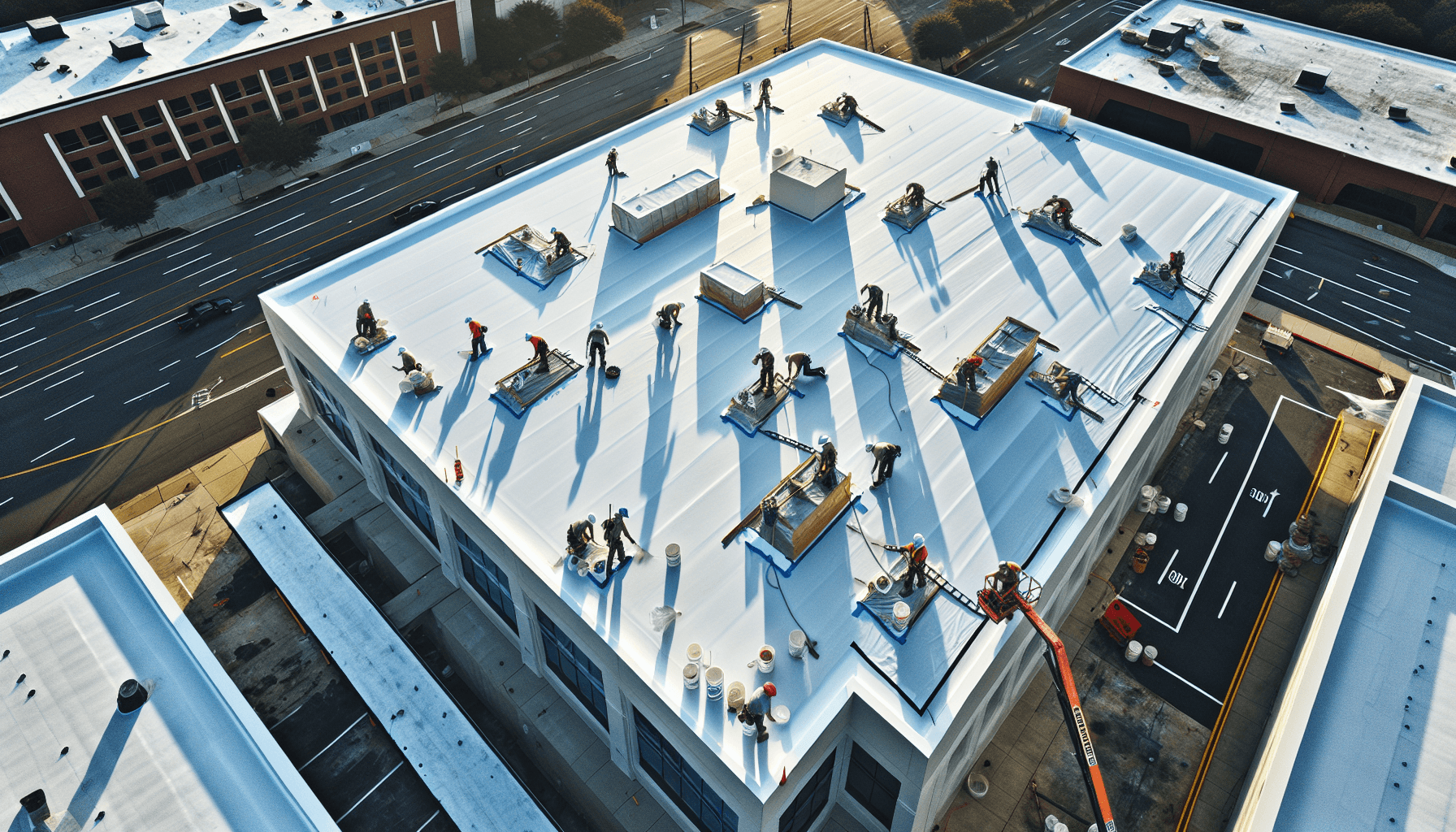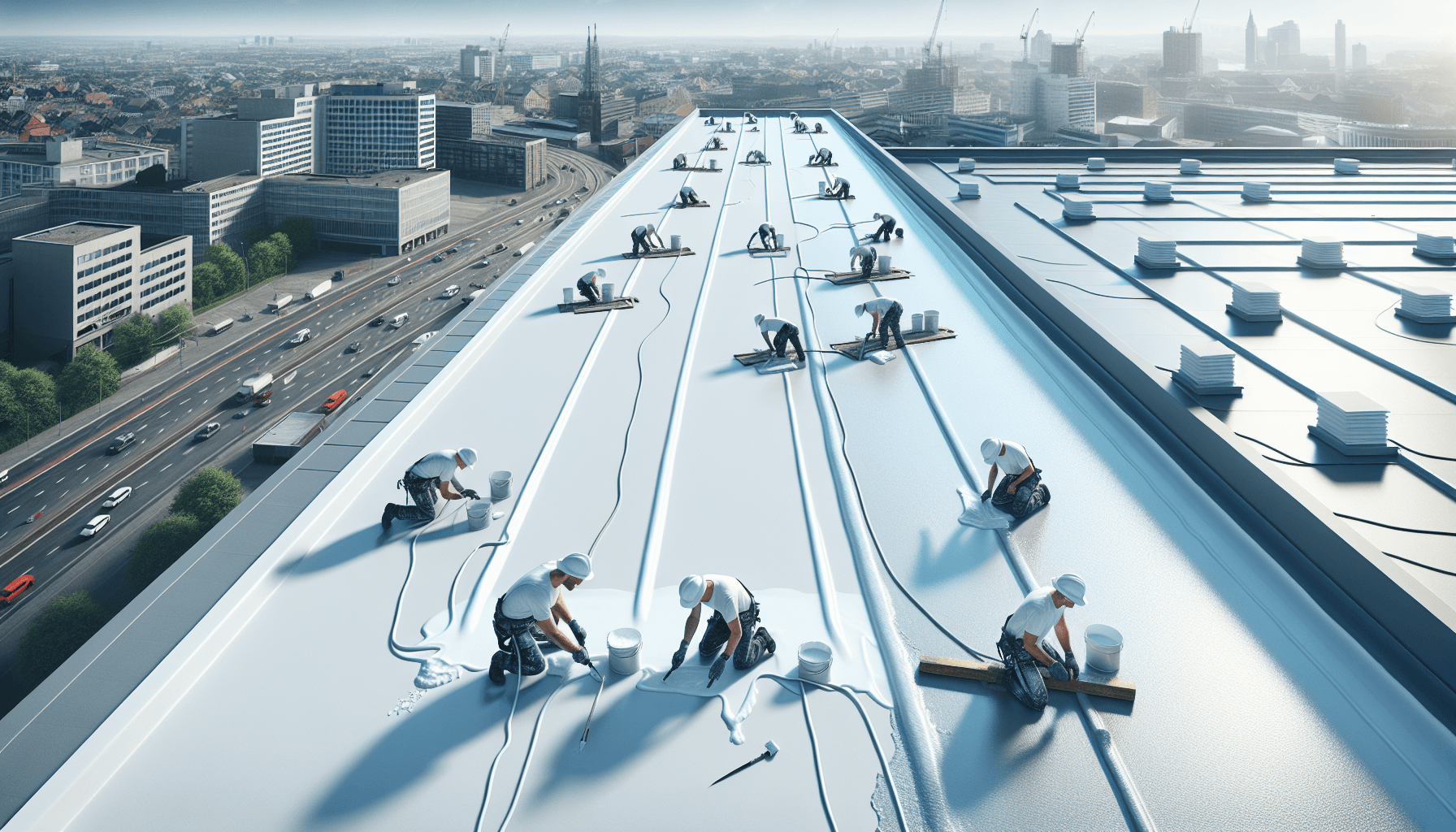
When commercial property owners in Charlotte, NC face deteriorating roof conditions, they're confronted with a critical decision: invest in a complete roof replacement or extend the existing roof's lifespan with a professional coating system. This decision carries significant financial implications, with cost differences that can impact your bottom line by tens of thousands of dollars. Understanding the true cost comparison between these two approaches requires examining not just the initial investment, but the total lifecycle economics of each option.
For commercial buildings throughout the Charlotte metro area,from South Charlotte office parks in Ballantyne to industrial warehouses in Steele Creek,the choice between roof replacement and coating represents one of the most consequential facility management decisions you'll make. The financial gap between these options is substantial: while a commercial roof replacement typically costs between $8 and $18 per square foot installed, a professional roof coating system generally ranges from $2 to $6 per square foot, representing potential savings of 60-75% on initial costs.
However, the cost analysis extends far beyond these initial price points. This comprehensive guide examines the complete financial picture, including installation costs, disruption expenses, energy savings, tax implications, and long-term maintenance considerations specific to Charlotte's climate and commercial construction market.
Understanding Commercial Roof Replacement Costs in Charlotte
Commercial roof replacement represents the most comprehensive,and expensive,solution for aging or failing roof systems. In the Charlotte market, several factors influence the total replacement cost, creating a wide range of potential investments depending on your specific building characteristics.
Base Material and Installation Costs
The foundation of any roof replacement budget is the material and labor cost. In Charlotte, these costs vary significantly based on the roofing system selected:
| Roofing System | Cost Range per Sq Ft | Key Benefits |
|---|---|---|
| TPO (Thermoplastic Polyolefin) | $7-12 | Excellent reflectivity, energy efficiency |
| EPDM (Rubber Membrane) | $6-10 | Reliable performance, lower initial cost |
| PVC (Polyvinyl Chloride) | $9-15 | Superior chemical resistance, longevity |
| Modified Bitumen | $5-9 | Traditional performance, modern enhancements |
| Built-Up Roofing (BUR) | $6-11 | Proven multi-layer protection |
| Standing Seam Metal | $12-18 | Exceptional durability, modern aesthetics |
For a typical 20,000 square foot commercial building in Charlotte,common for warehouse facilities in Matthews or retail centers in Huntersville,the material and installation costs alone range from $120,000 to $360,000 depending on the system selected.
Hidden Replacement Costs: Tear-Off and Disposal
One of the most significant cost components in roof replacement that property owners often underestimate is the tear-off and disposal of the existing roof system. In Charlotte, these costs typically add $2-$4 per square foot to the project budget, depending on several factors:
- Number of existing roof layers (Charlotte building codes generally allow up to two layers before mandatory removal)
- Presence of hazardous materials like asbestos in older buildings
- Accessibility challenges for debris removal equipment
- Local landfill tipping fees and transportation distances
- Required environmental controls and containment measures
For our 20,000 square foot example building, tear-off and disposal adds $40,000-$80,000 to the replacement project. This represents pure cost with no value-added benefit,you're simply paying to remove what you already own.
Tear-off and disposal costs are often underestimated in initial budgets. Factor an additional $2-4 per square foot for these essential but non-value-added expenses when calculating roof replacement costs.
Structural Upgrades and Hidden Repairs
During roof replacement, contractors frequently discover underlying structural issues that require remediation before the new roof system can be installed. These unexpected costs can significantly impact project budgets:
- Deck replacement: Damaged or deteriorated roof decking costs $3-$7 per square foot to replace
- Insulation upgrades: Meeting current energy codes may require enhanced insulation at $2-$5 per square foot
- Structural reinforcement: Addressing inadequate support systems can add $5-$15 per square foot in affected areas
- Drainage improvements: Correcting ponding water issues may require tapered insulation systems at $4-$8 per square foot
Industry data suggests that 40-60% of commercial roof replacements encounter some level of unexpected structural costs, averaging an additional $15,000-$75,000 for medium-sized commercial buildings in the Charlotte area.
Facing roof replacement costs that seem overwhelming? A professional roof coating might extend your existing roof's life at a fraction of the replacement cost. Our thermal drone inspections can identify exactly which areas need attention.
Get a Free ConsultationBusiness Disruption Costs: The Hidden Financial Impact
The often-overlooked financial impact of roof replacement includes the operational disruption to your business. Charlotte commercial construction projects involving roof replacement typically require:
- Timeline: 3-8 weeks for complete replacement versus 3-7 days for coating application
- Noise disruption: Significant impact on tenant operations, particularly for office environments
- Access restrictions: Limited use of certain building areas during construction
- Odor concerns: Adhesives and solvents can affect indoor air quality
- Security vulnerabilities: Open roof sections create temporary security and weather exposure risks
For businesses in South Charlotte's Ballantyne Corporate Park or similar professional environments, tenant disruption can translate to productivity losses, temporary relocation costs, or even tenant turnover. While difficult to quantify precisely, these soft costs often represent 5-15% of the hard construction costs.
Comprehensive Roof Coating Costs: The Complete Investment Picture
Professional roof coating systems offer a dramatically different cost structure compared to replacement, though understanding the complete investment requires examining several components. At We Coat, our division specializing in commercial roof restoration, we've seen how coating systems deliver exceptional value for Charlotte property owners when applied to appropriate candidates.
Base Coating Material and Application Costs
The core investment in a roof coating system includes material costs and professional application labor. In the Charlotte market, pricing breaks down as follows:
| Coating Type | Cost per Sq Ft | Best Applications |
|---|---|---|
| Acrylic coatings | $1.50-3.50 | UV resistance, reflectivity for hot summers |
| Silicone coatings | $2.50-5.00 | Ponding water resistance, long-term performance |
| Polyurethane coatings | $3.00-6.00 | Impact resistance, foot traffic durability |
| Polyurea coatings | $3.50-6.50 | Rapid cure, chemical resistance for industrial |
For that same 20,000 square foot commercial building, coating costs range from $30,000 to $130,000,representing 25-36% of the replacement cost for comparable performance benefits.
Surface Preparation Requirements and Costs
The success of any coating system depends critically on proper surface preparation. Unlike roof replacement, which removes the existing system entirely, coating requires thorough preparation of the existing substrate:
Step 1: Power Washing
$0.15-$0.35 per square foot to remove dirt, debris, and biological growth. Essential for proper coating adhesion.
Step 2: Localized Repairs
$3-$8 per square foot for damaged areas requiring patching or reinforcement. Critical for long-term performance.
Step 3: Seam Treatment
$2-$5 per linear foot for reinforcing existing seams and transitions. Prevents future failure points.
Step 4: Fastener Sealing
$0.50-$1.50 per fastener for proper sealing of exposed fasteners. Eliminates penetration points.
Step 5: Primer Application
$0.50-$1.25 per square foot when required for adhesion to specific substrates. Ensures coating bond.
The extent of preparation required varies significantly based on existing roof condition. A well-maintained roof in good structural condition may require minimal preparation, adding just $5,000-$15,000 to project costs. Conversely, a neglected roof with extensive localized damage might require $25,000-$50,000 in preparation work for the same building.
Quality Assurance and Advanced Assessment
Professional coating applications include quality control measures that add value to the investment:
- Pre-application assessment: Comprehensive roof evaluation including moisture testing and thermal imaging
- Adhesion testing: Field adhesion tests to verify coating compatibility and performance
- DFT measurements: Wet and dry film thickness testing to ensure specification compliance
- Documentation: Detailed application records including weather conditions, coverage rates, and cure times
At We Build, our thermal drone roof inspection service provides detailed pre-coating assessments without the expense and risk of traditional physical inspections. Our FAA-certified commercial drone pilot uses aerial thermal imaging to detect moisture intrusion, insulation gaps, and hidden damage,critical information for determining coating candidacy and preparation requirements.
Most manufacturer warranties require minimum dry film thickness (DFT) measurements. Cutting corners on coating thickness to reduce costs inevitably leads to premature failure and voided warranties.
Lifecycle Cost Analysis: The 20-Year Total Investment Comparison
While initial costs favor coating systems by substantial margins, sophisticated facility managers evaluate the total lifecycle cost of ownership over the expected service life. This comprehensive analysis reveals the true economic advantage of each approach for Mooresville, Rock Hill, SC, and other Charlotte-area commercial properties.
Expected Service Life and Performance Curves
The longevity of each roofing solution directly impacts lifecycle economics:
- Roof replacement service life: 15-30 years depending on material selection, installation quality, and maintenance
- Coating system service life: 10-20 years with proper maintenance and recoating cycles
- Coating recoat timeline: Typically 10-15 years before recoating becomes necessary
Over a 20-year analysis period, a roof replacement installed today will likely require one major intervention (either extensive repairs or complete replacement) around year 15-18. A coating system will require one recoat application around year 10-12, which typically costs 60-70% of the initial coating investment since surface preparation is minimal.
Roof Replacement Lifecycle
- Year 0: $120,000-$360,000 initial investment
- Years 1-14: $2,900-$6,700 annual maintenance
- Year 15-18: $40,000-$120,000 major repairs/replacement
- Total 20-year cost: $200,000-$550,000
Coating System Lifecycle
- Year 0: $30,000-$130,000 initial investment
- Years 1-10: $1,800-$4,400 annual maintenance
- Year 10-12: $18,000-$91,000 recoat application
- Total 20-year cost: $84,000-$309,000
Energy Performance and Utility Cost Savings
Both modern roof replacement systems and reflective coating systems deliver energy efficiency improvements over aged, deteriorating roofs, but coating systems often provide superior thermal performance:
- Solar reflectance: Premium roof coatings achieve 85-90% solar reflectance versus 70-80% for standard TPO or PVC membranes
- Thermal emittance: Coatings typically exceed 0.85 emittance ratings, releasing absorbed heat more effectively
- Cool roof certification: Many coating systems exceed ENERGY STAR and Cool Roof Rating Council requirements
For a 20,000 square foot commercial building in Charlotte with typical cooling loads, the superior reflectivity of a coating system can deliver annual energy savings of $3,000-$7,000 compared to the building's pre-renovation condition. Over 20 years, these savings total $60,000-$140,000, substantially offsetting the coating investment.
The Charlotte climate,characterized by hot, humid summers with average July temperatures of 89°F and significant solar radiation,makes reflective roof systems particularly valuable. Buildings in Rock Hill, SC and surrounding York County areas experience similar conditions, making energy performance a critical cost consideration.
Over 20 years, energy savings from reflective coating systems can total $60,000-$140,000 for a typical 20,000 sq ft building in Charlotte,often offsetting 50-100% of the initial coating investment.
Maintenance and Repair Cost Differentials
Ongoing maintenance requirements differ significantly between replacement and coating systems:
| Maintenance Activity | Roof Replacement | Coating System |
|---|---|---|
| Annual inspections | $500-1,200 | $400-900 |
| Bi-annual cleaning | $800-1,500 | $600-1,200 |
| Minor repairs (annual avg.) | $1,200-3,000 | $600-1,800 |
| Seam maintenance | $400-1,000 | $200-500 |
| Total annual maintenance | $2,900-6,700 | $1,800-4,400 |
Over 20 years, the maintenance cost differential between these systems can reach $22,000-$46,000, further enhancing the lifecycle cost advantage of coating systems. However, this assumes proper maintenance protocols,neglected roofs of either type will experience accelerated deterioration and higher costs.
Ready to explore whether roof coating or replacement makes financial sense for your Charlotte commercial property? We provide detailed cost analyses and thermal imaging assessments to help you make informed decisions.
Schedule Your Assessment TodayTax Implications and Depreciation Schedules
The tax treatment of roof replacement versus coating creates important financial distinctions for commercial property owners:
- Roof replacement: Generally capitalized and depreciated over 39 years for commercial property (27.5 years for residential rental property)
- Roof coating: Often qualifies as a repair/maintenance expense, potentially deductible in the year incurred
- Section 179 deduction: Coating systems may qualify for immediate expensing under certain conditions
- Energy efficiency incentives: Both systems may qualify for various energy efficiency tax benefits
The ability to expense a coating project immediately rather than capitalizing and depreciating over decades can create substantial near-term tax benefits. For a profitable Charlotte business in the 25% effective tax bracket, a $60,000 coating project that qualifies for immediate expensing delivers $15,000 in first-year tax savings,effectively reducing the net investment to $45,000. Consult with your tax advisor to understand how these rules apply to your specific situation.
When Roof Replacement Costs Are Justified
Despite the compelling cost advantages of coating systems, certain circumstances make roof replacement the more prudent investment. Understanding these scenarios prevents costly mistakes and ensures optimal long-term value for properties throughout Huntersville and the greater Charlotte region.
Structural Compromise Makes Coating Cost-Ineffective
When the underlying roof deck or structural system has experienced significant deterioration, coating cannot address these fundamental failures:
- Advanced wood deck rot: Widespread deterioration affecting more than 25% of deck area
- Metal deck corrosion: Rust-through conditions compromising structural integrity
- Insulation saturation: Wet insulation affecting more than 30% of roof area (undetectable moisture often revealed through thermal imaging)
- Structural deflection: Sagging or inadequate slope causing persistent drainage problems
Our thermal drone inspection service identifies these conditions before significant investment in coating systems. For buildings in Mooresville and other Lake Norman communities, where older industrial buildings are common, this assessment proves particularly valuable in avoiding costly coating failures.
Membrane Condition Eliminates Coating Viability
Coating systems extend roof life by protecting and sealing existing membranes, but they cannot resurrect membranes that have reached end-of-life conditions:
- Severe cracking and splitting: Membrane fractures exceeding 20% of surface area
- Complete adhesion failure: Large sections of membrane separating from substrate
- Advanced UV degradation: Membrane brittleness preventing proper coating adhesion
- Chemical damage: Contamination from oils, solvents, or other chemicals preventing coating bond
For these scenarios, attempting to coat rather than replace represents false economy,you'll invest in a system destined to fail prematurely, then still face replacement costs within 2-5 years. The total cost becomes replacement plus failed coating investment.
Building Plans Affect Cost-Benefit Calculations
Property owners planning building sales or major renovations within 5-7 years may find replacement provides better return on investment:
- Market perception: Prospective buyers often value "new roof" more highly than "restored roof" despite similar performance
- Warranty transferability: Manufacturer warranties on new roofs often transfer more readily than coating warranties
- Renovation coordination: Major building renovations may justify roof replacement for comprehensive modernization
- Tenant lease requirements: Some commercial lease agreements specify maximum roof age, favoring replacement
Optimal Coating Cost Scenarios: Maximizing ROI
Roof coating systems deliver maximum financial advantage when applied to appropriate candidates. Understanding ideal coating scenarios helps Charlotte-area property owners achieve the best return on investment for their commercial buildings.
The Perfect Coating Cost-Benefit Profile
Buildings that extract maximum value from coating systems typically share these characteristics:
- Roof age: 8-15 years old, showing early signs of weathering but structurally sound
- Membrane condition: Intact with minor defects affecting less than 15% of surface area
- Proper drainage: Minimal ponding water (less than 48-hour retention after rainfall)
- Good maintenance history: Regular inspections and prompt repair of minor issues
- Substrate integrity: Dry insulation and solid deck verified through testing
- Appropriate size: Buildings over 10,000 square feet where coating cost advantage is most pronounced
Many warehouse and distribution centers throughout Charlotte fit this profile perfectly,large roof areas with relatively simple geometry and modest traffic where coating systems excel from both performance and cost perspectives.
Charlotte Climate Factors Affecting Coating Costs
The Charlotte climate presents specific challenges and opportunities for coating systems that influence long-term cost effectiveness:
- UV exposure: Charlotte receives 2,900-3,100 hours of annual sunshine, making UV-resistant coatings essential but also maximizing energy savings
- Thermal cycling: Summer highs around 90°F and winter lows around 30°F create expansion/contraction stresses
- Humidity: Average relative humidity of 70% requires moisture-tolerant coating systems
- Precipitation: 43 inches annual rainfall necessitates excellent water resistance
- Storm exposure: Occasional severe weather requires durable, well-adhered systems
Premium silicone and acrylic coating systems specifically formulated for southeastern climates perform exceptionally well in these conditions, typically achieving or exceeding their expected service life when properly applied and maintained,maximizing the cost benefits over replacement systems.
Building Type Cost Optimization
Certain commercial building types prove particularly well-suited to coating systems from both performance and economic perspectives:
- Manufacturing facilities: Large roof areas with minimal penetrations maximize coating efficiency and cost per square foot advantages
- Distribution centers: Cost-per-square-foot advantages most pronounced on these expansive roofs
- Retail centers: Tenant sensitivity to disruption makes quick coating application attractive, avoiding revenue losses
- Office buildings: Energy savings from reflective coatings deliver substantial value for occupied spaces with high cooling loads
- Cold storage facilities: Reflective coatings reduce cooling load for temperature-controlled environments, maximizing energy cost savings
For specialty applications like brewery and restaurant construction, coating systems offer additional cost advantages by minimizing operational disruption during application,a critical consideration for businesses that cannot afford extended closures and associated revenue losses.
Regional Cost Factors Specific to Charlotte Markets
Several regional factors influence the cost comparison between roof replacement and coating in the Charlotte metropolitan area and surrounding communities, affecting the financial analysis for commercial property owners.
Labor Market Impact on Replacement vs Coating Costs
Charlotte's robust construction market affects pricing dynamics for both replacement and coating options:
- Skilled labor availability: Strong commercial construction activity in Charlotte creates competitive contractor pricing for both services
- Seasonal demand: Peak construction season (April-October) may increase costs 10-15% versus winter months
- Travel premiums: Projects in outlying areas like Rock Hill, SC or Mooresville may include modest travel charges
- Competition levels: Charlotte's large contractor base maintains competitive pricing pressure
- Coating specialists: Growing number of certified coating contractors reduces premium pricing for specialized applications
Material Cost Advantages in Charlotte Region
Regional material costs reflect Charlotte's position as a major distribution hub:
- Freight advantages: Charlotte's logistics infrastructure keeps material delivery costs moderate for both replacement and coating materials
- Distributor density: Multiple roofing material distributors serve the market, maintaining competitive pricing
- Volume discounts: Large projects benefit from economies of scale in material procurement
- Specialty materials: Ready availability of premium coating systems and advanced membrane products
Permitting Costs: Replacement vs Coating
Charlotte and surrounding jurisdictions maintain specific requirements affecting project costs:
| Cost Factor | Roof Replacement | Roof Coating |
|---|---|---|
| Building permits | $500-2,000 | Usually $0 |
| Inspection requirements | $200-800 | Usually $0 |
| Plan review fees | $300-1,200 | Usually $0 |
| Code compliance costs | $2-5/sq ft | Usually $0 |
The permitting cost differential,while modest in dollar terms,represents another hidden advantage of coating systems that avoid triggering these regulatory requirements and associated timeline delays.
Financial Decision Framework: Cost-Optimized Selection Process
Armed with comprehensive cost data, commercial property owners throughout South Charlotte and surrounding markets need a structured framework for making the replacement-versus-coating decision. This systematic approach ensures optimal financial outcomes.
Conducting Proper Roof Cost Assessment
The decision process begins with thorough evaluation of current roof condition to determine which option offers better long-term cost performance:
Visual Inspection
Surface examination identifying obvious defects, membrane condition, and drainage issues that affect coating viability and replacement scope.
Thermal Imaging Assessment
Advanced detection of moisture intrusion and insulation problems invisible to visual inspection,critical for accurate cost projections.
Core Sampling
Strategic samples revealing substrate condition and insulation moisture content to determine preparation costs for coating or replacement scope.
Adhesion Testing
Field tests determining coating compatibility if coating is being considered, preventing costly application failures.
We Build's thermal drone inspection service provides comprehensive assessment data without the safety risks and expense of traditional inspection methods,particularly valuable for large warehouse facilities or buildings with challenging access where inspection costs can be substantial.
Break-Even Cost Analysis Framework
Develop a customized financial model comparing replacement and coating cost scenarios:
- Establish baseline costs: Obtain detailed quotes for both replacement and coating alternatives including all preparation work
- Project lifecycle timeline: Determine your expected ownership period and facility planning horizon
- Factor energy savings: Calculate projected utility cost reductions based on current consumption and building characteristics
- Include maintenance costs: Estimate ongoing maintenance requirements and costs for each option
- Consider tax impacts: Consult with your tax advisor on depreciation versus expense treatment implications
- Assess risk factors: Evaluate warranty coverage, failure probability, and potential disruption costs
- Calculate net present value: Discount future costs to present value for accurate cost comparison
For most Charlotte commercial properties with roofs in reasonable condition, this analysis reveals coating systems deliver superior financial returns when the ownership horizon exceeds 7-10 years, primarily due to dramatically lower initial costs and comparable performance.
For buildings with ownership horizons exceeding 7-10 years and roofs in reasonable condition, coating systems typically deliver 40-60% lower total lifecycle costs compared to replacement options.
Warranty Cost-Benefit Evaluation
Understanding warranty coverage for each option is critical to risk-adjusted cost comparison:
- Replacement warranties: Typically 10-30 years depending on system and manufacturer, covering materials and sometimes labor
- Coating warranties: Generally 10-20 years, requiring adherence to maintenance protocols
- Contractor workmanship warranties: Usually 1-5 years covering installation defects
- Weather resistance guarantees: Wind and hail damage coverage varies significantly between systems
Premium coating systems from reputable manufacturers often include warranties comparable to replacement systems when properly specified and installed by certified applicators, eliminating warranty coverage as a cost differentiator.
Timing Optimization for Cost Management
The optimal timing for roof investment affects both cost and performance outcomes:
- Preventive intervention: Coating at the first signs of weathering (years 8-12) maximizes coating effectiveness and ROI while avoiding emergency replacement premiums
- Crisis management: Emergency replacement due to catastrophic failure costs 15-25% more than planned replacement
- Capital budget cycles: Alignment with your organization's capital planning timeline and available funding
- Tenant lease terms: Coordination with lease expirations, renewals, or commercial upfit projects
- Seasonal optimization: Scheduling during favorable weather windows for best installation conditions and competitive pricing
Making the Cost-Optimized Investment Decision
Based on comprehensive cost analysis and decades of combined experience across our team serving Matthews, Huntersville, and throughout the Charlotte region, We Build offers these practical guidelines for commercial property owners facing the replacement-versus-coating cost decision.
Strong Coating Cost Advantage Scenarios
Consider roof coating as your primary cost-effective option when:
- Your roof is 7-18 years old with sound structural substrate, maximizing coating ROI
- Thermal imaging confirms dry insulation and absence of widespread moisture intrusion
- Your building ownership timeline exceeds 7 years, allowing full cost recovery
- Minimizing business disruption is critical to avoiding revenue losses
- Energy efficiency improvements would deliver significant utility cost savings
- Your capital budget cannot accommodate full replacement costs
- You maintain regular roof maintenance protocols, extending coating service life
Clear Replacement Cost Justification
Prioritize roof replacement despite higher initial costs when:
- Thermal imaging or core samples reveal extensive moisture in substrate (>30% affected area)
- Structural issues require deck repair or replacement, necessitating tear-off anyway
- Membrane has reached end-of-life with extensive cracking, splitting, or shrinkage
- Building codes or insurance requirements mandate replacement
- You're planning building sale within 3-5 years and market perception affects value
- Major building renovation projects justify comprehensive roof modernization
- Previous coating attempts have failed due to improper application or unsuitable conditions
Professional Assessment Required for Cost Optimization
Some scenarios demand detailed professional evaluation before making cost-based decisions:
- Mixed conditions with good roof performance in some areas, deterioration in others
- Uncertainty about substrate condition or moisture content affecting cost projections
- Complex roof geometries with numerous penetrations affecting coating preparation costs
- Prior repairs of unknown quality affecting significant roof areas
- Buildings with multiple roof levels or systems requiring coordinated cost-effective solutions
For these situations, We Build's comprehensive assessment services,including thermal drone inspections and detailed roof condition reporting,provide the data needed for confident, cost-optimized decision-making.
Key Cost Comparison Takeaways
- Roof coating costs 60-75% less than replacement initially ($2-6 vs $8-18 per sq ft)
- Total lifecycle costs favor coating systems by 40-60% for appropriate candidates
- Energy savings from reflective coatings can offset 50-100% of initial coating investment
- Coating avoids $40,000-$80,000 tear-off costs for typical commercial buildings
- Business disruption costs are 70-85% lower with coating (days vs weeks)
- Coating may qualify for immediate tax deduction vs. 39-year depreciation for replacement
Whether you're managing a warehouse facility in Matthews, an office building in South Charlotte, or a distribution center in Huntersville, the choice between roof replacement and coating costs requires careful analysis of your specific building conditions, ownership timeline, and financial objectives. Contact We Build's experienced team for a comprehensive cost assessment and thermal drone inspection to determine the most cost-effective solution for your commercial property.
Ready to determine whether roof coating or replacement offers the better cost solution for your Charlotte commercial property? Our team provides detailed cost analyses, thermal imaging assessments, and comprehensive project quotes.
Call (980) 471-1745 for Your Free Consultation