When planning a restaurant project in Charlotte NC, one of the most critical decisions you'll face is whether to renovate an existing space or construct a new building from the ground up. This choice impacts not just your initial investment, but your timeline, operational efficiency, and long-term profitability. Understanding the true cost differential between restaurant renovation and new construction requires examining dozens of variables, from permitting timelines in Mecklenburg County to the hidden expenses lurking in aging commercial spaces across South Charlotte's Ballantyne corridor or the historic buildings in Plaza Midwood.
The financial stakes are substantial. According to industry data, restaurant construction costs in Charlotte NC currently range from $200 to $425 per square foot for new builds, while renovation projects typically fall between $150 and $350 per square foot. However, these averages mask critical nuances that can swing your project budget by hundreds of thousands of dollars. A seemingly straightforward upfit in an existing Matthews restaurant space might uncover obsolete electrical systems requiring complete replacement, while a ground-up build in Huntersville offers cost certainty but demands significantly more capital upfront.
This comprehensive analysis examines every financial dimension of the renovation versus new build decision, providing Charlotte area restaurateurs with the detailed cost breakdowns, timeline comparisons, and strategic insights needed to make the right choice for their specific concept and financial situation.
Understanding Restaurant Renovation vs New Build Cost Variables
Restaurant renovation costs vary dramatically based on the condition of your existing space, the extent of mechanical system updates required, and how closely your planned concept aligns with the space's previous use. A former restaurant space on South Boulevard already equipped with commercial kitchen infrastructure presents vastly different financial considerations than converting a retail storefront in NoDa into a full-service dining establishment.
Core Renovation Cost Components
The foundation of any restaurant renovation budget starts with understanding where your money goes. For renovation projects in Charlotte NC, expect these primary cost categories:
| Cost Component | Cost Range (per SF) | Notes |
|---|---|---|
| Demolition and site preparation | $8-$15 | Historic buildings +20-30% |
| Mechanical systems (HVAC, plumbing, electrical) | $75-$125 | Largest renovation expense |
| Commercial kitchen buildout | $150-$300 | Kitchen area only |
| Dining area finishes | $60-$150 | High-end concepts to $200+ |
| Restroom updates | $15,000-$35,000 | Per restroom |
| Fire suppression and safety | $25,000-$60,000 | Commercial kitchens |
Many buildings constructed before 2000 require complete electrical service upgrades to support modern commercial kitchen loads, which can add $40,000-$80,000 to projects in older Charlotte neighborhoods. Commercial kitchen buildouts include ventilation hoods, grease traps, three-compartment sinks, and specialized plumbing requirements mandated by Mecklenburg County Health Department.
Many older Charlotte buildings require complete restroom relocations to meet current ADA accessibility codes, adding 15-25% to baseline restroom renovation costs.
Hidden Renovation Costs That Destroy Budgets
Experienced Charlotte restaurant owners understand that renovation projects rarely stay on budget without accounting for unexpected conditions. These hidden expenses frequently emerge during construction:
Structural deficiencies: Aging commercial buildings throughout Matthews, Pineville, and older Charlotte neighborhoods often conceal structural issues invisible during initial inspections. Load-bearing wall modifications to create open kitchen concepts can require steel beam installations costing $15,000-$40,000. Foundation settling common in Charlotte's clay soil may necessitate underpinning or structural reinforcement adding $25,000-$75,000 to renovation budgets.
Code compliance upgrades: Mecklenburg County enforces current building codes when restaurants undergo substantial renovations, typically defined as improvements exceeding 50% of the building's value. This triggers requirements for sprinkler system installations ($8-$12 per square foot), complete electrical service upgrades, ADA accessibility modifications, and energy code compliance measures. These mandated improvements frequently add $75,000-$200,000 to renovation projects in buildings constructed before 1990.
Hazardous material abatement: Asbestos-containing materials remain common in commercial buildings built before 1980 throughout South Charlotte and Lake Norman communities. Professional abatement runs $15-$35 per square foot for affected areas, with some projects requiring complete removal of ceiling tiles, floor tiles, and pipe insulation throughout the space.
Utility infrastructure inadequacies: Restaurant operations demand substantially more electrical capacity, gas service, water supply, and grease trap capacity than most retail or office spaces. Upgrading service entrances, installing larger transformers, and running new utility services from the street can cost $40,000-$120,000 in older commercial districts where infrastructure hasn't been updated in decades.
Evaluating an existing restaurant space in Charlotte? Our team provides detailed pre-construction assessments identifying hidden costs before you commit to a lease or purchase.
Get a Free ConsultationNew Restaurant Construction Costs: Ground-Up Build Financial Analysis
Building a new restaurant from bare land offers cost certainty, design freedom, and the ability to incorporate modern efficiency from the foundation up. However, the capital requirements substantially exceed renovation projects, and timelines extend significantly longer. New restaurant construction in Charlotte NC currently averages $250-$425 per square foot, with the wide range reflecting variations in building quality, site conditions, and architectural complexity.
Comprehensive New Build Cost Breakdown
Ground-up commercial construction involves costs that don't exist in renovation scenarios. Here's what Charlotte restaurant owners should budget for new builds:
Land Acquisition
Charlotte NC commercial land prices vary dramatically by location. Busy corridors in South Charlotte near Ballantyne command $15-$35 per square foot, while emerging areas in Cornelius or Mooresville might offer land at $8-$18 per square foot. A typical restaurant site of 1.5-2 acres for a 5,000 square foot building costs $250,000-$900,000.
Site Development
Preparing raw land involves grading, stormwater management, utility extensions, parking construction, and landscaping. Budget $100,000-$300,000 for comprehensive site work in Charlotte NC, with costs increasing in areas requiring significant earth movement or extended utility runs.
Building Shell Construction
The structural building envelope,foundation, framing, roof, and exterior finishes,runs $120-$180 per square foot for standard construction quality. Higher-end architectural designs can push this to $200-$250 per square foot.
MEP Systems
New construction mechanical, electrical, and plumbing systems cost $85-$140 per square foot, incorporating properly sized HVAC systems, electrical service designed for restaurant loads, commercial kitchen plumbing, and grease interceptors.
Interior Buildout
Kitchen areas require $180-$320 per square foot for equipment, ventilation, finishes, and specialized systems. Dining areas run $100-$200 per square foot depending on concept and finish quality.
New Build Soft Costs and Development Fees
Beyond direct construction expenses, new restaurant development involves substantial soft costs that renovation projects largely avoid:
- Mecklenburg County permitting and impact fees: $15,000-$45,000 depending on project size and jurisdiction. Some Charlotte suburbs impose additional school impact fees and transportation improvement fees.
- Survey and title work: $8,000-$15,000 for boundary surveys, topographic surveys, and title insurance for land purchases.
- Geotechnical engineering: $5,000-$12,000 for soil borings and foundation design recommendations, critical in Charlotte's varied soil conditions.
- Environmental assessments: Phase I environmental site assessments cost $2,500-$4,500, with Phase II investigations adding $8,000-$25,000 if contamination concerns emerge.
- Legal and closing costs: $12,000-$30,000 for land acquisition legal work, entity formation, and construction contract reviews.
- Construction financing fees: Loan origination, inspection fees, and interest during construction add 3-6% to project costs, typically $40,000-$120,000 for restaurant projects in the $1.5-$3 million range.
New construction demands comprehensive architectural and engineering services. Budget 8-12% of construction costs for design professionals, typically $60,000-$180,000 for a 5,000 square foot restaurant in Charlotte NC.
Timeline Comparison: Speed to Revenue Generation in Restaurant Renovation vs New Build Cost Analysis
While upfront costs matter tremendously, the timeline from project initiation to opening day directly impacts your cash flow and competitive positioning. Every month of delay represents lost revenue, continued overhead expenses, and potentially missed seasonal opportunities in Charlotte's restaurant market.
Restaurant Renovation Timeline
Renovation projects in Charlotte NC typically require 4-9 months from lease signing to opening, broken down as follows:
Renovation Timeline
Pre-construction phase (6-10 weeks): Lease negotiation, commercial upfit design development, permit preparation, and contractor selection.
Permitting and approvals (3-8 weeks): Building permits, health department plan review, fire marshal approval, and potential ABC permit coordination.
Construction phase (8-16 weeks): Actual renovation work, from demolition through final inspections. Simple cosmetic refreshes complete in 6-8 weeks, while comprehensive gut renovations require 14-20 weeks.
Equipment installation (2-3 weeks): Commercial kitchen equipment installation, staff training, and soft opening preparations.
New Build Timeline
Land acquisition (6-12 weeks): Property search, purchase negotiations, environmental assessments, soil testing, and financing arrangement.
Design and engineering (12-20 weeks): Architectural design, civil engineering, MEP engineering, and construction document preparation require 3-5 months for restaurant projects.
Permitting (8-16 weeks): Site plan review, subdivision approval (if required), building permit processing, and utility coordination.
Construction (30-46 weeks): Site development (6-10 weeks) plus building construction (24-36 weeks).
Mecklenburg County reviews basic renovation permits in 10-15 business days for straightforward projects, though complex renovations requiring variance requests or historic district approval can extend this to 8-12 weeks. New construction permits involve more extensive plan review, with typical processing times of 6-10 weeks for complete submissions.
Need help determining which approach makes financial sense for your restaurant concept? We Build specializes in cost analysis and value engineering for Charlotte restaurateurs.
Get a Free Consultation - (980) 471-1745Financing Considerations: How Lenders View Restaurant Renovation vs New Build Costs
The financing landscape differs substantially between renovation and new construction projects, impacting both availability of capital and the terms you'll secure. Charlotte area lenders evaluate these project types through different risk lenses, affecting down payment requirements, interest rates, and loan-to-value ratios.
Restaurant Renovation Financing
Renovation projects typically enjoy more accessible financing options with lower capital requirements. Small Business Administration (SBA) 504 and 7(a) loans frequently finance restaurant renovations, offering favorable terms including down payments as low as 10-15% and amortization periods extending to 20-25 years for real estate components.
Conventional commercial lenders in Charlotte NC typically require 20-30% down for renovation projects, viewing them as lower risk than ground-up construction due to the existing building envelope and shorter construction timelines. Loan-to-value ratios of 70-80% are common for well-conceived renovation projects in strong Charlotte submarkets like South End or University City.
However, extensive renovations approaching 75-100% of the existing building's value sometimes face financing challenges, as lenders perceive similar risk profiles to new construction without the corresponding property value appreciation potential. Projects requiring structural modifications, complete mechanical system replacements, or hazardous material abatement may face higher scrutiny and reduced loan-to-value ratios.
New Restaurant Construction Financing
Ground-up restaurant construction demands significantly more equity from borrowers, with most Charlotte lenders requiring 25-35% down for new builds. Construction-to-permanent loans provide development financing converting to traditional mortgages upon completion, but impose stricter underwriting requirements including detailed construction budgets, guaranteed maximum price contracts with experienced general contractors, and demonstrated restaurant operating experience.
Interest rates for new construction typically run 0.5-1.5 percentage points higher than renovation financing, reflecting the increased complexity and timeline risks. Draw schedules require lender inspection and approval at each construction milestone, potentially delaying access to funds if construction falls behind schedule.
The significant advantage of new construction financing comes from higher appraised values upon completion. Purpose-built restaurants in strong Charlotte locations typically appraise 15-25% higher than comparable renovation projects, providing better long-term equity positions and refinancing opportunities.
Operating Efficiency and Long-Term Cost Implications
The initial cost differential represents only one dimension of the renovation versus new build decision. Long-term operating costs, maintenance expenses, and functional efficiency create ongoing financial impacts lasting decades.
Energy Efficiency and Utility Costs
New restaurant construction allows incorporation of modern energy codes, high-efficiency HVAC systems, LED lighting throughout, and advanced building envelope performance that older buildings simply cannot match economically. Charlotte restaurateurs operating in new buildings report energy costs 30-45% lower than comparable concepts in renovated older buildings.
A typical 5,000 square foot restaurant in Charlotte NC operating in a renovated 1980s building might spend $3,500-$5,000 monthly on utilities, while a comparable new building designed to exceed current energy codes typically runs $2,200-$3,200 monthly. Over a 10-year period, this $15,600-$21,600 annual difference accumulates to $156,000-$216,000 in additional operating costs for the renovated space.
High-efficiency HVAC systems cost 20-30% more than standard equipment upfront, but the payback period typically extends 7-12 years through reduced operating costs.
Maintenance and Replacement Costs
Renovated restaurants inherit the maintenance burden of aging building systems. HVAC equipment, electrical panels, plumbing systems, and roofing in buildings 15-30 years old face remaining useful lives of 5-15 years, meaning restaurateurs should budget for major system replacements within their first decade of operation.
Charlotte restaurant owners operating in renovated spaces should budget 2.5-4% of annual revenue for maintenance and repairs, compared to 1-1.5% for new construction during the first 10 years. For a restaurant generating $2 million annually, this represents $30,000-$50,000 in additional annual maintenance expenses, totaling $300,000-$500,000 over a decade.
New construction typically includes comprehensive warranties: 1-2 years on workmanship, 5-10 years on HVAC systems, 10-20 years on roofing, and manufacturers' warranties on all equipment and materials. These warranties substantially reduce unexpected maintenance expenses during critical early operating years.
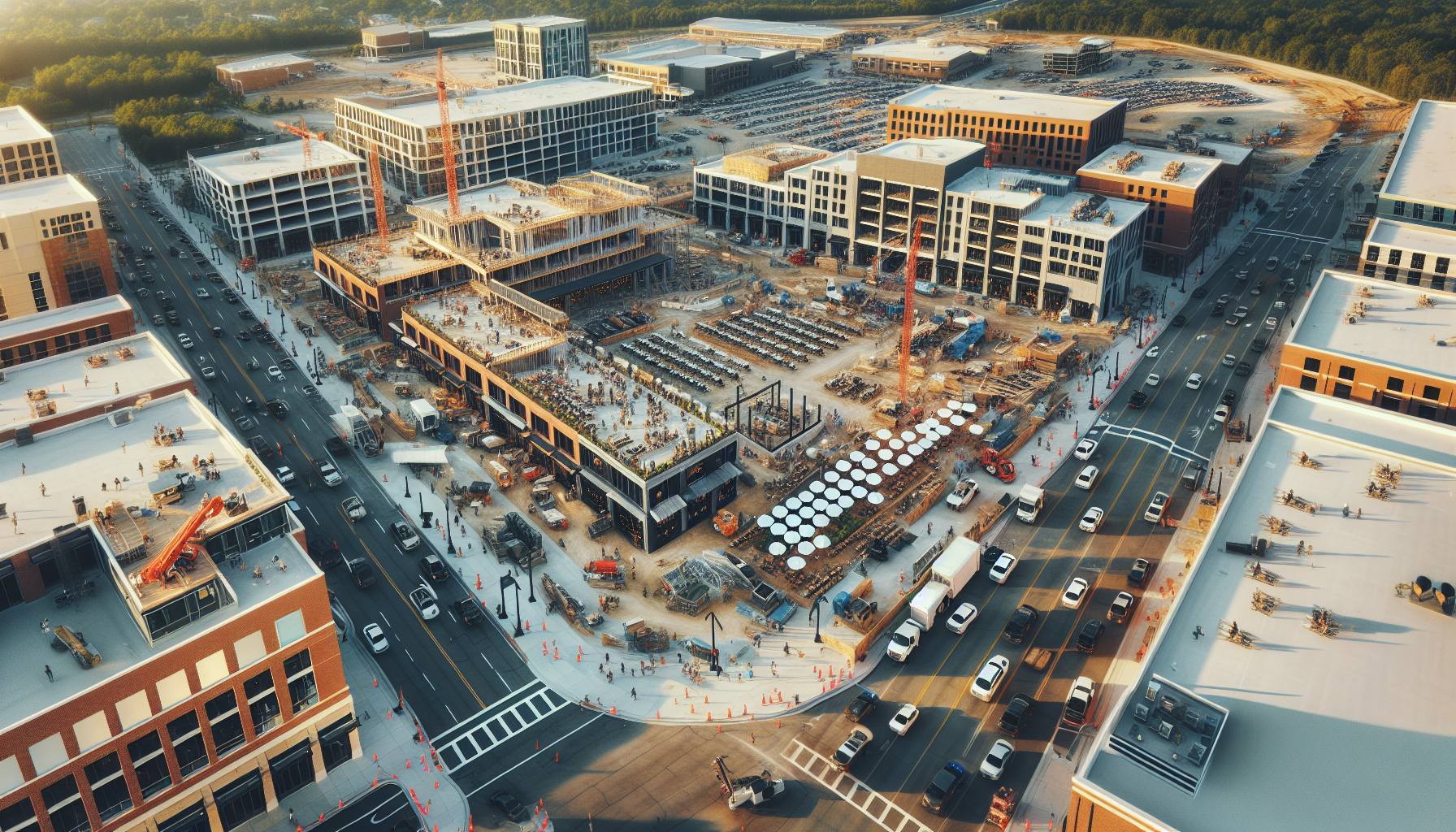
Location-Specific Cost Factors Across Charlotte NC
Charlotte's diverse commercial real estate market creates substantial cost variations between submarkets. Understanding these location-specific factors helps restaurateurs make informed decisions about where to build and whether renovation or new construction makes more financial sense in their restaurant renovation vs new build cost analysis.
Urban Core Locations: Uptown, South End, NoDa
Charlotte's urban core presents unique cost dynamics favoring renovation in many cases. Land scarcity and premium pricing in established neighborhoods like South End or NoDa make new construction prohibitively expensive for most independent restaurants. Commercial land prices of $25-$50 per square foot, combined with limited available parcels, push new restaurant construction into the $450-$600 per square foot range.
Conversely, these neighborhoods offer abundant existing buildings suitable for restaurant conversion. Former retail spaces, warehouses, and obsolete industrial buildings provide character and location advantages at $180-$320 per square foot renovation costs. However, these urban core renovations face higher soft costs including extended permitting timelines, parking variance requirements, and neighborhood design review processes that can add 8-16 weeks and $25,000-$60,000 to project budgets.
Suburban Growth Corridors: Ballantyne, Huntersville, Matthews
Charlotte's suburban growth areas present opposite dynamics. Available land, streamlined permitting in newer jurisdictions, and purpose-built retail centers make new construction increasingly competitive with renovation in submarkets like Huntersville, Matthews, and the South Charlotte corridor.
Land costs of $10-$22 per square foot and abundant site options allow restaurateurs to build exactly the facility they need rather than compromising to fit existing spaces. New construction in these markets runs $280-$380 per square foot, competitive with comprehensive renovations of older suburban restaurant spaces once hidden costs emerge.
Suburban locations also benefit from newer utility infrastructure, simplified permitting processes, and ample parking that doesn't require variance requests. Mecklenburg County's suburban municipalities typically process new construction permits in 6-8 weeks compared to 10-14 weeks in urban Charlotte, accelerating timelines and reducing holding costs.
Secondary Markets: Mooresville, Rock Hill, Fort Mill
Charlotte's secondary markets in Mooresville, Rock Hill SC, and Fort Mill offer the most compelling economics for new restaurant construction. Land prices of $6-$14 per square foot, lower prevailing wage rates, and simplified permitting allow new builds at $220-$310 per square foot, often competitive with even basic renovations in these markets.
These communities actively court restaurant development through economic incentives, expedited permitting, and infrastructure support. Restaurant owners report completing new construction projects in these markets 15-25% below comparable Charlotte costs while gaining modern, efficient facilities designed specifically for their concepts.
Specific Restaurant Concept Considerations
Different restaurant concepts present varying cost-benefit analyses for renovation versus new construction based on operational requirements, equipment needs, and customer expectations.
Fast Casual and Quick Service Restaurants
Fast casual concepts emphasizing efficiency, throughput, and operational consistency typically favor new construction despite higher upfront costs. Purpose-built facilities optimize kitchen layouts, drive-through configurations, and customer flow patterns impossible to achieve economically in most renovated spaces.
New construction for fast casual restaurants in Charlotte NC runs $300-$380 per square foot, while renovation costs for similar concepts range $240-$330 per square foot. The smaller differential reflects fast casual concepts' relatively simple building requirements compared to full-service restaurants. However, new construction provides drive-through capabilities worth 30-45% of revenue for many concepts, impossible to add economically to most existing buildings.
Full-Service and Fine Dining Establishments
Full-service restaurants present more nuanced decisions. High-end concepts benefit from renovation's ability to leverage historic buildings, unique architectural features, and established neighborhood character that new construction cannot replicate. Charlotte's most successful fine dining establishments frequently occupy renovated historic buildings in Dilworth, Myers Park, or downtown, where the building itself contributes to the dining experience.
These high-end renovations run $350-$550 per square foot, exceeding new construction costs but creating distinctive environments impossible to achieve in new buildings. The premium pays off through higher average checks, enhanced customer loyalty, and marketing advantages from operating in landmark buildings.
Conversely, suburban full-service concepts emphasizing consistency, efficiency, and family accessibility often favor new construction. Purpose-built facilities optimizing kitchen efficiency, accommodating large party rooms, and providing abundant parking serve these markets better than adapted existing spaces.
Breweries and Taprooms
Craft breweries and taprooms present unique real estate requirements favoring renovation in most Charlotte scenarios. These concepts require substantial ceiling heights (14-20 feet minimum for brewing equipment), heavy floor load capacity (200-400 pounds per square foot), and expansive open floor plans difficult to find except in industrial or warehouse buildings.
Brewery construction specialists in Charlotte report renovation costs of $160-$280 per square foot for brewery conversions, substantially below the $280-$400 per square foot required for purpose-built new construction. Former warehouses, manufacturing facilities, and industrial buildings throughout NoDa, South End, and older industrial corridors provide ideal spaces at significant cost advantages over new builds.
However, these renovations require substantial mechanical and structural investments. Installing adequate electrical service for brewing equipment, upgrading floor drains, and reinforcing floors for heavy fermentation tanks frequently costs $80,000-$180,000 beyond basic renovation budgets.

Risk Analysis: Comparing Certainty vs Flexibility in Restaurant Renovation vs New Build Cost Decisions
Beyond direct costs and timelines, renovation and new construction present different risk profiles that impact long-term success and financial stability.
Renovation Risk Factors
Restaurant renovation carries inherent uncertainty around hidden conditions, code compliance triggers, and structural surprises. Industry data suggests 65-75% of renovation projects exceed initial budgets by 10-25%, primarily due to unexpected conditions discovered during demolition.
Charlotte restaurant owners should maintain contingency funds representing 15-25% of renovation budgets to address unforeseen issues. A $400,000 renovation budget requires $60,000-$100,000 in reserves, capital that cannot be deployed toward revenue-generating improvements but remains essential for project completion.
However, renovation offers faster market entry and reduced total capital requirements. Opening 4-8 months sooner than new construction provides revenue generation during critical early periods when new concepts build customer bases and refine operations. This earlier cash flow frequently offsets higher per-square-foot costs and renovation uncertainties.
New Construction Risk Factors
New restaurant construction provides cost certainty through guaranteed maximum price contracts, but extends market risk through longer development timelines. Charlotte's restaurant market evolves rapidly; concepts planned 18-24 months before opening may face different competitive landscapes than those anticipated during initial planning.
The substantial capital requirements create another risk dimension. New builds typically demand $750,000-$1.5 million in equity beyond debt financing, capital locked in land and construction before generating any revenue. Restaurant failures during initial years leave owners with specialized buildings difficult to repurpose or sell, potentially resulting in total equity loss.
Conversely, new construction provides operational advantages worth hundreds of thousands of dollars over multi-decade ownership periods. Modern systems, optimal layouts, and energy efficiency create competitive advantages in labor-constrained markets where operational efficiency increasingly determines profitability.
New construction typically requires 50-75% more upfront capital than renovation, potentially constraining working capital needed for operations, marketing, and concept refinement during critical early months.
Making the Decision: A Structured Framework for Restaurant Renovation vs New Build Cost Analysis
Charlotte restaurateurs should evaluate renovation versus new construction through a structured decision framework weighing financial capacity, timeline requirements, concept needs, and long-term objectives.
Choose Renovation When:
- Available capital limits total investment to under $1 million
- Speed to market provides competitive advantages worth premium per-square-foot costs
- Unique historic buildings or established neighborhoods contribute to brand identity
- Existing restaurant spaces with functional kitchen infrastructure reduce buildout costs
- Lease terms (5-10 years) don't justify substantial capital investments
- Urban core locations where land scarcity makes new construction prohibitively expensive
- Concepts emphasizing character and neighborhood integration over operational efficiency
Choose New Construction When:
- Capital availability supports $1.5-$3 million total investment
- Long-term property ownership (20+ years) justifies higher upfront costs
- Drive-through capability or specialized layouts critical to concept success
- Suburban or secondary markets offer competitive land prices
- Multi-unit concepts requiring standardized prototype designs
- Energy efficiency and modern systems justify premium costs
- Real estate investment objectives beyond restaurant operations
Charlotte-Specific Decision Factors
Several Charlotte-specific market conditions influence the renovation versus new build decision for restaurant operators in this market.
Permitting and Regulatory Environment
Mecklenburg County's building department processes renovation permits more quickly than new construction in most cases, particularly for projects not triggering substantial improvement thresholds requiring full code compliance. Simple tenant improvement permits clear in 10-15 business days, while new construction reviews require 6-10 weeks even for complete, professional submissions.
However, Charlotte's historic districts, neighborhood overlays, and design review requirements sometimes extend renovation timelines beyond new construction in suburban greenfield sites. Projects in Dilworth, Myers Park, or Plaza Midwood requiring historic preservation approval face 8-16 additional weeks beyond standard permitting.
Labor and Contractor Availability
Charlotte's robust construction market creates contractor competition affecting both renovation and new build costs. Experienced restaurant construction specialists command premium pricing but deliver value through expertise avoiding costly mistakes and change orders.
Renovation specialists familiar with Charlotte's older building stock provide particular value identifying potential issues during pre-construction planning. Their experience with local permitting requirements, code officials, and typical building conditions in various Charlotte neighborhoods reduces contingency requirements and timeline uncertainty.
Real Estate Market Dynamics
Charlotte's commercial real estate market favors renovation in established neighborhoods where land scarcity limits new construction options. South End, NoDa, Plaza Midwood, and Uptown present limited opportunities for ground-up restaurant development, making renovation the default approach for operators targeting these markets.
Conversely, rapid suburban growth in Ballantyne, Weddington, Waxhaw, and Lake Norman communities creates abundant new construction opportunities. These markets offer purpose-built retail centers, available pad sites, and developer incentives making new construction increasingly competitive with renovation financially.
The Financial Bottom Line: Restaurant Renovation vs New Build Cost Comparison
The renovation versus new build decision ultimately turns on specific project variables rather than universal cost advantages. Charlotte restaurant projects demonstrate that renovation typically costs 60-75% of comparable new construction when analyzing direct construction expenses alone. However, this apparent savings evaporates quickly when accounting for hidden costs, extended timelines for complex renovations, and long-term operating expense differentials.
For a typical 5,000 square foot restaurant in Charlotte NC, expect these all-in project costs:
| Cost Component | Renovation Range | New Construction Range |
|---|---|---|
| Hard construction costs | $750,000-$1,500,000 | $1,250,000-$2,000,000 |
| Soft costs and fees | $50,000-$120,000 | $180,000-$350,000 |
| FF&E and equipment | $200,000-$350,000 | $200,000-$350,000 |
| Contingency | $100,000-$200,000 | $80,000-$140,000 |
| Total Project Cost | $1,100,000-$2,170,000 | $1,710,000-$2,840,000 |
The $600,000-$670,000 cost differential between mid-range renovation and new construction represents the financial heart of this decision. However, this premium purchases operational efficiency worth $20,000-$35,000 annually in reduced energy and maintenance costs, timeline advantages of 6-10 months enabling earlier revenue generation, and modern facilities supporting efficient operations in increasingly competitive labor markets.
Charlotte restaurateurs should approach this decision by calculating total cost of ownership over planned holding periods, evaluating how quickly earlier opening dates generate sufficient additional revenue to offset higher costs, and honestly assessing whether capital constraints make renovation the only viable option regardless of long-term economics.
Ready to start your restaurant project in Charlotte? Our experienced team provides detailed cost analysis and construction solutions for both renovation and new build projects.
Schedule Your Free Consultation TodayKey Takeaways
- Renovation typically costs 60-75% of new construction upfront, but hidden costs can eliminate this advantage
- New construction requires 50-75% more capital but provides operational efficiency and lower long-term costs
- Renovation opens 6-10 months faster, generating earlier revenue but potentially higher operating expenses
- Charlotte's urban core favors renovation due to land scarcity, while suburban markets make new construction competitive
- Fast casual concepts benefit from new construction's drive-through capability and operational efficiency
- Financing for renovation requires less equity (15-30% down) versus new construction (25-35% down)
- Total cost of ownership over 10+ years often favors new construction despite higher initial investment
Frequently Asked Questions
What's the average cost difference between restaurant renovation and new build in Charlotte NC?
Restaurant renovation in Charlotte NC typically costs $150-$350 per square foot, while new construction ranges from $250-$425 per square foot. However, when including land acquisition, site development, and soft costs, the total project differential narrows to approximately $600,000-$670,000 for a 5,000 square foot restaurant.
How long does restaurant renovation take compared to new construction in Charlotte?
Restaurant renovation projects in Charlotte NC typically require 4-9 months from lease signing to opening, while new construction demands 14-24 months from land acquisition to opening. This 6-10 month timeline advantage allows renovated restaurants to generate revenue much earlier, potentially offsetting higher per-square-foot costs.
Which financing options are available for restaurant renovation vs new construction?
Restaurant renovation typically qualifies for SBA loans with 10-15% down payments and conventional commercial loans requiring 20-30% down. New construction demands 25-35% down payments and involves construction-to-permanent loan products with stricter underwriting requirements and higher interest rates.
What hidden costs should I budget for restaurant renovation in Charlotte?
Common hidden renovation costs in Charlotte include structural deficiencies ($25,000-$75,000), code compliance upgrades ($75,000-$200,000), hazardous material abatement ($15-$35 per square foot), and utility infrastructure upgrades ($40,000-$120,000). Maintain 15-25% contingency funds to address unexpected conditions.
Do renovated restaurants have higher operating costs than new builds?
Yes, renovated restaurants typically experience 30-45% higher energy costs and should budget 2.5-4% of annual revenue for maintenance versus 1-1.5% for new construction. Over 10 years, this can represent $300,000-$500,000 in additional operating expenses for a $2 million annual revenue restaurant.
Which Charlotte neighborhoods favor renovation over new construction?
Urban core neighborhoods like South End, NoDa, Plaza Midwood, and Uptown favor renovation due to land scarcity and premium pricing ($25-$50 per square foot). Suburban growth corridors like Ballantyne, Huntersville, and Matthews offer competitive new construction opportunities with land costs of $10-$22 per square foot.
How do permit timelines differ between renovation and new construction in Mecklenburg County?
Mecklenburg County processes basic renovation permits in 10-15 business days for straightforward projects, while new construction permits require 6-10 weeks for complete submissions. However, complex renovations requiring variances or historic district approval can extend to 8-12 weeks, sometimes exceeding new construction timelines.
What restaurant concepts work better with renovation vs new construction?
Fast casual and drive-through concepts typically favor new construction for operational efficiency and layout optimization. Fine dining establishments often benefit from renovation's unique character and historic building advantages. Breweries and taprooms usually favor renovation of industrial spaces due to ceiling height and load capacity requirements.